 Collars
 Leashes
 Charms
Dog Swallowed a Crystal? What to Do Right Now

If your dog swallowed a crystal, a bead or a small stone, call your vet or an emergency clinic now, even if your dog seems fine. A smooth bead often passes on its own, but only a vet can judge the size and shape against your dog’s size, and a stone that gets stuck in the gut can become serious quickly. Do not try to make your dog vomit unless a vet tells you to. This page covers what to do in the next few minutes, what to tell the vet, and how to keep it from happening again.
What to do in the first few minutes
- Stay calm and keep your dog with you. Remove any other loose stones or beads from reach.
- Call your vet or the nearest emergency clinic. If you cannot reach them, call the ASPCA Animal Poison Control Center at (888) 426-4435 or the Pet Poison Helpline at (855) 764-7661. Both are open 24 hours; a consultation fee may apply.
- Do not induce vomiting yourself. A hard or pointed stone can do more damage on the way back up.
- Do not pull at anything you can see in the mouth or at the other end. Let the vet handle it.

What to tell the vet
- What it was: the stone’s name if you know it (for example “amethyst bead”), plus any metal parts such as a ring or clasp.
- Size and shape: round and smooth, or rough and pointed. A 10 mm bead is very different from a raw crystal point.
- How many and roughly when.
- Your dog’s weight and any signs so far.
Most stones used in jewellery, such as quartz, agate and obsidian, are not poisonous; the concern is a physical blockage. A few collector minerals contain metals such as copper or lead, which is another reason to give the exact name. The International Gem Society’s toxicity table lists which minerals contain them.
Warning signs of a blockage
A swallowed object can take hours or a few days to cause trouble. Call your vet again straight away if you notice:
- vomiting or retching, especially repeated
- not wanting to eat, or drooling
- a sore or swollen belly, or a hunched posture
- tiredness or restlessness
- straining to pass stool, or no stool at all
Stones show up clearly on X-rays, so a vet can usually see where it is. Depending on the size and position, they may watch and wait, remove it with an endoscope, or operate. This vet guide to foreign bodies in dogs and this overview of intestinal blockages explain the options.
How to prevent it
- Charms are for wearing, not chewing. Supervise your dog while it wears a charm, and take collars with charms off before crate time or when your dog is alone.
- Check the hardware. Before each walk, look at the ring and clasp that hold the bead. Replace anything bent or loose.
- Keep crystal collections out of reach. Tumbled stones in a bowl at nose height are a common way dogs swallow stones.
- Get the fit right. A collar that fits with two fingers underneath sits where a dog cannot easily reach the bead. Our collar sizing guide shows how to measure.
About the beads on LuPetz pieces
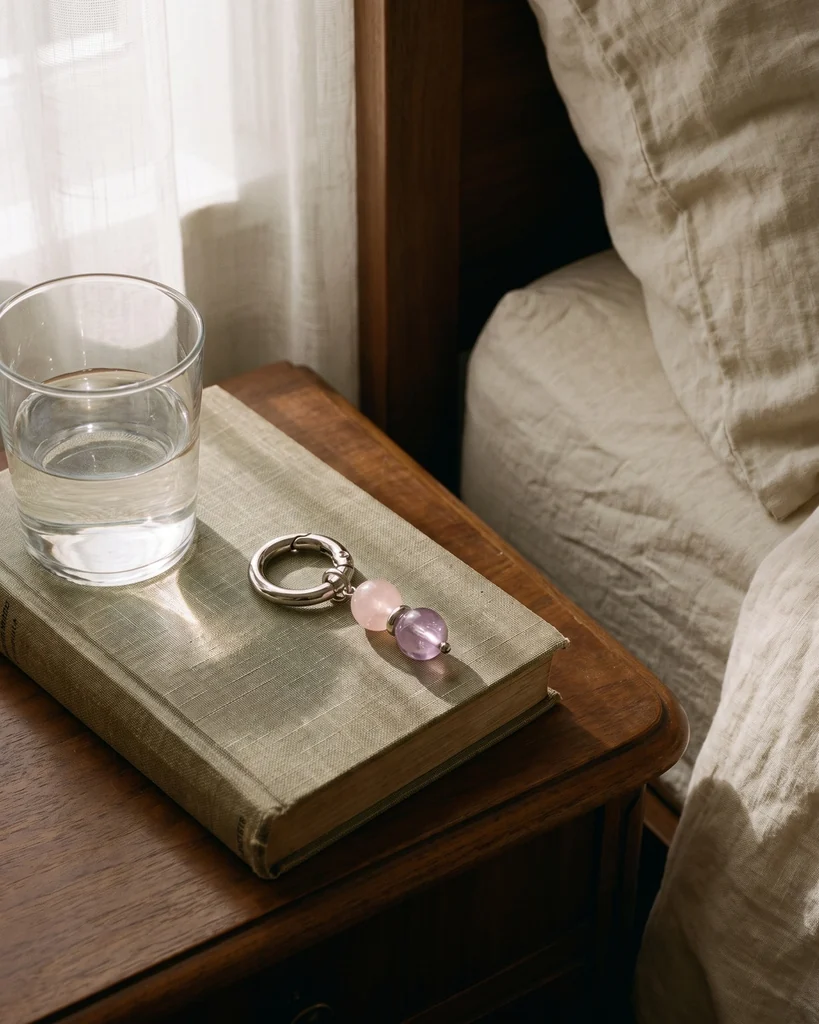
The stones on the LuKra collar, the LuKra leash and the LuStar charm are smooth, polished natural beads about 10 mm across, held on a stainless steel ring. They are decoration, and like any small accessory part they must not be chewed or swallowed. If your dog is a chewer, enjoy the collar on walks and supervised time, and keep the charm off at other times.
FAQ
Will a small crystal pass on its own?
Sometimes, but not always. Only a vet can tell from your dog’s size and the stone’s size and shape, so always call.
Are crystals toxic to dogs?
Quartz, agate and obsidian are not poisonous. A few collector minerals contain metals such as copper or lead, so tell the vet the exact stone.
Should I give my dog bread or oil to help it pass?
No. Do not give food, oil or anything else unless your vet tells you to.
How long does it take to know if there is a blockage?
Signs can appear within hours or take a few days. Stay in touch with your vet and watch for vomiting, a sore belly or no stool.
More on Natural Stones
See all Crystals for Dog Collars: How to Choose a Natural Stone That LastsStart here: Natural Stones
 Seven Stones, Seven Colours: The Natural Stones on LuKra CollarsRead the guide
 How Are Crystals Formed? A Clear Guide to Natural StonesRead the guide
 Rose Quartz for Pets: The Soft Pink Stone, ExplainedRead the guide
Also in this topicClear Quartz·Amethyst·Aquamarine·Green Aventurine·Tiger’s Eye·Red Agate·Obsidian·How to Clean Crystals Safely: Stones on Your Pet’s Collar·How to Tell if a Crystal Is Real (and if Amethyst Is Genuine)·Are Crystals Safe for Pets? A Practical Safety Guide·Crystal Collar for Cats: Fit, Safety and Supervision·Are Crystals Radioactive? What Pet Owners Should Know·Are Crystal Collars Magnetic? What Quartz Actually Does·LuKra Collar