 Collars
 Leashes
 Charms
Are Crystals Radioactive? What Pet Owners Should Know
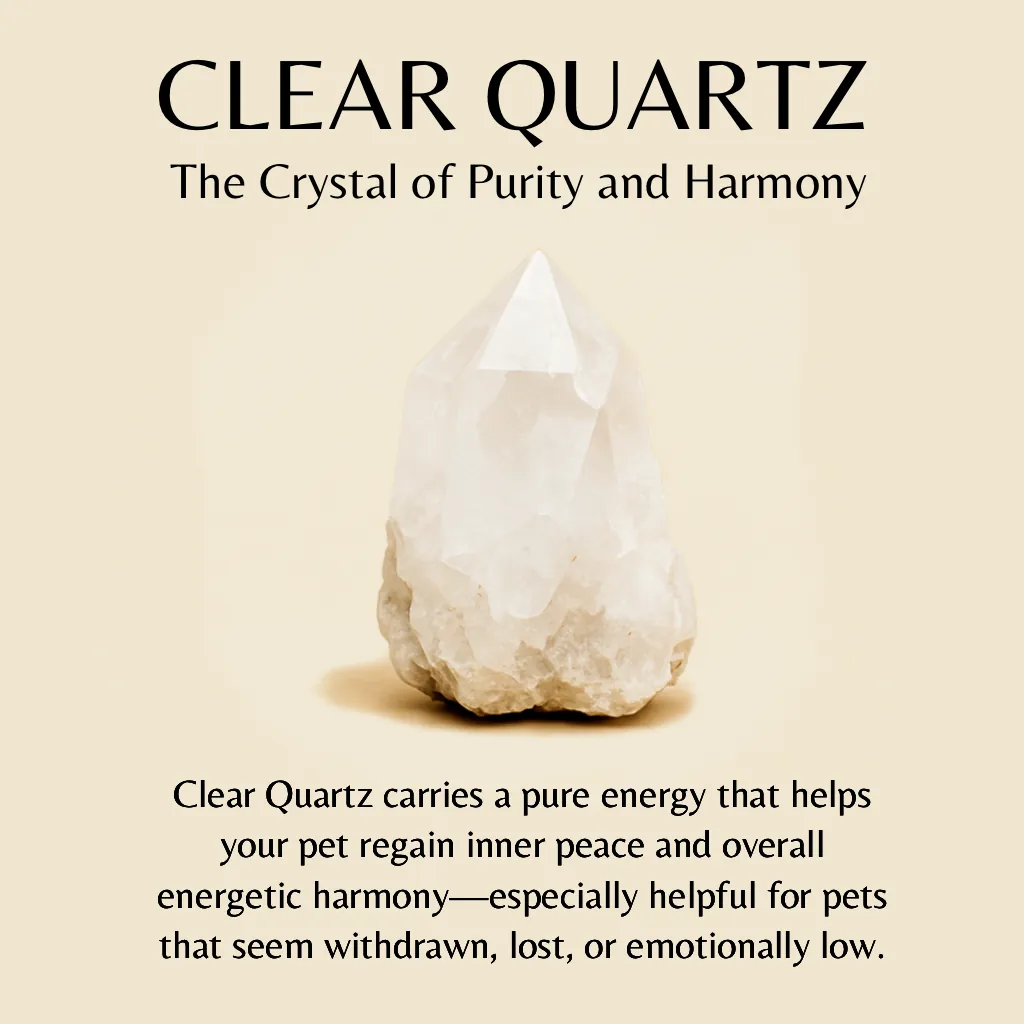
Are crystals radioactive? For the stones you usually see on collars and charms, the short answer is no. Clear quartz, amethyst, rose quartz, citrine, aquamarine, agate, tiger’s eye, green aventurine and obsidian are made of ordinary elements such as silicon, oxygen and aluminium, and they do not give off radiation. A small number of minerals do contain radioactive elements, and some gems are coloured with radiation in a lab, so the question is a fair one. This guide explains the difference in plain terms, so you know what to look for before anything goes near your dog or cat.
Which stones are not radioactive
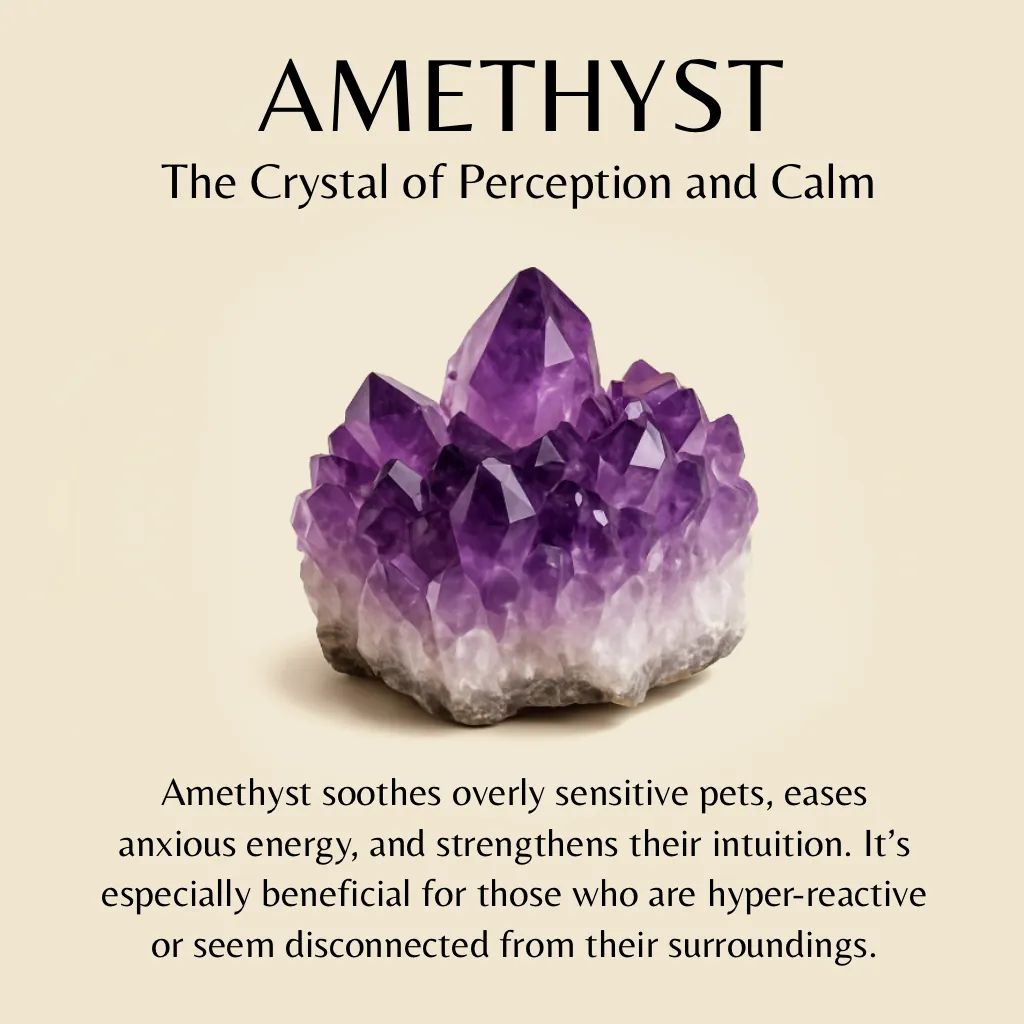
Quartz is silicon dioxide. Its coloured varieties get their colour from tiny traces of other elements: iron in amethyst and citrine, titanium or manganese in rose quartz, and iron in aquamarine, which is a beryl rather than a quartz. None of these traces are radioactive. Agate is a banded form of quartz, tiger’s eye is quartz with fine fibres inside it, and obsidian is natural volcanic glass.
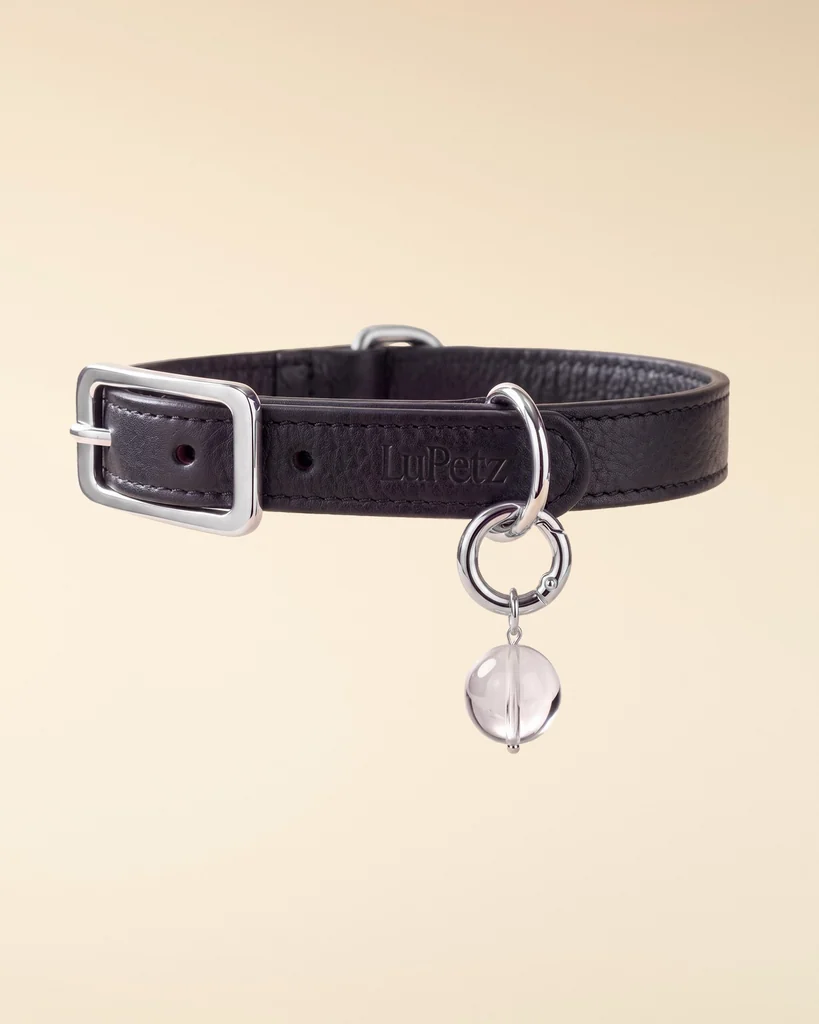
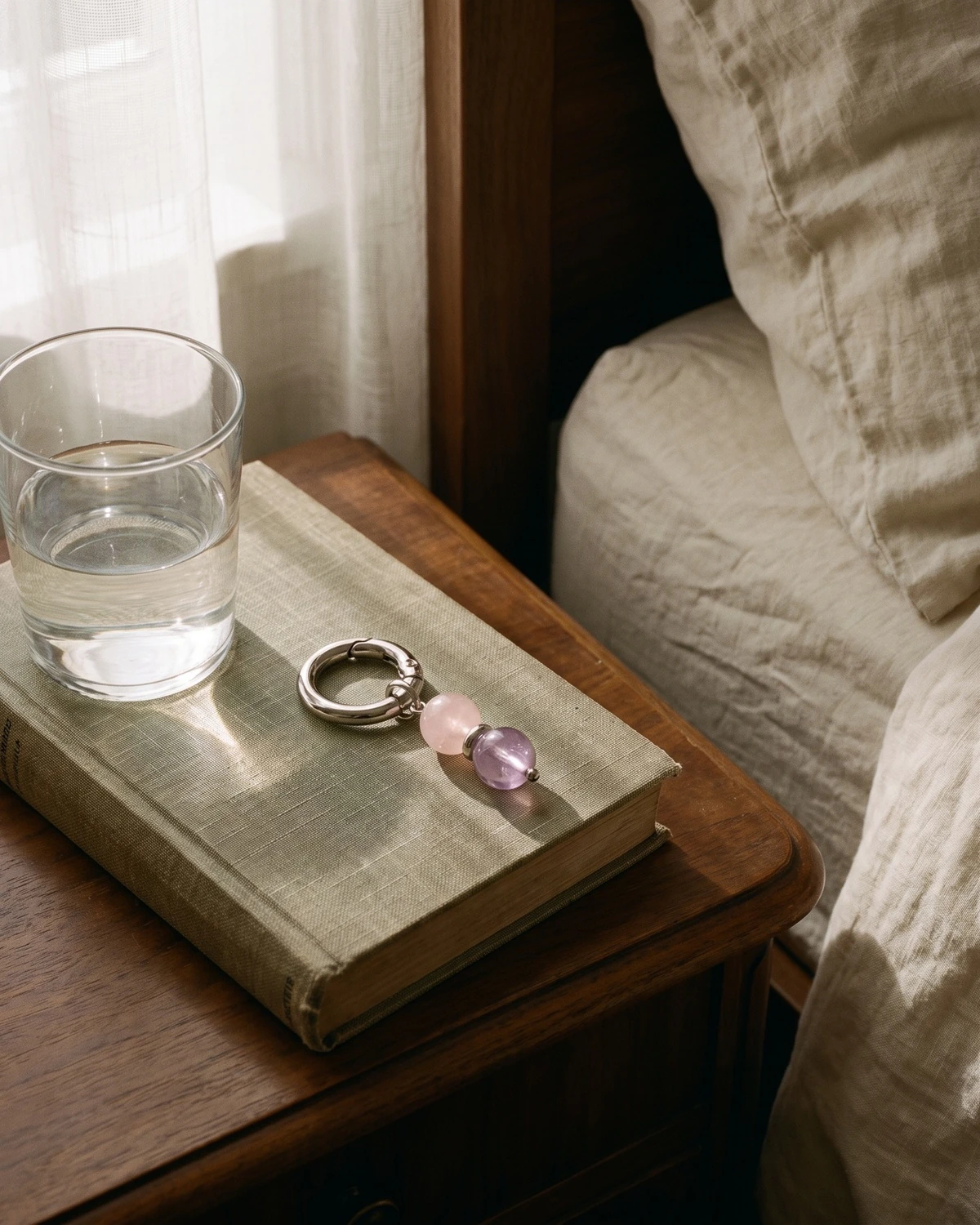
These are the stones we use. Every bead on a LuKra collar or LuStar charm is one of these natural stones, chosen for its colour and texture.
Where the confusion comes from
Smoky quartz and colour centres
Some quartz turns brown or grey because natural radiation in the surrounding rock shifted electrons in the crystal over millions of years. Mineralogists call these spots colour centres. The radiation changed the crystal’s colour, but it did not leave anything radioactive behind, in the same way that a sunburn does not make skin give off sunlight. Lab work on quartz colour, such as the Mineralogical Magazine study of irradiation colours in quartz, describes these colour centres in detail.
Irradiated gems
Some gems are coloured on purpose with radiation. Blue topaz is the best-known example. In the United States the Nuclear Regulatory Commission controls the first distribution of these stones: they must be held until any short-lived activity has decayed and must be checked before sale. The NRC fact sheet on irradiated gemstones explains the rules and estimates that wearing such a stone gives a far smaller dose than a single chest X-ray.
“Ion” and “quantum” pendants
The products that have actually caused warnings are not natural crystals. Health and radiation agencies in Illinois, Hong Kong and the Netherlands have warned about so-called quantum or negative-ion pendants made with powdered rock containing thorium and uranium. The Illinois Emergency Management Agency advised people to stop wearing them against the skin. These are manufactured items sold with big claims, which is a good reason to be wary of any pet product that promises invisible effects.
Minerals that can be radioactive
Collectors know a short list of minerals that contain uranium or thorium, such as autunite, torbernite, uraninite and some zircon and monazite. They are specimens for display cases, not beads for a collar. The International Gem Society’s toxicity table lists them and recommends checking radioactive minerals with a Geiger counter before handling. If a seller cannot tell you exactly which mineral a stone is, do not put it on your pet.
How to check a crystal before it goes near your pet
- Know the name. A reputable seller names the mineral, for example “amethyst”, rather than using a vague marketing label.
- Be wary of vague claims. Words like “scalar”, “ion” or “quantum” usually describe a manufactured product, not a natural stone.
- Prefer smooth, solid beads. A polished round bead has no dust or sharp edges, which matters more for daily wear than anything else.
- Keep it on the outside. A bead should hang on the collar, not be something your pet can chew. Supervise pets wearing accessories, and never let them chew or swallow a charm.
What this means for a LuPetz collar
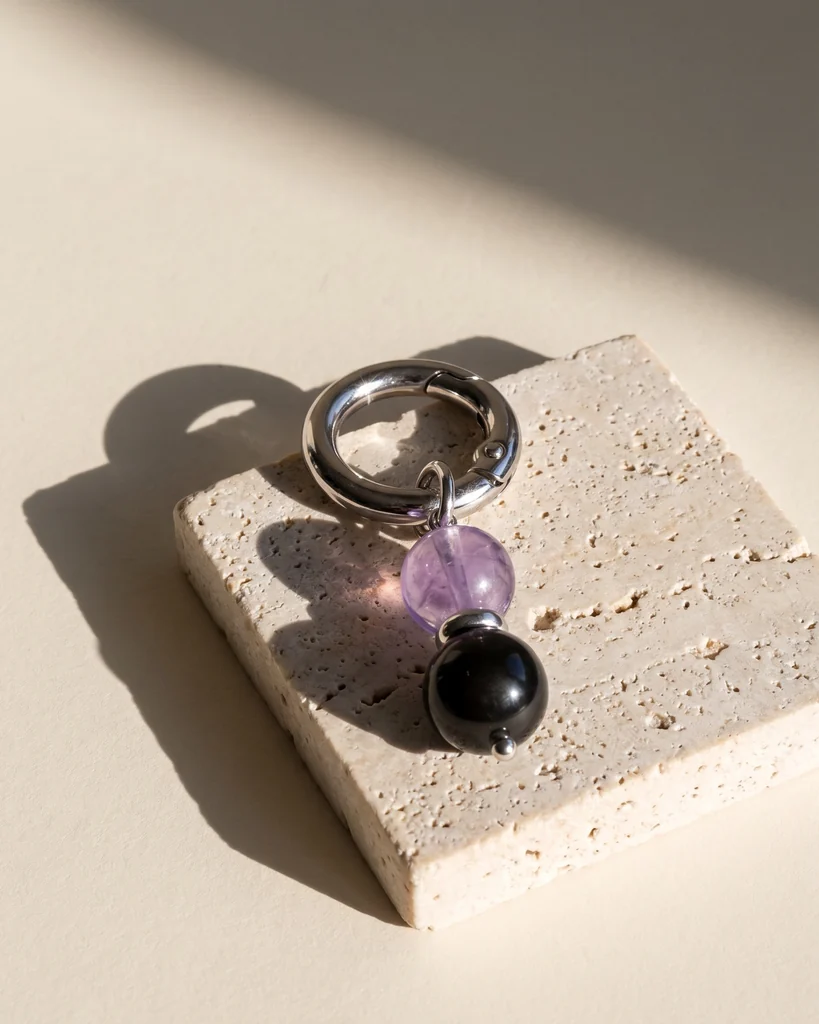
Our beads are natural quartz-family stones and obsidian, polished smooth and about 10 mm across. They are decoration: we choose them for their colour, the way they catch light, and how they look against Italian full-grain leather. We do not make any claim that a stone changes how your pet feels. For day-to-day care, our guide to cleaning the stone on your pet’s collar covers what each stone tolerates, and our collar fit guide covers the two-finger check.
FAQ
Is amethyst radioactive?
No. Amethyst is quartz coloured by traces of iron. Natural radiation in the rock helped create its colour long ago, but the stone itself does not give off radiation.
Is smoky quartz safe to wear?
Yes. Its colour comes from colour centres in the crystal, not from radioactive elements.
Should I test my crystals with a Geiger counter?
For common stones like quartz, agate and obsidian there is no need. Testing makes sense for collector minerals known to contain uranium or thorium.
Are crystal pet collars safe?
A collar with a smooth natural bead is safe to wear under supervision when it fits well. The bigger risks are chewing and swallowing, not radiation.
Browse the LuPetz shop to see each stone on black or taupe leather.
More on Natural Stones
See all Crystals for Dog Collars: How to Choose a Natural Stone That LastsStart here: Natural Stones
 Seven Stones, Seven Colours: The Natural Stones on LuKra CollarsRead the guide
 How Are Crystals Formed? A Clear Guide to Natural StonesRead the guide
 Rose Quartz for Pets: The Soft Pink Stone, ExplainedRead the guide
Also in this topicClear Quartz·Amethyst·Aquamarine·Green Aventurine·Tiger’s Eye·Red Agate·Obsidian·How to Clean Crystals Safely: Stones on Your Pet’s Collar·How to Tell if a Crystal Is Real (and if Amethyst Is Genuine)·Are Crystals Safe for Pets? A Practical Safety Guide·Crystal Collar for Cats: Fit, Safety and Supervision·Are Crystal Collars Magnetic? What Quartz Actually Does·Dog Swallowed a Crystal? What to Do Right Now·LuKra Collar