Collars
 Leashes
 Charms
Dog Collar Size Chart: How to Measure and Find the Right Fit
Use the dog collar size chart below to turn your dog’s neck measurement into a collar size. Measure around the base of the neck with a soft tape, where the collar actually sits, then pick the size whose range puts that number near the middle. Confirm the fit on your dog with the two-finger check. The steps after the chart show how to measure accurately, what to do between sizes, and how puppies and cats differ.
Dog collar size chart
These are the neck ranges for the LuKra Collar. Other makers size differently, so always compare your dog’s neck measurement with the chart for the collar you are buying, not a size letter alone.
| Size | Neck (cm) | Neck (inches) | Usually fits |
|---|---|---|---|
| Small | 20–29 cm | 7.9–11.4 in | Most cats and toy breeds |
| Medium | 29–39 cm | 11.4–15.4 in | Small dogs |
| Large | 39–48 cm | 15.4–18.9 in | Small to medium dogs |
If the measurement lands exactly on the line between two sizes, choose the larger one. Breed is only a rough guide: two dogs of the same breed can be a full size apart, so measure your own dog rather than going by breed.
What you need before you start
A flexible sewing tape is ideal. If you don’t have one, a length of string or a strip of paper works: wrap it, mark where it meets, then lay it flat against a ruler. Avoid a metal tape measure; it won’t follow the curve of the neck and you will end up guessing.
Pick a calm moment. A dog who has just come in from a walk or is settling after dinner is far easier to measure than one who is waiting at the door. Have a few small treats ready, and if your dog is wary of hands around the neck, ask someone to offer the treats while you measure. Keep it quick, then reward.
Write the number down in both inches and centimeters. Collar sizes are listed in different units by different makers, and converting in your head at the checkout is how mistakes happen.
Step by step: measuring your dog’s neck
- Stand your dog square. Measure while your dog is standing, head in a natural position, not looking up at you or down at the floor. A raised or lowered head changes the reading.
- Find the base of the neck. The collar rests low on the neck, closer to the shoulders than to the ears. The American Kennel Club’s gear-measuring guide suggests starting near the withers, the ridge between the shoulder blades, and wrapping the tape around to the front of the chest.
- Wrap close, not tight. The tape should lie flat against the coat without pressing into it. If you see the fur flatten into a groove, ease off.
- Read the number, then measure again. Two readings that agree are worth more than one. If they differ, use the larger.
- Allow for coat. On a fluffy or double-coated dog, the number before and after a groom can differ noticeably. Measure at the coat length your dog usually wears.

Turning the number into a collar size
A buckle collar does not have one length; it has a range, set by the first and last holes. Your dog’s neck measurement should fall comfortably inside that range, ideally near the middle. That leaves a hole or two either side for seasonal coat changes, a little weight gain or loss, and the way leather relaxes with wear.
Leather adds one consideration that nylon doesn’t. A well-made leather collar has real thickness, especially one lined with leather on the inside as well as the outside. That thickness sits between the collar and the neck, so a leather collar at a given hole feels slightly snugger than a thin webbing collar at the same nominal length. If your measurement lands right at the top of a size’s range, go up a size.
The AKC puts it plainly: “If your dog is in between sizes, always go for the larger size.” A collar with spare holes can always be tightened; one that runs out of holes cannot be let out.
Compare your measurement with the size chart above rather than guessing from your dog’s breed. A muscular neck on a small dog is more common than people expect.
Checking the fit once the collar is on
The number gets you close. The fit check on your actual dog is what confirms it.
The two-finger rule
With the collar buckled, slide two fingers flat between the collar and your dog’s neck. They should go in without forcing, and the collar should not shift much when you do it. If you can’t get two fingers under, the collar is too tight. If you can fit your whole hand, or the collar slides easily up toward the ears, it is too loose.
The over-the-head test
Gently draw the collar forward toward the ears. It should stop at the back of the skull. A collar that slips over the head on a gentle tug can slip off on a walk, too. Dogs with heads about as narrow as their necks, such as many sighthounds, may need a different collar style for walks; ask your vet or trainer what suits your dog.
Watch the first few walks
A well-fitted collar sits low, stays put and doesn’t rub. After the first week or two, look at the coat where the collar rests. Flattened fur is normal; redness, hair loss or a rubbed patch are not, and mean the fit or position needs another look.
Puppy collar size: growing dogs, seniors and coat changes
A collar that fits today won’t necessarily fit in three months. American Humane advises checking a puppy’s collar weekly until the dog is fully grown, which can take more than a year in large breeds, because a collar does not grow with the dog. Older dogs often lose weight, and many dogs carry a thicker coat in winter, so adult collars need a periodic check too.
For a fast-growing puppy, an inexpensive adjustable collar is usually the practical choice until growth slows. A leather collar is best bought once your dog’s neck has settled, so you can choose a size where the fit sits in the middle of the range and stays there.
Make the two-finger check part of your routine: when you clip the leash on, run your fingers under the collar. It takes a second and catches changes early.
Cat collar size
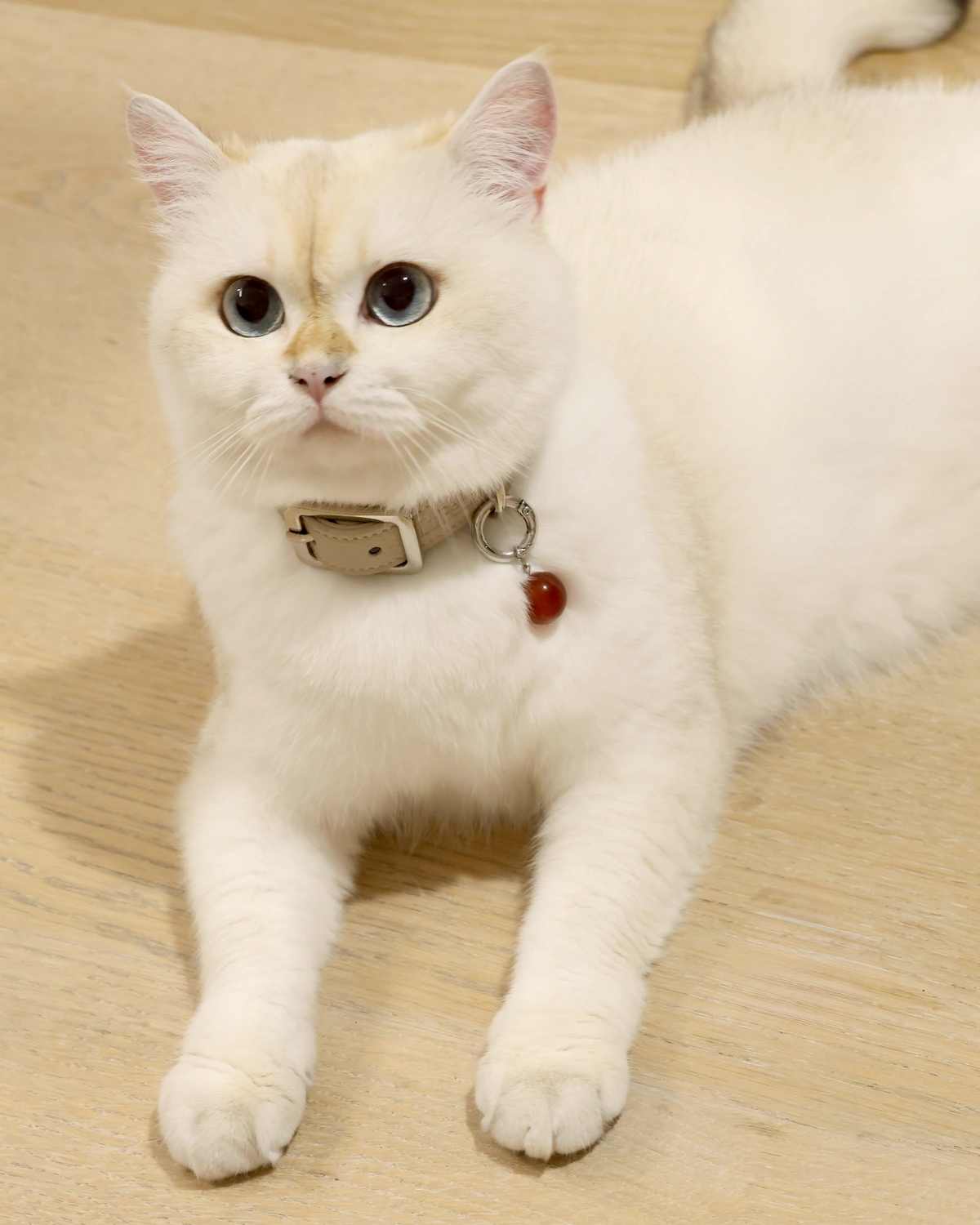
Cats are measured the same way: a soft tape around the base of the neck, close but not tight. Most adult cats fall in the Small range of the chart above (20–29 cm, 7.9–11.4 in). Check the fit with two fingers, as for a dog; a cat’s collar should not slide over the ears when you draw it gently forward.
The LuKra Collar is a buckle collar, not a breakaway collar, so it does not release if it catches on something. Put it on when you are around to keep an eye on your cat, and take it off for time alone or outdoors. Our guide to collars for cats covers fit and supervision in more detail.
Wearing a collar safely
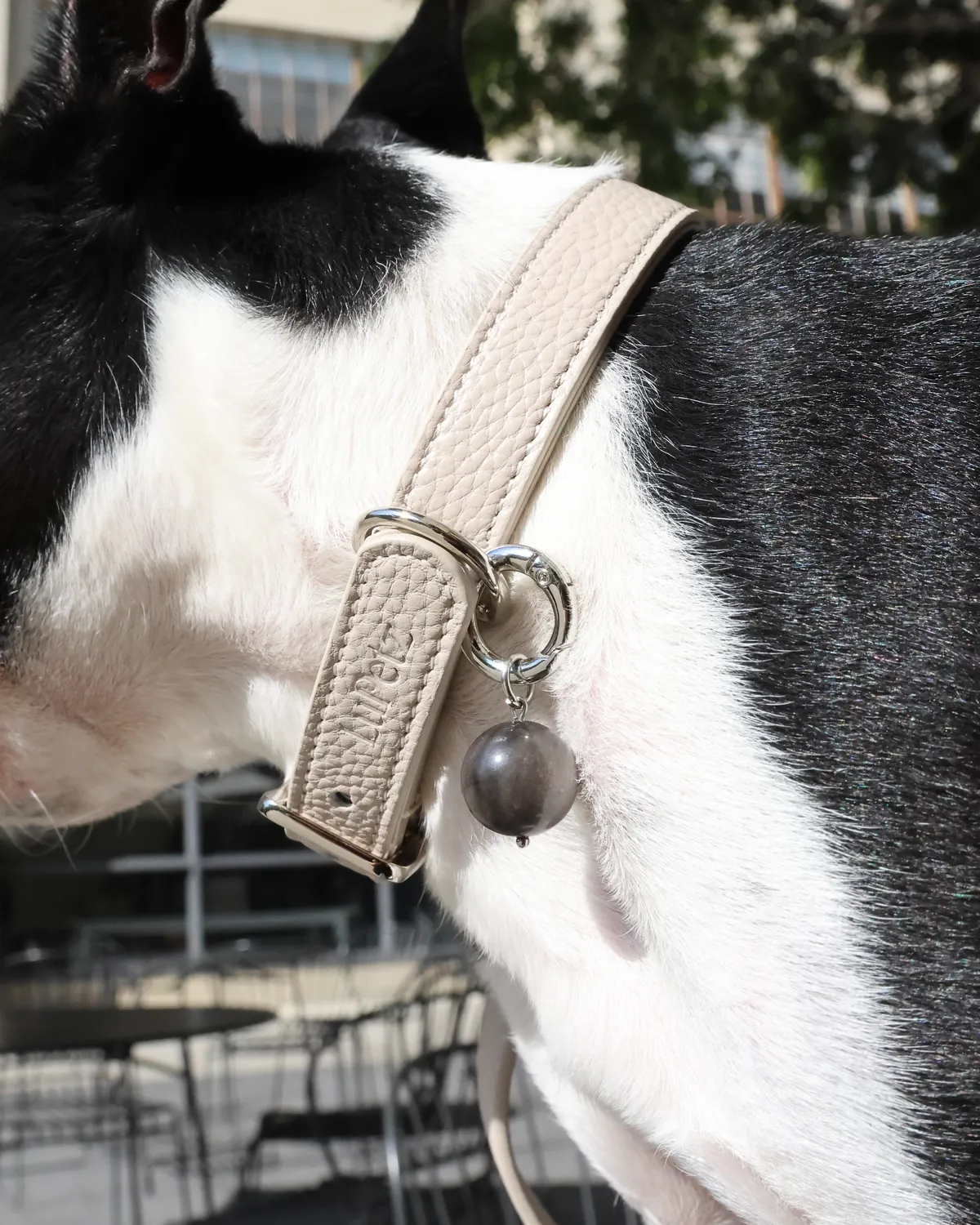
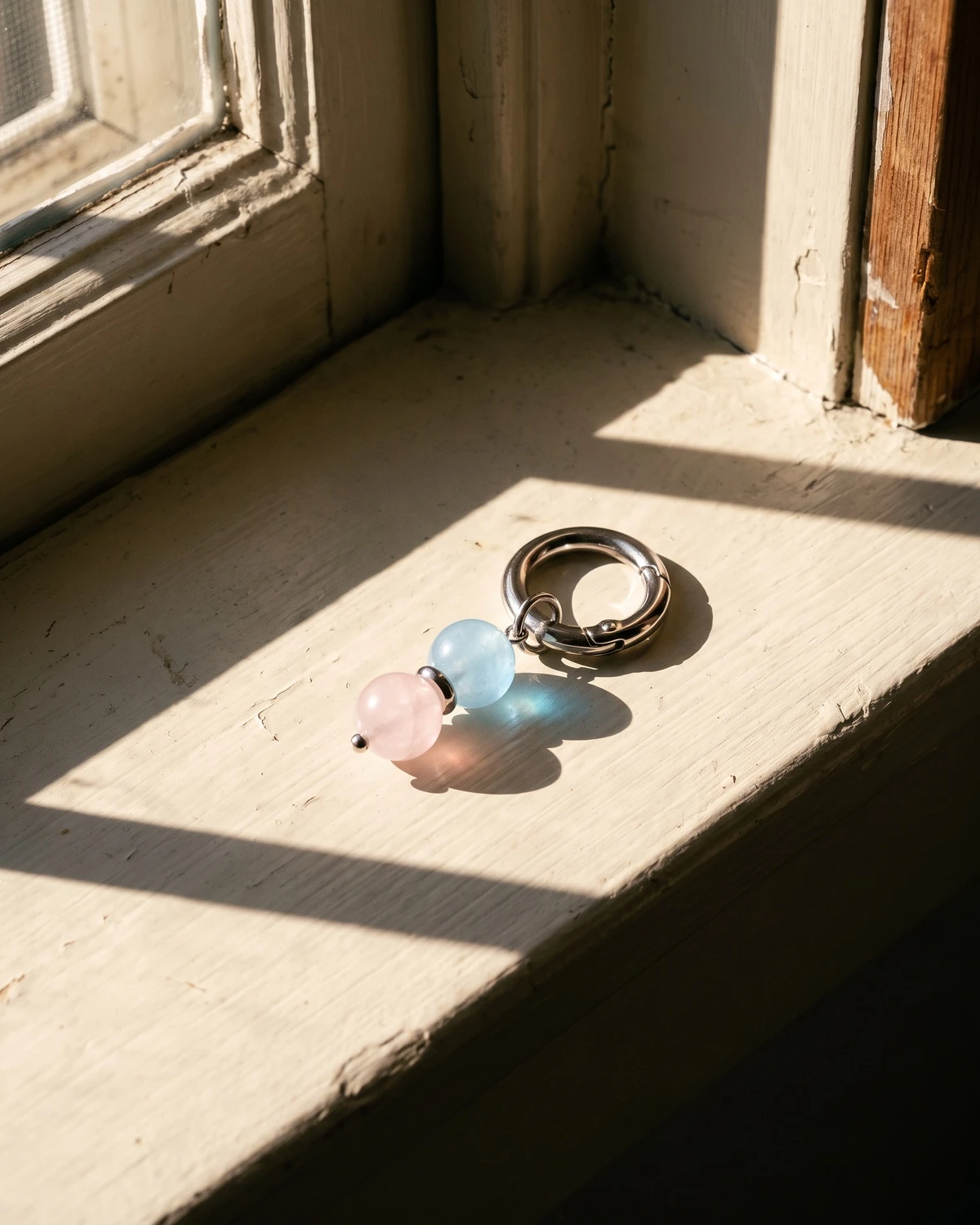
The LuKra Collar is a classic buckle collar with metal hardware, not a breakaway or safety collar. Fit it with the two-finger rule, check it regularly, and supervise your pet while wearing accessories, especially in the first days. The small natural stone charm is a decorative finishing detail: like any small item, it must not be chewed or swallowed, so remove the collar if your dog starts mouthing at it, and keep an eye on puppies who chew everything in reach.
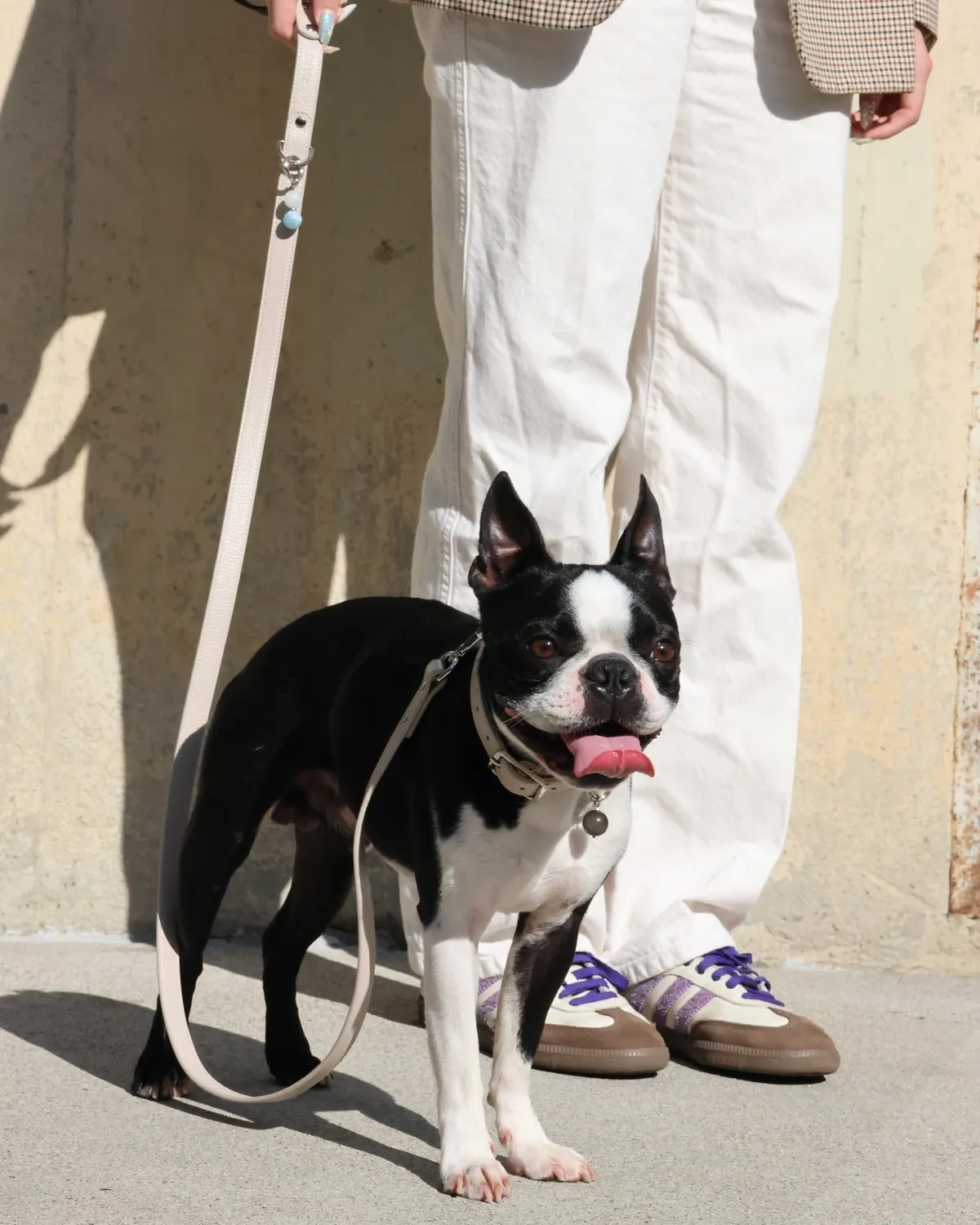
Once the collar fits, the matching LuKra Leash completes the set in the same Italian full-grain leather, and shipping is free when a collar and leash are ordered together.
FAQ
Where exactly should I measure my dog’s neck for a collar?
At the base of the neck, where the collar naturally rests, not up near the ears. Measuring high on the neck often gives a smaller number and a collar that ends up too tight.
How many fingers should fit under a dog collar?
Two fingers, laid flat, should slide under the buckled collar without forcing. Fewer means it’s too tight; a whole hand means it’s too loose.
How tight should a dog collar be?
Snug enough that it can’t slip over the head, loose enough that two fingers slide flat underneath. Check again after a groom, a change of season or a change in weight.
What size collar does a puppy need?
Measure the base of the neck and use the chart, then check the fit every week while your puppy is growing. A collar that fit last month may already be too tight.
Should I size up for a leather collar?
If your measurement sits at the top end of a size range, yes. Leather, especially a leather-lined collar, is thicker than nylon webbing and fits slightly snugger at the same hole.
What if the collar doesn’t fit when it arrives?
Check it against your dog with the two-finger rule before regular wear. LuPetz offers 14-day returns; see our shipping and returns page for the details.
Ready to choose? Browse our leather dog collars, or take the LuPetz quiz if you’d like a little help choosing.