 Collars
 Leashes
 Charms
Aquamarine Crystal Collars & Leashes for Pets
Aquamarine is the pale blue to blue-green variety of the mineral beryl, the same mineral as emerald. On a LuKra collar it is the lightest color in the range, a cool sea-blue against black or taupe leather.
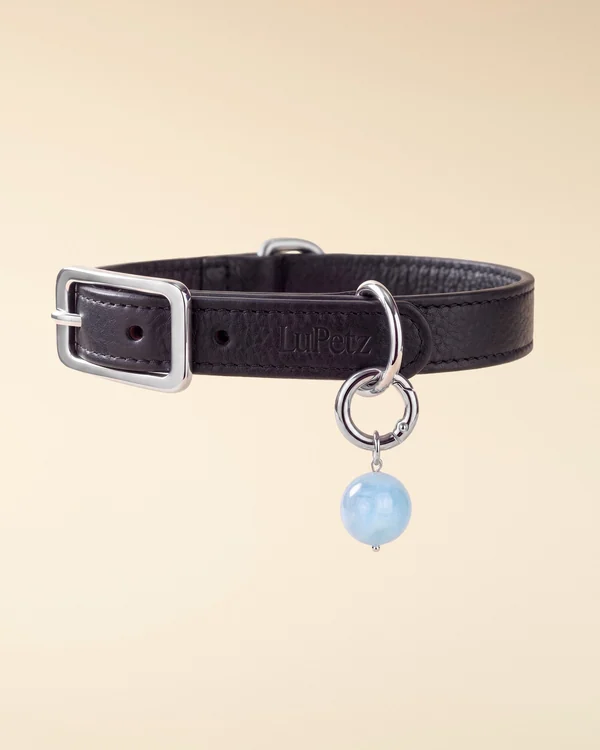
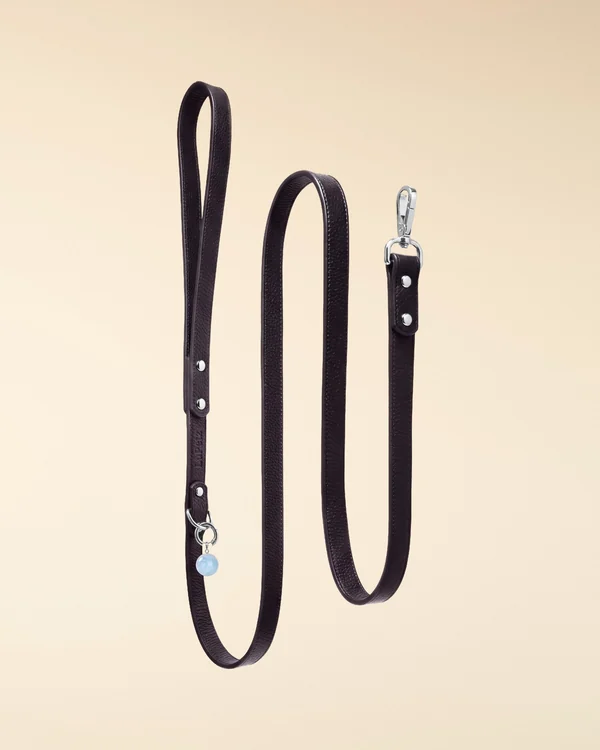
Aquamarine is a pale sea-blue variety of the mineral beryl, named after the Latin for “sea water”. Its color runs from a soft, almost watery blue to light blue-green, and it is usually clear enough to see into. Each bead is slightly different in depth of color.
Trace amounts of iron give it its blue. It forms in granite pegmatites, coarse-grained rock where the last fluids of cooling magma leave room for crystals to grow large. Brazil is the leading source, and it is also mined in Madagascar, Nigeria, Mozambique and Pakistan, among other countries.
- Color: pale blue to blue-green
- Mohs hardness: 7.5–8
- Commonly found in: Brazil, Madagascar, Nigeria, Mozambique, Pakistan
- At LuPetz: LuKra Collar and LuKra Leash, and the Pisces, Gemini and Libra LuStar charms
At 7.5 to 8 on the Mohs scale, aquamarine is the hardest stone in the LuKra range, so everyday wear barely marks it. Like most gems it is brittle, and a sharp knock can still chip it.
Its pale blue looks especially fresh on taupe leather, and crisp against black. On the LuKra Collar the stone hangs from a small ring, so it moves with your pet; on the LuKra Leash, beads of the same stone sit by the clip.
To clean the stone on the collar, wipe it with a soft cloth. If it needs more, dip a corner of the cloth in lukewarm water with a drop of mild soap, wipe the stone only and dry it straight away. Keep the water off the leather, keep the collar away from heaters, and let everything dry before the collar goes back on.
Questions
Ask us01What is aquamarine, and what does it look like?
Aquamarine is a pale sea-blue stone, a variety of the mineral beryl; its name comes from the Latin for “sea water”. It is the lightest colour in the LuKra range and looks especially fresh on taupe leather. Each stone is natural, so its shade varies slightly. Find it on the LuKra Collar, the LuKra Leash and the Pisces, Gemini and Libra LuStar charms.
02How does aquamarine form?
Aquamarine forms in granite pegmatites, coarse-grained rock where crystals have room to grow large. Its crystals are a pale sea-blue variety of the mineral beryl. Because every crystal grows in its own conditions, the shade and clarity of each aquamarine differ slightly, so no two stones on a collar look exactly the same.
03Where is aquamarine found?
Aquamarine comes mainly from Brazil, Madagascar, Nigeria and Pakistan, in granite pegmatites. Those are places where this kind of stone is commonly found. Every stone is natural, so its clarity and exact shade of blue differ a little from piece to piece.
04How hard is aquamarine?
Aquamarine is a hard stone, 7.5–8 on the Mohs hardness scale, harder than quartz. That makes it well suited to a piece worn every day. As with any stone, check it and its ring now and then, along with the leather, stitching and buckle of the collar.
05How do I clean aquamarine on a collar?
Wipe it with a damp soft cloth and let it dry before the collar goes back on. Keep the water off the leather, and keep perfume and cleaning sprays away from both the stone and the collar. If the collar gets wet, pat it dry and let it air-dry away from heat. See our guide to cleaning the stone on a collar.
More on Natural Stones
See all Crystals for Dog Collars: How to Choose a Natural Stone That LastsStart here: Natural Stones
 Seven Stones, Seven Colours: The Natural Stones on LuKra CollarsRead the guide
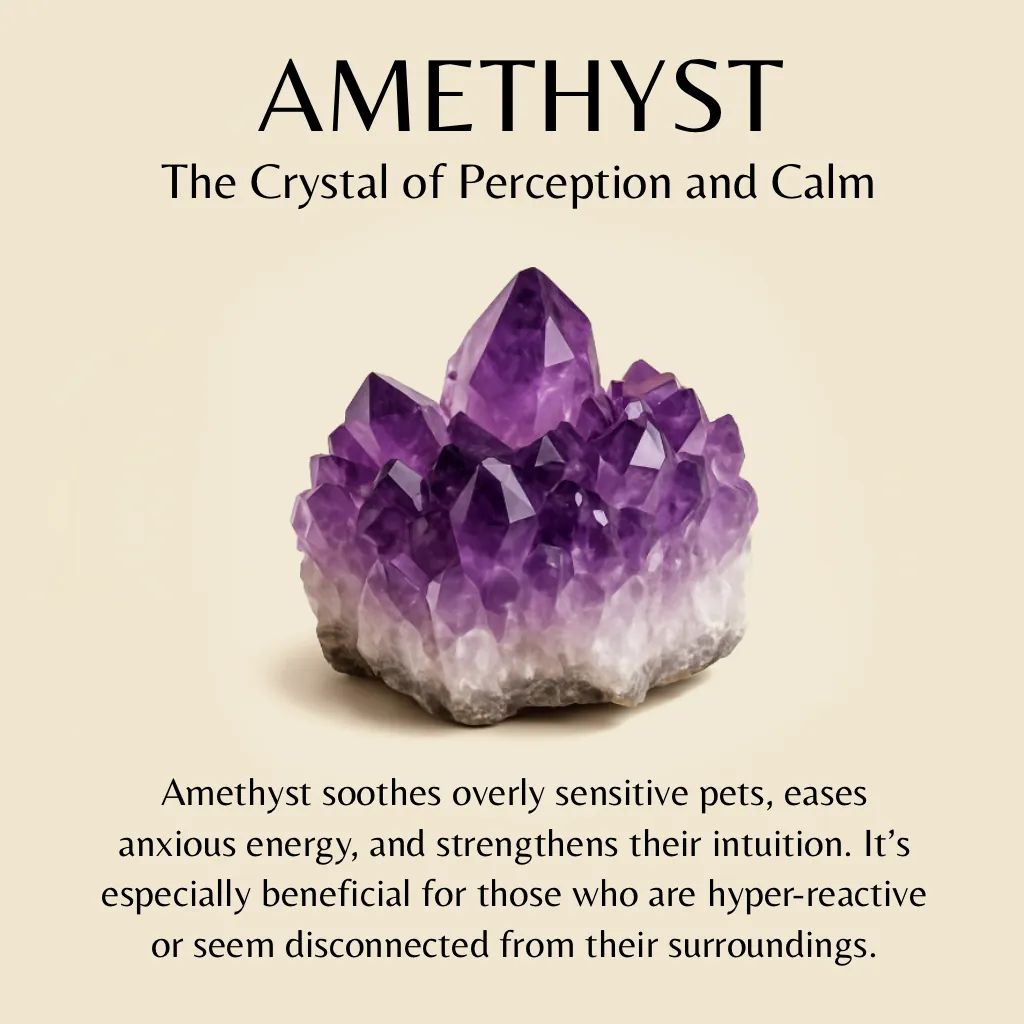 How Are Crystals Formed? A Clear Guide to Natural StonesRead the guide
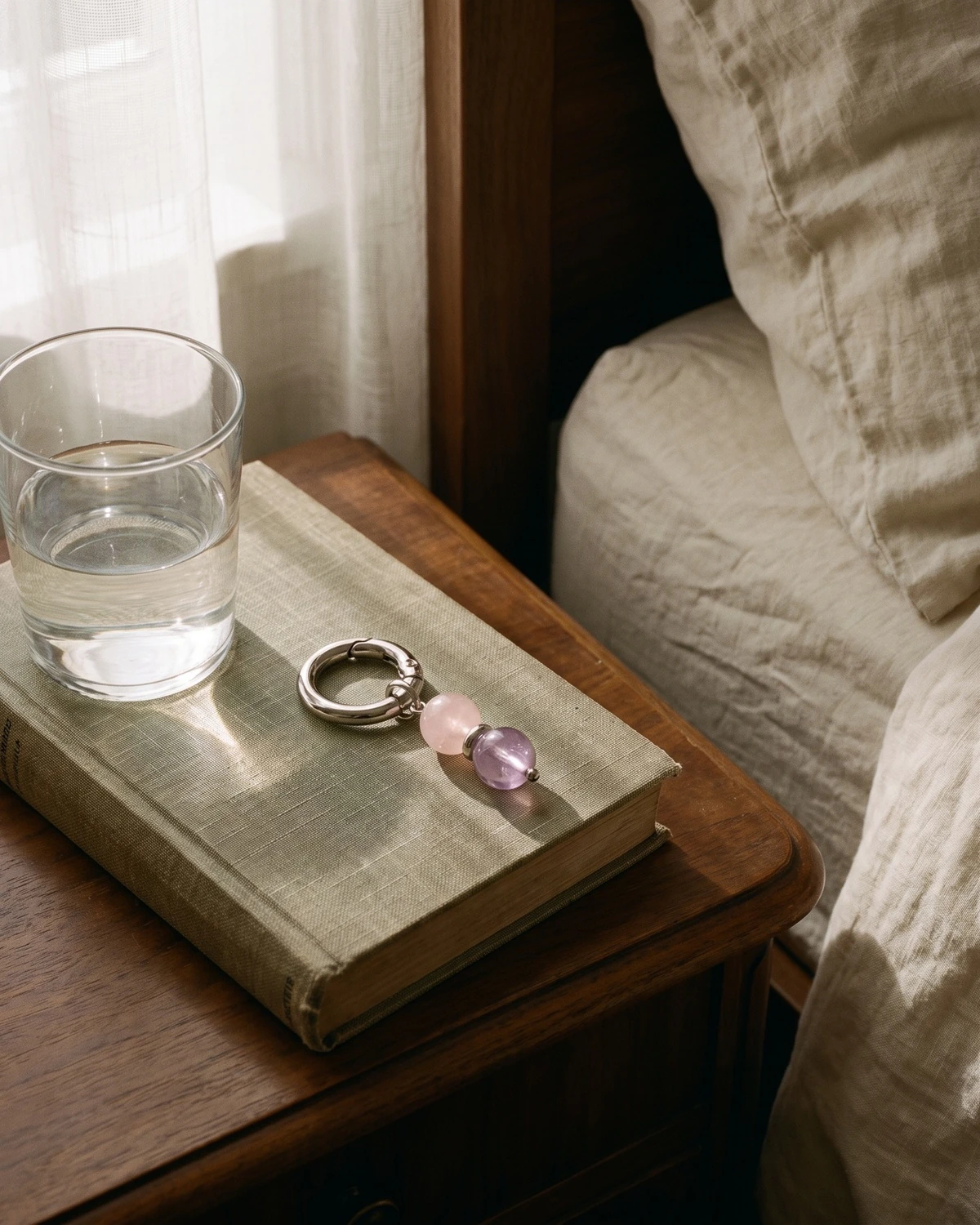 Rose Quartz for Pets: The Soft Pink Stone, ExplainedRead the guide
Also in this topicClear Quartz·Amethyst·Green Aventurine·Tiger’s Eye·Red Agate·Obsidian·How to Clean Crystals Safely: Stones on Your Pet’s Collar·How to Tell if a Crystal Is Real (and if Amethyst Is Genuine)·Are Crystals Safe for Pets? A Practical Safety Guide·Crystal Collar for Cats: Fit, Safety and Supervision·Are Crystals Radioactive? What Pet Owners Should Know·Are Crystal Collars Magnetic? What Quartz Actually Does·Dog Swallowed a Crystal? What to Do Right Now·LuKra Collar