 Collars
 Leashes
 Charms
Are Crystal Collars Magnetic? What Quartz Actually Does

Are crystal collars magnetic? No. The stones used on most crystal collars, including clear quartz, amethyst, rose quartz, aquamarine, agate, tiger’s eye and obsidian, are not magnetic. A magnet will not pick them up, and they do not create a magnetic field around your pet. A few minerals do react to magnets, and some products add real magnets, so it helps to know the difference. This guide explains what quartz actually does, how to test a bead at home, and why magnets and pets need care.
Why quartz is not magnetic
Magnetism in rocks comes mostly from iron in particular arrangements. Quartz is silicon and oxygen. It is what physicists call diamagnetic: in a very strong lab magnet it is pushed away by a tiny amount, far too small to notice in daily life. The trace elements that colour amethyst, citrine or rose quartz are present in such small amounts that they do not change this.
Obsidian is volcanic glass and agate is banded quartz, so they behave the same way. A bead from any of these stones will sit still next to a fridge magnet.
Which stones do react to magnets
Magnetite
Magnetite is an iron oxide and the most strongly magnetic natural mineral. Lodestone is magnetite that is itself a natural magnet.
Hematite and “magnetic hematite”
Natural hematite is only weakly magnetic. The shiny grey beads sold as “magnetic hematite” are usually a man-made ceramic magnet, not natural stone. They snap together on a string, which is exactly why they are a poor choice for pets.
How to test a bead at home
- Take a strong fridge magnet or a small neodymium magnet.
- Hold it next to the bead for a few seconds.
- If the bead moves, clicks or sticks, it contains magnetic material. Natural quartz, agate and obsidian will not move.
This does not tell you which stone you have, but it quickly separates natural quartz-family beads from magnetic beads and metal-cored imitations.
Why magnets and pets do not mix
The real concern with magnets is swallowing. If a dog or cat swallows two magnets, or a magnet and a piece of metal, they can attract each other through the wall of the gut and cause a serious injury that needs surgery. Vets list magnets among the most dangerous objects a pet can swallow; this vet’s overview of intestinal blockages explains how swallowed objects cause trouble. For that reason we do not use magnets anywhere on our collars, leashes or charms.
What is on a LuPetz collar
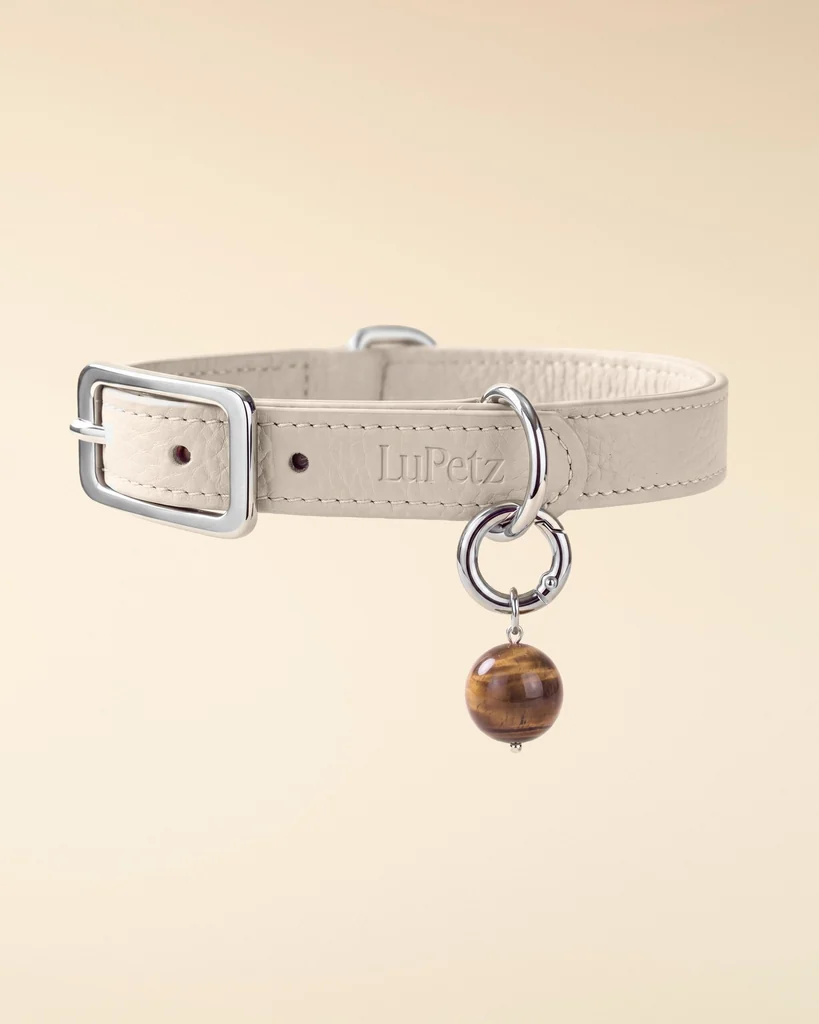
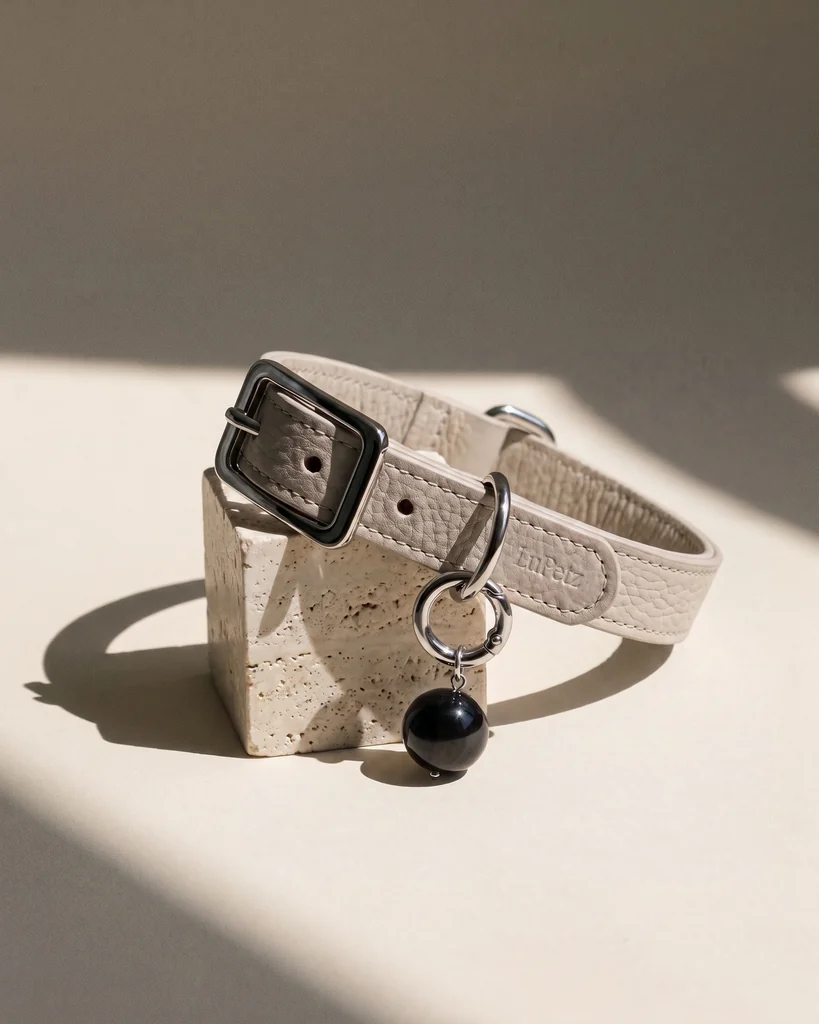
A LuKra collar is Italian full-grain leather with a stainless steel buckle and hardware, and one round natural stone bead about 10 mm across. The LuKra leash and the LuStar charm use the same kind of stones. None of them contain magnets, and we do not claim that a stone has any effect on your pet. We pick each stone for its colour and how it looks against the leather.
As with any accessory, check the fit with two fingers under the collar, supervise your pet while it wears a charm, and never let a charm be chewed or swallowed. Our collar sizing guide walks you through the fit.
Where the magnetic idea comes from
Much of the confusion comes from product listings that mix two different things: stone beads and magnetic jewellery. Some bracelets and collars sold online do contain small magnets or magnetic hematite, and the listing may sit right next to quartz beads with similar wording. When a listing says “magnetic”, look for the mineral name and ask the seller what the bead is made of. If the answer is quartz, agate or obsidian, the bead is not magnetic, whatever the description suggests. If the answer is a magnet or “magnetic hematite”, treat it as a swallowing risk for a pet that chews.
FAQ
Does a crystal collar create a magnetic field?
No. Quartz, agate and obsidian do not create a magnetic field. Only magnetic materials such as magnetite or man-made magnets do.
Is tiger’s eye magnetic?
No. Tiger’s eye is quartz with fine fibres inside. It does not react to a household magnet.
Are magnetic collars safe for dogs?
The risk is swallowing: magnets that come loose can injure the gut. If a pet chews accessories, avoid anything with small magnets.
Will a crystal bead affect a microchip or a GPS tag?
No. A non-magnetic stone does not interfere with microchips, tags or trackers.
More on Natural Stones
See all Crystals for Dog Collars: How to Choose a Natural Stone That LastsStart here: Natural Stones
 Seven Stones, Seven Colours: The Natural Stones on LuKra CollarsRead the guide
 How Are Crystals Formed? A Clear Guide to Natural StonesRead the guide
 Rose Quartz for Pets: The Soft Pink Stone, ExplainedRead the guide
Also in this topicClear Quartz·Amethyst·Aquamarine·Green Aventurine·Tiger’s Eye·Red Agate·Obsidian·How to Clean Crystals Safely: Stones on Your Pet’s Collar·How to Tell if a Crystal Is Real (and if Amethyst Is Genuine)·Are Crystals Safe for Pets? A Practical Safety Guide·Crystal Collar for Cats: Fit, Safety and Supervision·Are Crystals Radioactive? What Pet Owners Should Know·Dog Swallowed a Crystal? What to Do Right Now·LuKra Collar