Collars
 Leashes
 Charms
Are Crystals Safe for Pets? A Practical Safety Guide

Are crystals safe for pets? Yes, as long as you treat them like any other small object. A smooth, polished natural stone on a well-fitted collar is safe for supervised wear, and common stones such as quartz, agate and obsidian are not toxic or radioactive. The real risks are chewing, swallowing and sharp raw pieces lying around the house. This guide covers both sides: how to keep crystals safe around dogs and cats, and an honest answer to the question many owners also ask, whether crystals are good for pets.
Are crystals good for pets?
There is no scientific evidence that a stone changes a pet’s health, mood or behaviour. Studies with people point the same way: in a well-known experiment at Goldsmiths, University of London, volunteers reported the same sensations whether they held real quartz or a glass copy, which Time described in its look at whether crystals work. So we do not make any such claim. What a stone can do is look beautiful: the violet of amethyst, the bands of tiger’s eye, the clear depth of quartz against leather. That is why we use them, and that is the only promise we make.
If your pet seems anxious, unwell or in pain, please see your vet.
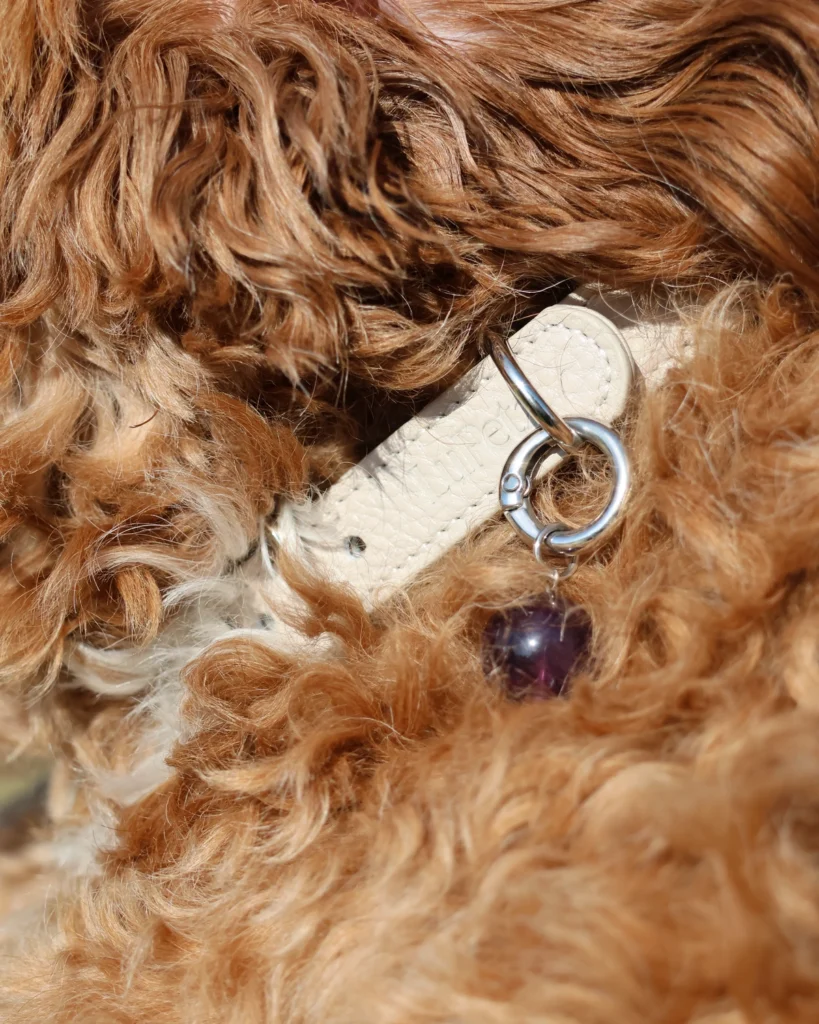
Which crystals are safe to have around pets
Most stones sold for jewellery are quartz or quartz-family stones (clear quartz, amethyst, citrine, rose quartz, agate, tiger’s eye, aventurine), beryls such as aquamarine, or volcanic glass (obsidian). These are hard, stable and not poisonous. A few minerals are worth keeping away from pets altogether because they contain metals or break into dust:
- Malachite and azurite contain copper.
- Cinnabar contains mercury, and galena contains lead.
- Selenite and other soft minerals dissolve or flake when wet or chewed.
- Collector minerals with uranium or thorium belong in a closed display case.
The International Gem Society’s toxicity table is a useful reference if you have a mixed collection at home.
Crystals around the house: simple rules
- Shelves, not floors. Bowls of tumbled stones at nose height invite a curious dog to taste them.
- Watch raw points. Raw clusters and points have sharp edges that can cut paws or mouths if knocked over.
- Keep water bowls plain. Do not put stones in your pet’s water; they are a choking hazard and some minerals react with water.
- Skip sprays and oils. Some products sold alongside crystals contain essential oils that are unsafe for cats.
Puppies and young cats explore with their mouths, so treat any small, smooth object as something they might try to eat. A tumbled stone the size of a grape is easy to swallow and hard to pass. If you have a young pet, move stone bowls and display pieces to closed cabinets or high shelves until the chewing stage is over, and keep an eye on visitors’ bags and pockets too.
Wearing a stone safely
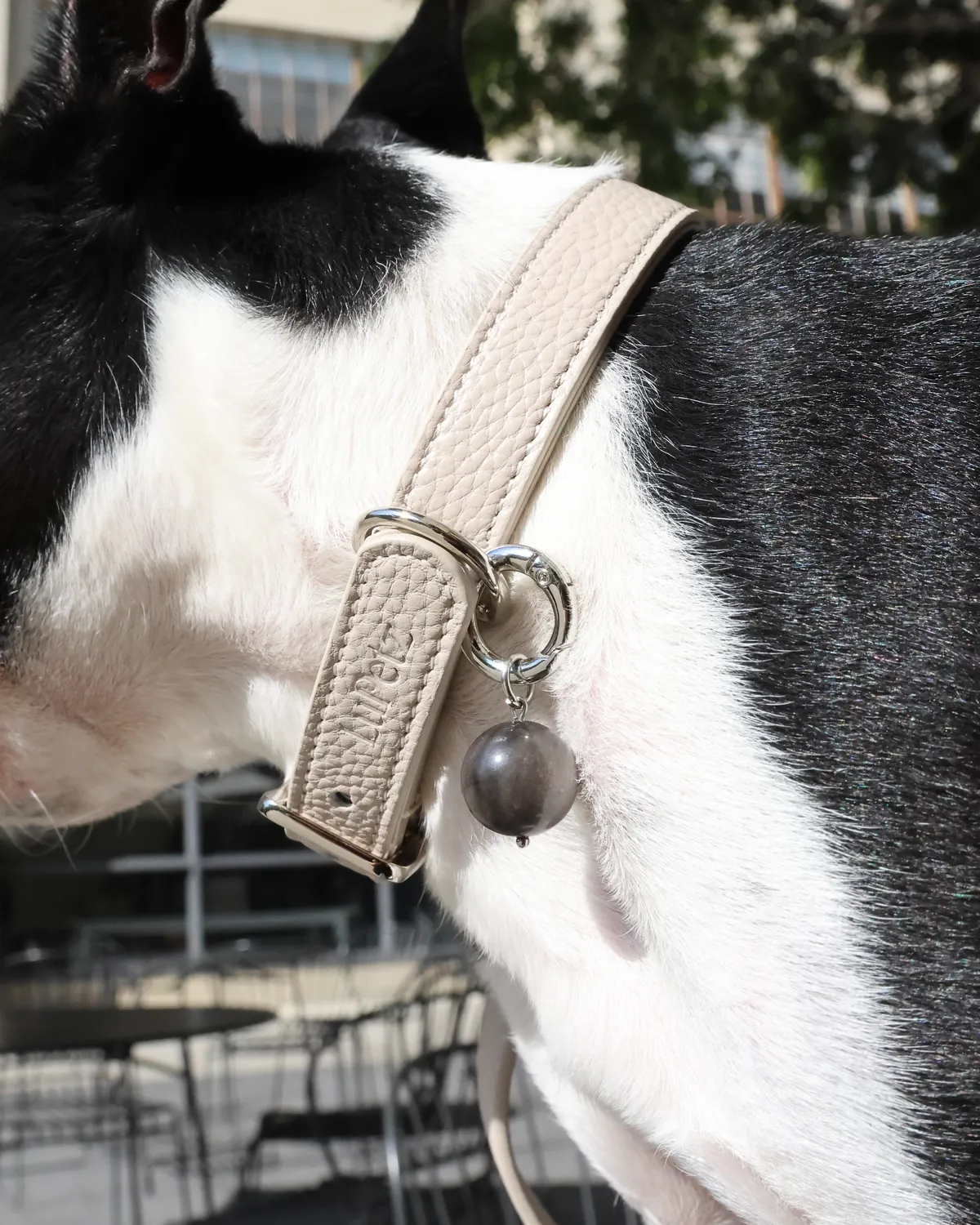
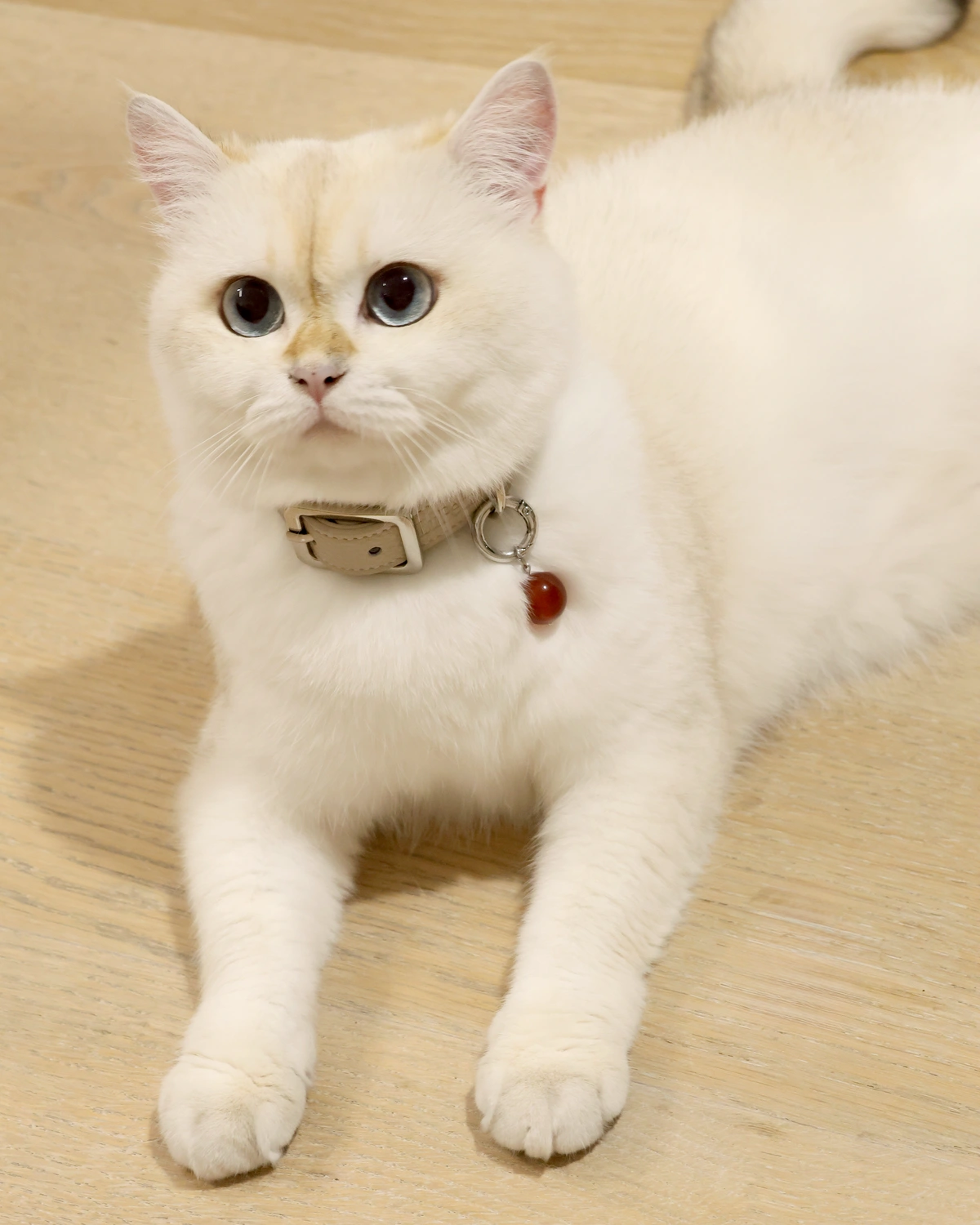
A stone on a collar is safest when the collar fits well and the bead is smooth and firmly attached:
- Fit: you should be able to slide two fingers flat under the collar. See our collar sizing guide.
- Supervision: let your pet wear charms when you are around, and never let a charm be chewed or swallowed.
- Hardware: check the ring and clasp now and then, and replace anything bent.
- Cleaning: wipe the bead with a soft damp cloth and dry it. Our stone cleaning guide lists what each stone tolerates.

What if my pet swallows one?
Call your vet or an emergency clinic straight away, even if your pet seems fine. In the US you can also call the ASPCA Animal Poison Control Center at (888) 426-4435 (a fee may apply). Do not try to make your pet vomit unless a vet tells you to.
FAQ
Are crystals toxic to cats?
Quartz, agate and obsidian are not toxic. Cats are more sensitive to essential oils and to minerals that contain copper or lead, so keep those away.
Are crystals radioactive?
Common jewellery stones are not. Irradiated gems such as blue topaz are checked before sale in the US under NRC rules.
Can a dog wear a crystal collar every day?
Yes, for supervised wear with a good fit. Take it off when your dog is alone or in a crate.
Which stones do you use?
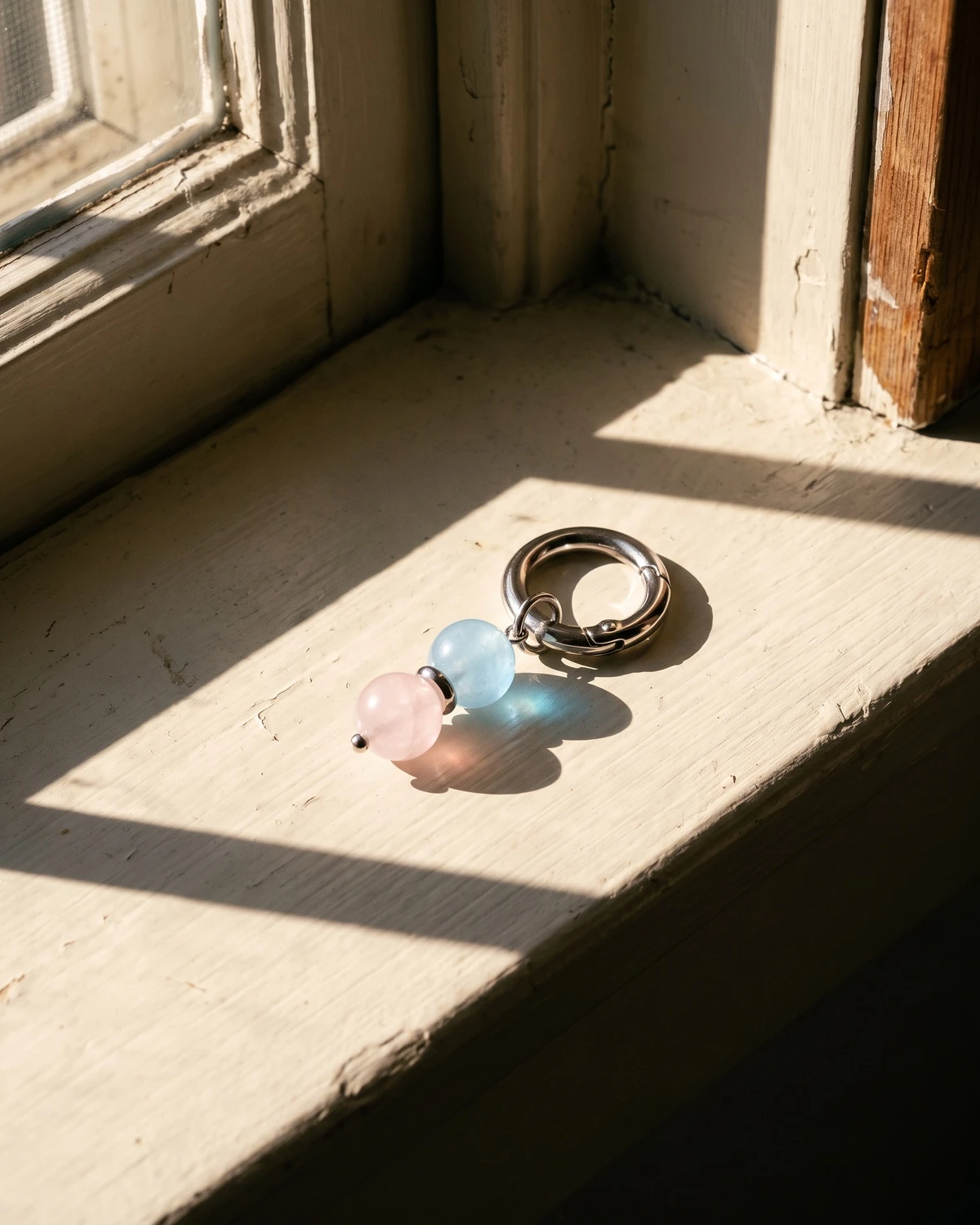
Natural clear quartz, amethyst, aquamarine, tiger’s eye, red agate, green aventurine and obsidian on the LuKra collar.