 Collars
 Leashes
 Charms
How Are Crystals Formed? A Clear Guide to Natural Stones
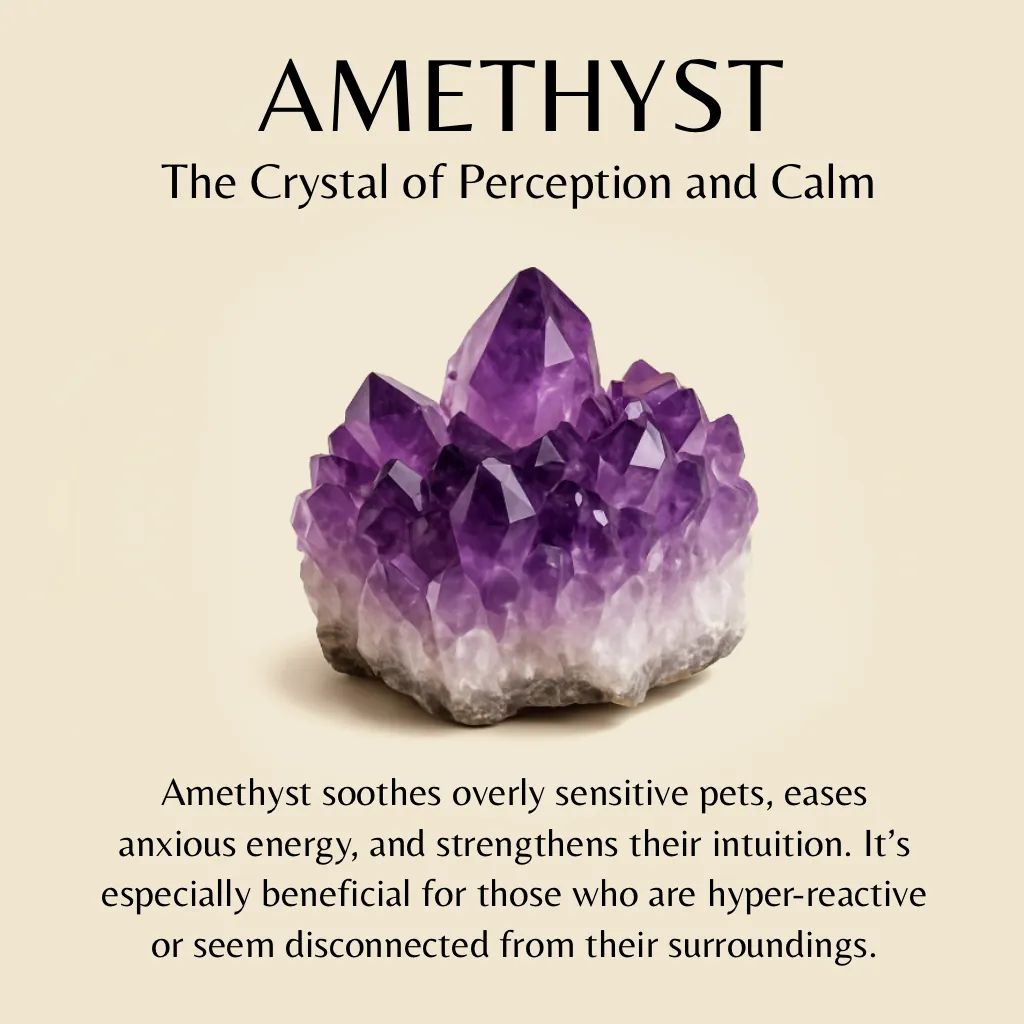
How are crystals formed? A crystal forms when atoms or molecules lock together in a neat, repeating pattern as a material turns solid. In nature this happens in three main ways: as molten rock (magma or lava) cools, as water carrying dissolved minerals cools or evaporates, and as existing rock is reworked by heat and pressure deep underground. The speed of cooling, the space available and the trace elements present decide how large a crystal grows and what colour it takes. This guide walks through each process, then shows how the seven natural stones on LuKra collars came to be.
What a crystal actually is
Most of the stones people call crystals are minerals. Geologists define a mineral as a naturally occurring, inorganic solid with a definite chemical composition and an ordered internal structure. That ordered structure is the crystal: the same small arrangement of atoms repeated over and over in three directions, like tiles laid across a floor.
You can see the pattern on the outside when a crystal has room to grow. Quartz grows as six-sided columns with pointed tips, salt grows as cubes, and aquamarine grows as long six-sided prisms. When crystals crowd together or grow very small, the outside shape is lost, but the ordered structure inside is still there.
Three ways crystals form in nature
1. From cooling magma and lava
Rock deep underground can melt into magma. As it cools, atoms slow down and begin to bond into crystal patterns. Cooling speed makes a visible difference: magma that cools slowly below the surface gives crystals time to grow large, while lava that cools quickly at the surface forms small crystals (geology.com). If it cools very fast, the atoms have no time to arrange themselves at all and the result is volcanic glass. Granite, with its visible grains, is a slow-cooled rock; obsidian is the fast-cooled glass.
2. From water rich in dissolved minerals
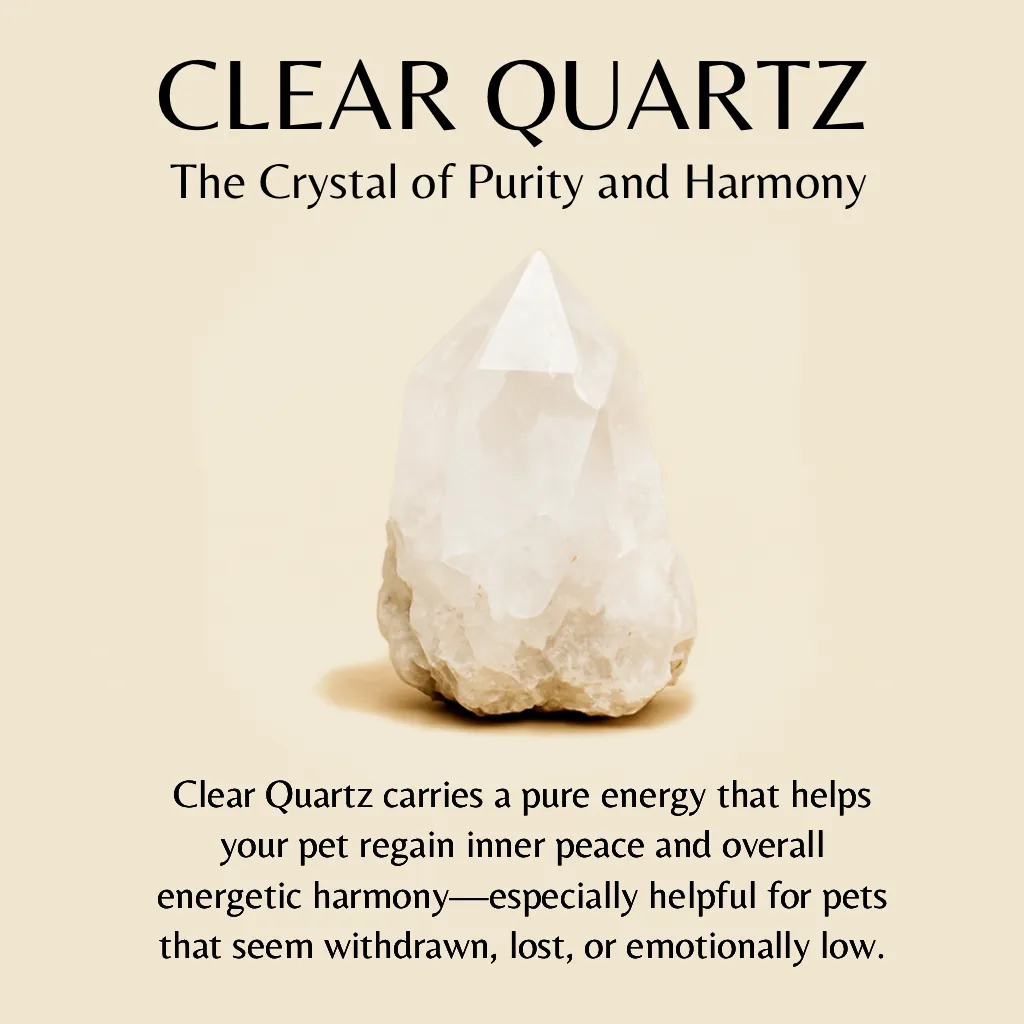
Hot water moving through cracks in rock can carry dissolved silica and other elements. As that water cools or its chemistry changes, minerals come out of solution and build crystals on the walls of the crack or cavity. Many quartz and amethyst crystals grow this way, lining veins and hollow pockets in rock. Agate forms in a similar setting: silica from groundwater is laid down layer by layer inside cavities, and each change in the water leaves a new band (geology.com on agate).
Evaporation works too. When seawater or salty lake water dries up, the dissolved salt is left behind as crystals of halite. Thick salt beds formed this way over long spans of time, and salt lakes such as the Great Salt Lake are still forming halite today.
3. From heat and pressure
Rock buried deep in the crust is squeezed and heated, often without melting. Under those conditions its minerals recrystallize: atoms rearrange into new, more stable crystals, and the rock’s texture and mineral make-up change. Geologists call the result metamorphic rock. Marble, which grows from limestone, and schist, which often glitters with mica flakes, are familiar examples.
How long do crystals take to form?
It depends on the process. Salt can crystallize from a drying puddle in days, and the same is true of sugar or salt crystals grown at home. Large mineral crystals in rock usually grow far more slowly, layer by layer, as the conditions around them change over long periods of geological time. As a rule, slow and steady conditions with open space produce the largest, clearest crystals, while fast cooling or crowded space produces many small ones.
Why crystals of the same mineral look different
Two stones of the same mineral can look quite unlike each other. Three things explain most of the difference:
- Trace elements. Tiny amounts of other elements change the colour. Amethyst is quartz that took in a little iron as it grew; natural radiation from the surrounding rock then turned that iron purple (geology.com on amethyst). Aquamarine is the mineral beryl coloured blue by traces of iron.
- Inclusions. Small grains or fibres of another mineral trapped inside a crystal add sparkle, sheen or pattern. Green aventurine owes its green glint to flakes of a chromium-rich mica called fuchsite (minerals.net).
- Growth conditions. Uneven growth leaves colour zones, and changing water chemistry leaves bands, as in agate.
This is why every natural stone on a LuKra collar or leash is slightly different from the next one. Our guide to natural stone colours shows the range you can expect.
How the seven LuKra stones formed
Here is where each stone offered on the LuKra Collar and the LuKra Leash comes from, in geological terms.
| Stone | What it is | How it forms | Where it is found |
|---|---|---|---|
| Clear quartz | Quartz (silica) | Grows from cooling magma and from silica-rich water in veins and cavities | Worldwide, in many rock types |
| Amethyst | Purple quartz | Quartz with traces of iron, coloured by natural radiation; often lines cavities in volcanic rock | Brazil, Uruguay, Zambia, Bolivia, Tanzania |
| Aquamarine | Blue beryl | Six-sided crystals, usually in granite pegmatites; blue from traces of iron | Brazil, plus Madagascar, Nigeria, Pakistan and others |
| Green aventurine | Quartz with fuchsite | Compact quartz holding fine flakes of green, chromium-rich mica | India, Brazil, Russia, Tanzania |
| Tiger’s eye | Quartz after crocidolite | Quartz gradually replaces fibrous crocidolite and keeps its fibres; iron stains it golden brown | South Africa (Northern Cape), Namibia, Australia |
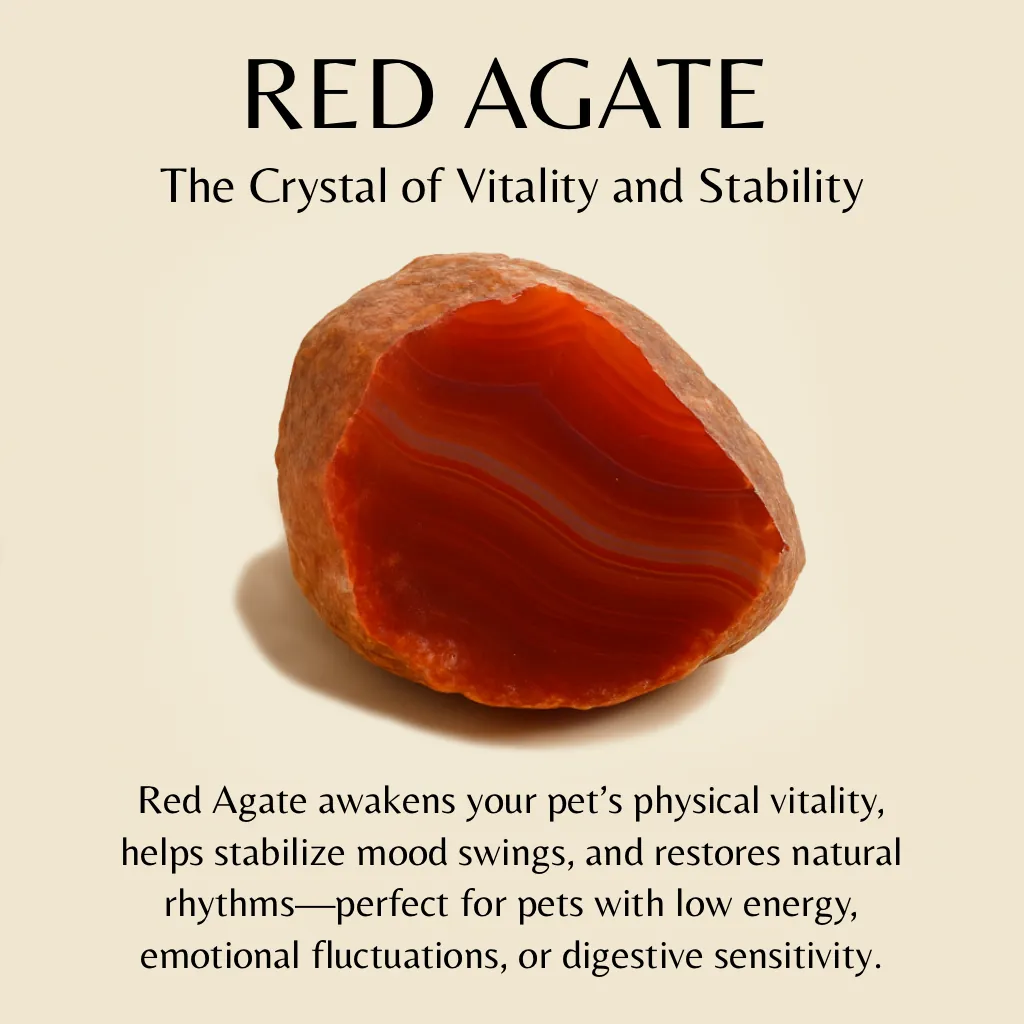
| Red agate | Banded microcrystalline quartz | Silica from groundwater deposited in layers inside cavities of volcanic rock | Many volcanic regions |
| Obsidian | Volcanic glass (not a crystal) | Lava that cools too fast for crystals to form | Areas of recent volcanic activity, such as the western United States |
Obsidian is the honest exception: it is a natural volcanic glass, called a mineraloid, with no crystal structure. Some obsidian slowly develops small white crystal clusters over time, which is how snowflake obsidian gets its spots (geology.com on obsidian).
Frequently asked questions
Are crystals and minerals the same thing?
Not exactly. A mineral is a natural, inorganic solid with a set chemical make-up and an ordered internal structure, and that ordered structure is a crystal. So nearly every mineral is crystalline, but crystals also form in things that are not minerals, such as sugar or snowflakes, and some stones sold as crystals, such as obsidian, are not crystalline at all.
Can crystals grow in a day?
Some can. Salt and sugar crystals grow within hours or days as a solution evaporates, which is why they make good kitchen experiments. The large, clear mineral crystals used in jewellery usually grow far more slowly in rock, over long periods, because steady conditions and open space are what allow big, well-shaped crystals to develop.
Is obsidian a crystal?
No. Obsidian is volcanic glass that formed when lava cooled so quickly that its atoms could not arrange themselves into a crystal pattern. Geologists call it a mineraloid. It is still a natural stone, which is why we include it among the seven stones on LuKra collars, and its glossy black surface polishes beautifully.
Why is amethyst purple when quartz is clear?
Amethyst is quartz that took in small amounts of iron while it grew. Natural radiation from the surrounding rock then changed that iron, producing the violet colour. Because iron is taken up unevenly, amethyst often shows lighter and darker zones. Clear quartz is the same mineral without that iron colouring.
How can I tell if a crystal is real?
Look for small natural inclusions and slight colour variation, feel whether the stone stays cool against your skin, and check for round air bubbles, which point to glass. Our guide to telling a real crystal from glass walks through each simple check, step by step.
How do I clean a crystal?
Wipe it with a soft, dry cloth. If it needs more, rinse it briefly in lukewarm water with a drop of mild soap and dry it straight away. Avoid harsh cleaners, ultrasonic machines and long soaks. On a collar, keep water off the leather. Our guide to cleaning the stone on your pet’s collar has the full routine.
See the stones up close
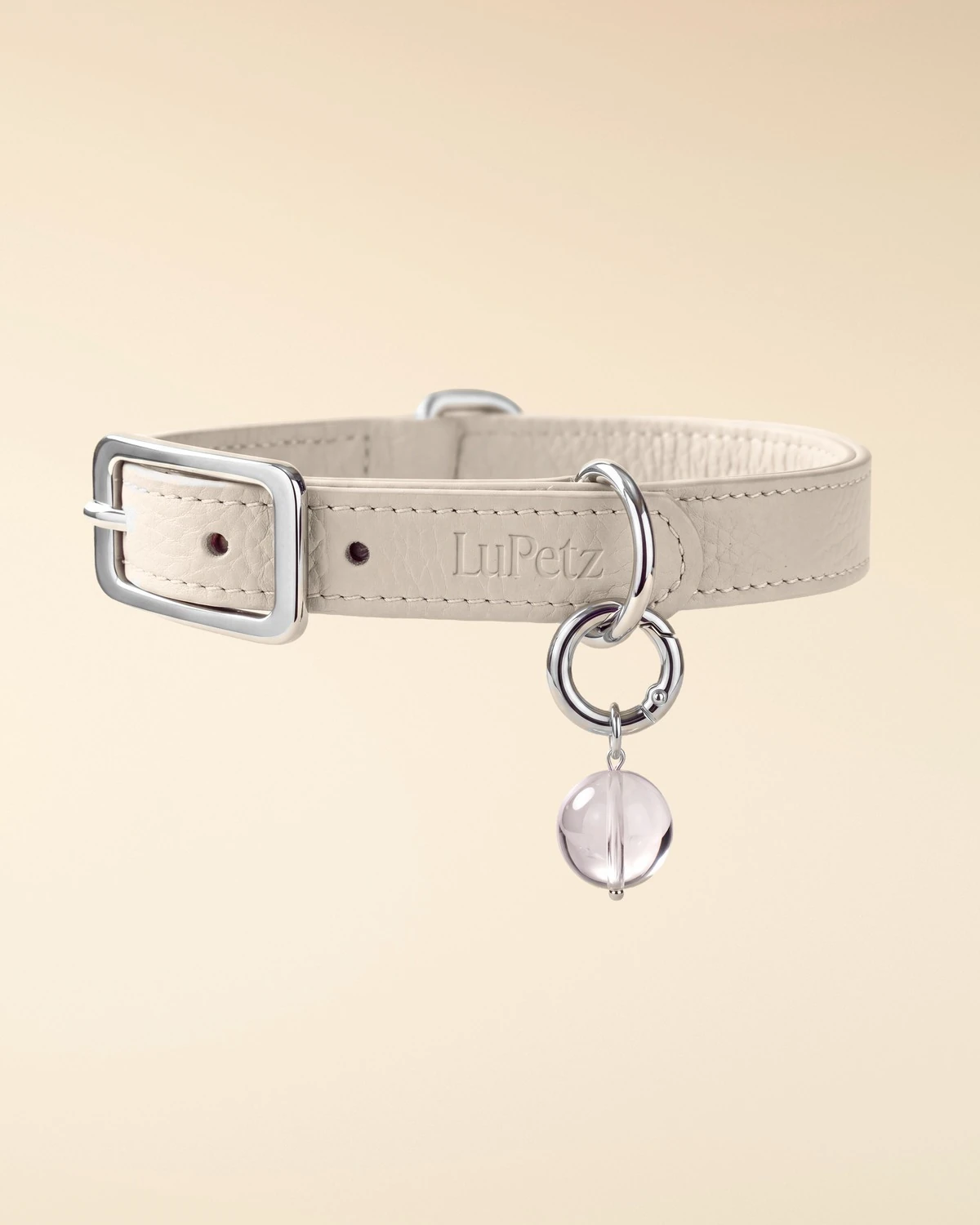
Each LuKra piece carries one natural stone, so its colour and pattern are its own. Browse the guide to the seven stones, then choose yours on the LuKra Collar.
More on Natural Stones
See all Crystals for Dog Collars: How to Choose a Natural Stone That LastsStart here: Natural Stones
 Seven Stones, Seven Colours: The Natural Stones on LuKra CollarsRead the guide
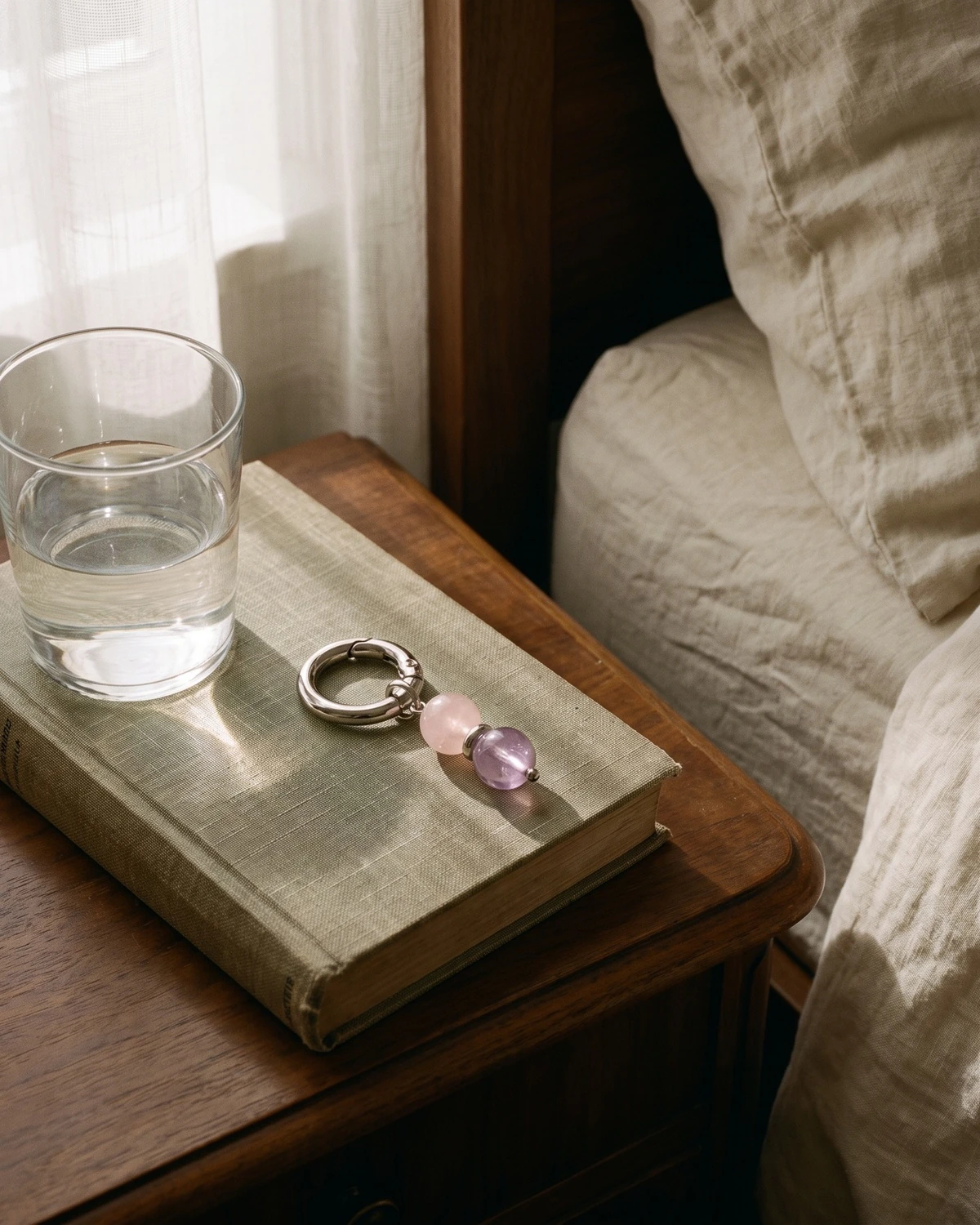 Rose Quartz for Pets: The Soft Pink Stone, ExplainedRead the guide
 How to Clean Crystals Safely: Stones on Your Pet’s CollarRead the guide
Also in this topicClear Quartz·Amethyst·Aquamarine·Green Aventurine·Tiger’s Eye·Red Agate·Obsidian·How to Tell if a Crystal Is Real (and if Amethyst Is Genuine)·Are Crystals Safe for Pets? A Practical Safety Guide·Crystal Collar for Cats: Fit, Safety and Supervision·Are Crystals Radioactive? What Pet Owners Should Know·Are Crystal Collars Magnetic? What Quartz Actually Does·Dog Swallowed a Crystal? What to Do Right Now·LuKra Collar