Collars
 Leashes
 Charms
What to Put on a Dog Tag: A Clear Guide to ID Tags
Put your phone number on your dog’s tag first: it is the one line that gets a lost dog home. After that, add your dog’s name, a second number or your city, and “Microchipped” or a medical note if it applies. Keep it to three or four short lines that someone can read at arm’s length, and update the tag the day your number changes.
What to put on a dog tag, in order of importance
Space is tight. The American Kennel Club notes that most tags hold only two to four lines of text, so choose what earns a line.
- Your mobile number. The single most useful thing on the tag. Use a number you answer, with the area code.
- A second number. A partner, a family member or your vet, in case you are out of reach.
- Your dog’s name. Most owners include it, so a finder can call your dog by name. Some leave it off out of caution; either choice is reasonable.
- “Microchipped”. One word that tells the finder a vet or shelter can scan your dog if the phone is not answered.
- A medical note. “Needs medication” or “Deaf” tells a finder to act quickly and gently.
- City or street. Useful if there is room. A full home address is a personal choice; your phone number does the main work.
A short line such as “Call my family” can replace a name if you prefer, but avoid jokes and decorations that crowd out the number.
Why a tag still matters if your dog is microchipped
A microchip is permanent, but nobody can read it without a scanner, and it only works if the registration is in your name and up to date. The AVMA’s microchip FAQ is plain about it: nothing replaces a collar with current ID tags. A neighbour who finds your dog can call the number on a tag in a minute, without a trip to a vet.
Lost dogs are common. In an ASPCA survey published in 2012, 15% of households had lost a dog or cat in the previous five years. Most dogs were found again, and a tag or chip was what brought some of them home. The survey is old, but the logic has not changed: a readable tag shortens the time a dog spends lost.
Choosing a tag that lasts
- Material. Stainless steel and solid brass keep engraving sharp for years. Painted or printed tags wear off quickly on an active dog.
- Engraving depth. Deep engraving stays readable after rain, swimming and rubbing against the ground. Check it once a year; replace a tag you have to squint at.
- Size and weight. Choose a tag in proportion to your dog. A heavy tag on a small dog swings, clinks and pulls at the collar.
- Noise. Two tags knocking together are loud. A single tag, a rubber silencer or a slide-on tag that sits flat on the collar keeps things quiet.
Where the tag goes on the collar
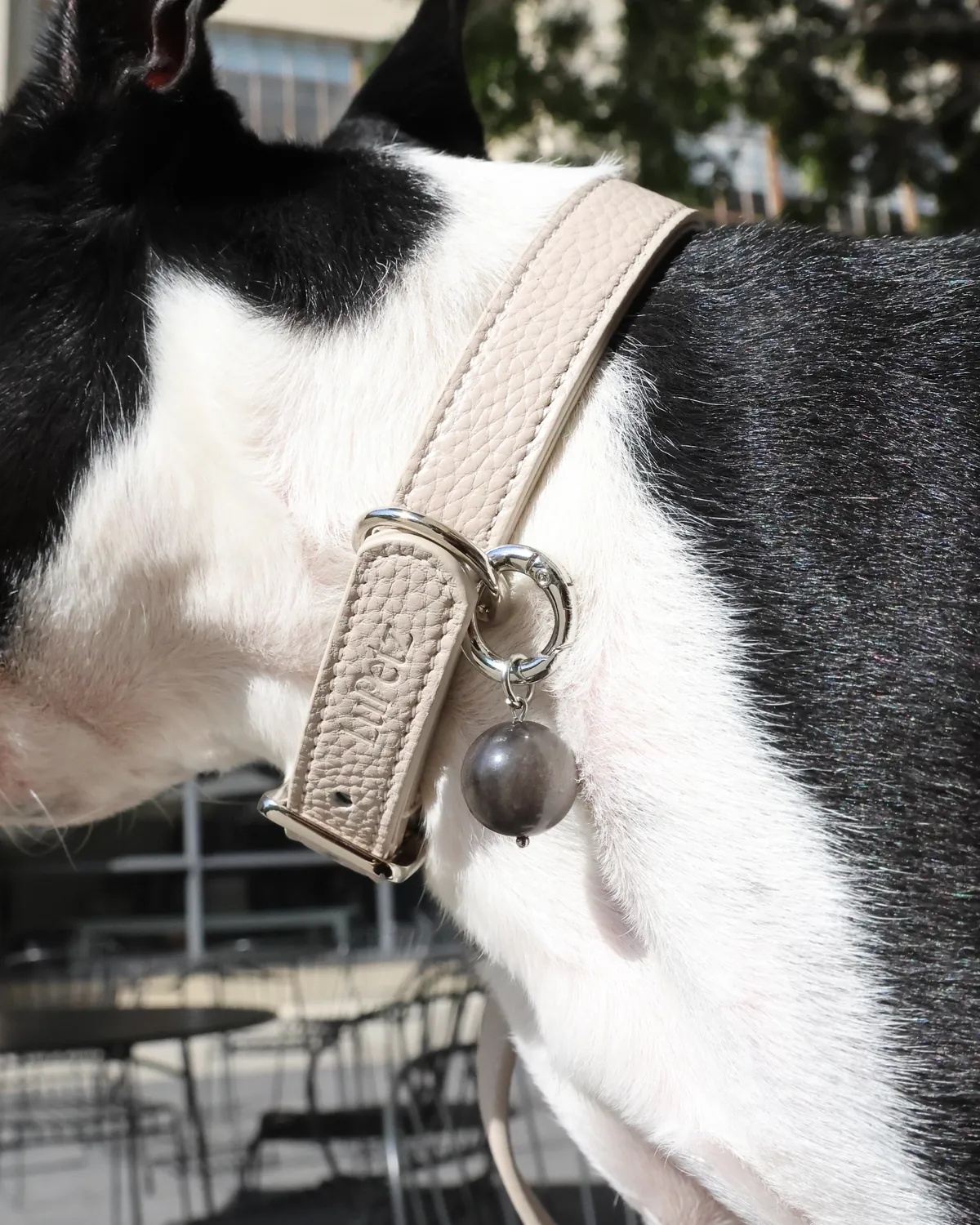
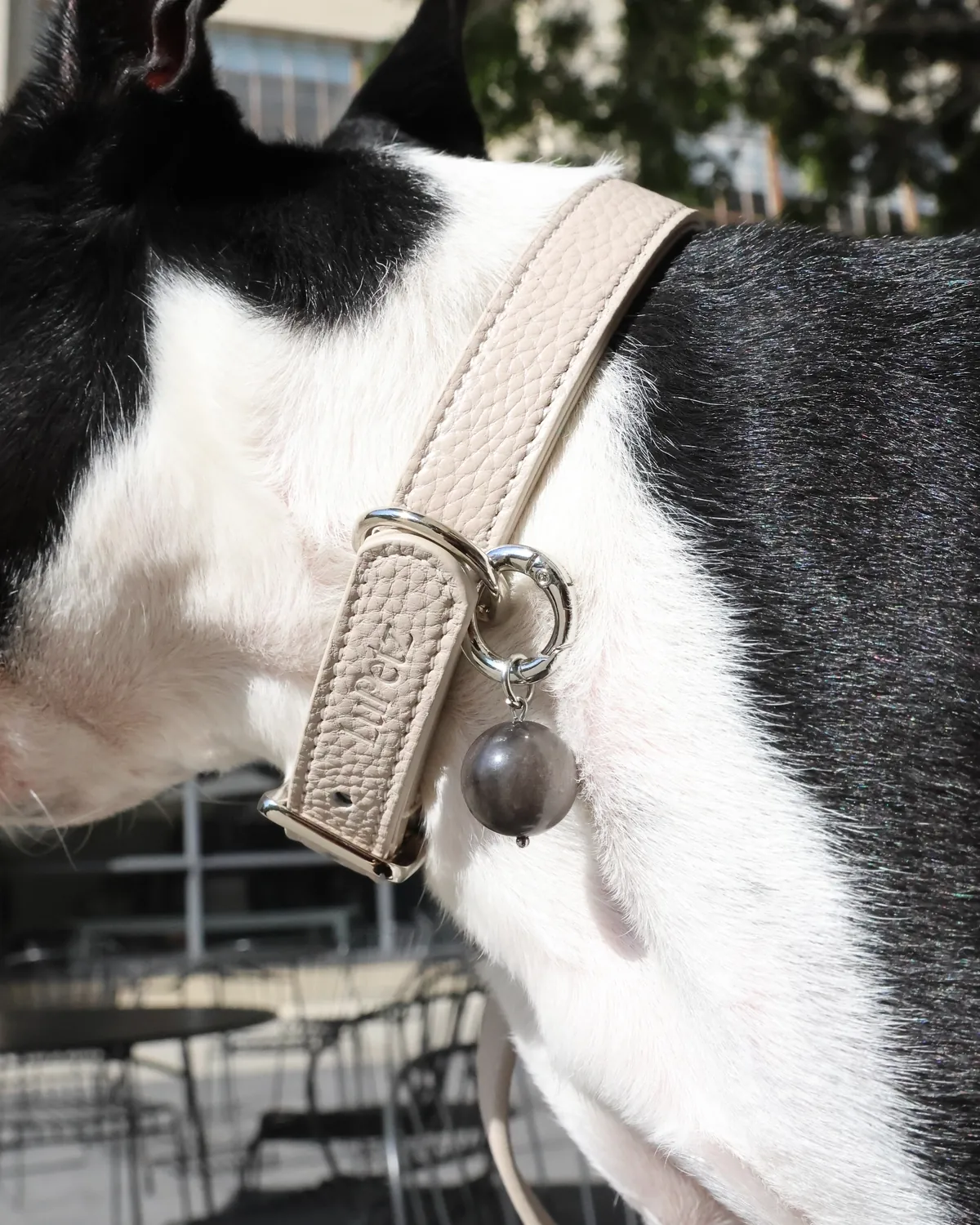
On most buckle collars the tag hangs from the metal ring near the buckle, the same ring the leash clips to on many designs. On the LuKra Collar, the buckle and ring are stainless steel, and a small natural stone already hangs from the ring as a quiet detail; a slim tag can sit beside it. If you prefer a cleaner look, a slide-on tag threads onto the leather strap and lies flat.
Whatever you hang from the collar, keep the fit right. You should be able to slide two fingers under the strap; our dog collar size chart shows how to measure. Tags, stones and charms must not be chewed or swallowed, so supervise play between dogs who like to mouth each other’s collars. And remember that the LuKra is a buckle collar, not a breakaway collar: take it off in the crate and when your dog is alone.
Keep the details current
Most tags fail quietly: the number changed, the engraving wore off or the tag fell off a split ring months ago. A short routine prevents that.
- Update the tag and the microchip registry the day you move or change your number.
- Check the chip registration once a year; the AVMA suggests August 15, Check the Chip Day, as an easy date to remember.
- Look at the tag and the ring whenever you clean the collar. Our guide to cleaning a leather dog collar fits naturally into the same five minutes.

Frequently asked questions
Should I put my dog’s name on the tag?
Most owners do, because it helps a finder calm and call the dog. If you would rather not, use your phone number and a line such as “Microchipped” instead.
Should my address be on a dog tag?
It is optional. A phone number is enough for most finders; a city or street helps if your dog is found nearby and your phone is off.
Does my dog need a tag if it is microchipped?
Yes. A chip needs a scanner and an up-to-date registration. A tag can be read by anyone, right away.
How often should I replace a dog tag?
Whenever your details change or the engraving is hard to read at arm’s length. A quick look once a year, when you check the microchip registration, is enough for most dogs.
A collar worth wearing every day
The best ID tag is one that is always on. If you are choosing the collar it hangs from, look at the LuPetz collars in Italian full-grain leather, or pair one with the matching LuKra Leash for a set that ships free in the US.