Collars
 Leashes
 Charms
When Can a Puppy Wear a Collar? A Calm First-Collar Guide
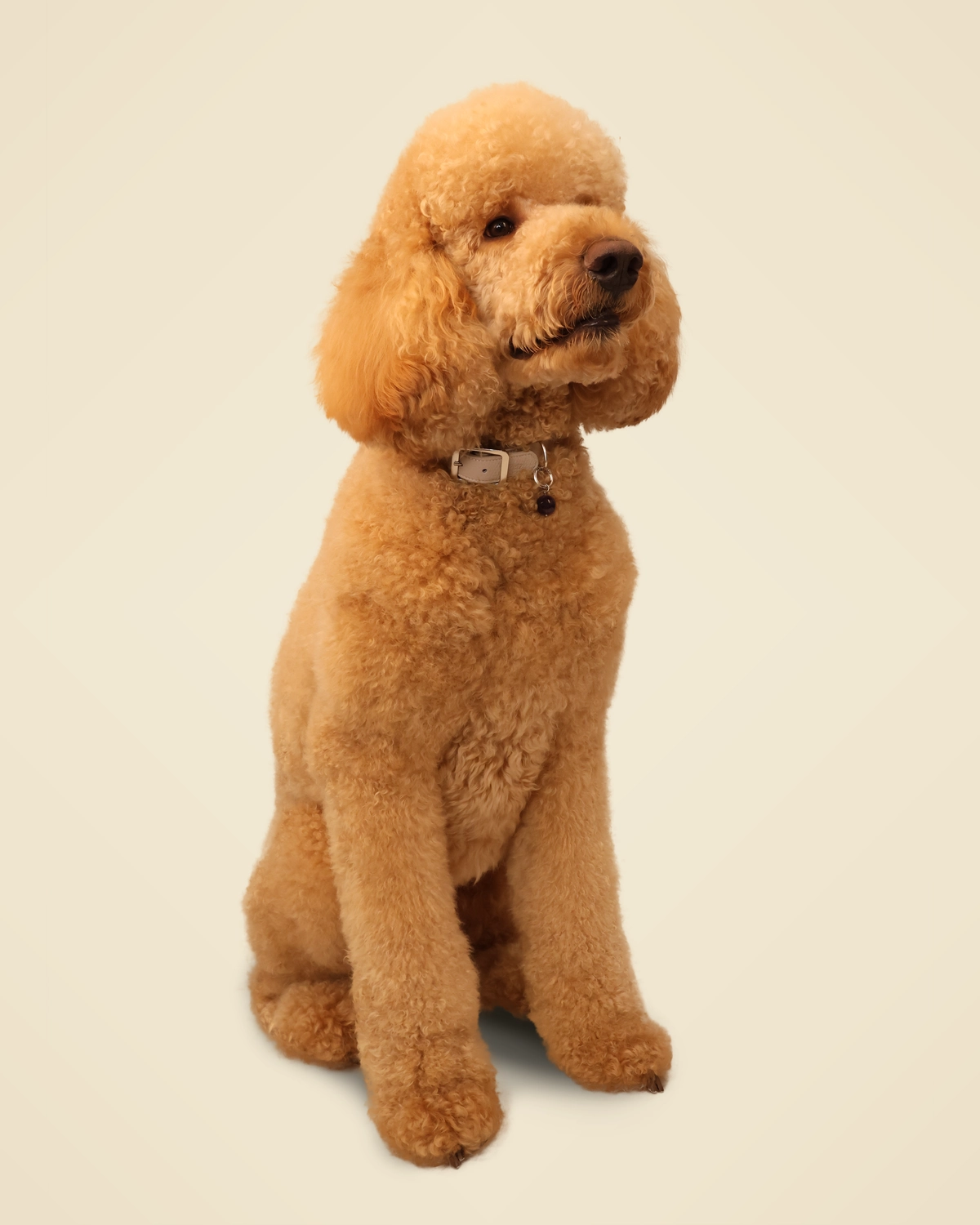
A puppy can start wearing a light, well-fitted collar from the day it comes home, which for most puppies is around eight weeks old. The collar itself is rarely the problem. What matters is how you introduce it: a few short, happy minutes at a time, a fit you check every week while the puppy grows, and a clear rule that the collar comes off when nobody is watching.
Below is the calm way we would do it, from the first sniff to the first walk.
When can a puppy wear a collar?
There is no single birthday that unlocks a collar. Trainers at Rover’s collar training guide suggest starting around eight weeks, and the American Kennel Club notes that leash training can begin as soon as the puppy is home, even before vaccinations are finished. In practice that means the collar arrives with the puppy.
Two things are worth knowing before you buy. First, puppies grow fast, so the first collar is often a temporary one. Second, for walking a young puppy who still pulls, many vets and trainers prefer a harness so that no pressure lands on the neck. The AKC puts it simply: “A harness is generally a better option for puppies.” A collar still has a job, though. It holds the ID tag and gives you something gentle to hold at the door.
Choosing the first collar
For a young puppy, choose a flat collar that is light, soft at the edges and easy to adjust. Skip anything heavy, stiff or decorated with loose parts that a curious mouth can find.
- Flat, not corrective. A plain buckle collar is the usual first choice. Prong and shock collars have no place in early training.
- Light enough to forget. A small puppy should barely notice the weight once the novelty wears off.
- Adjustable within the right range. Measure the neck with a soft tape and check our dog collar size chart before you order. Our guide to dog collar width covers how wide the strap should be for small and large breeds.
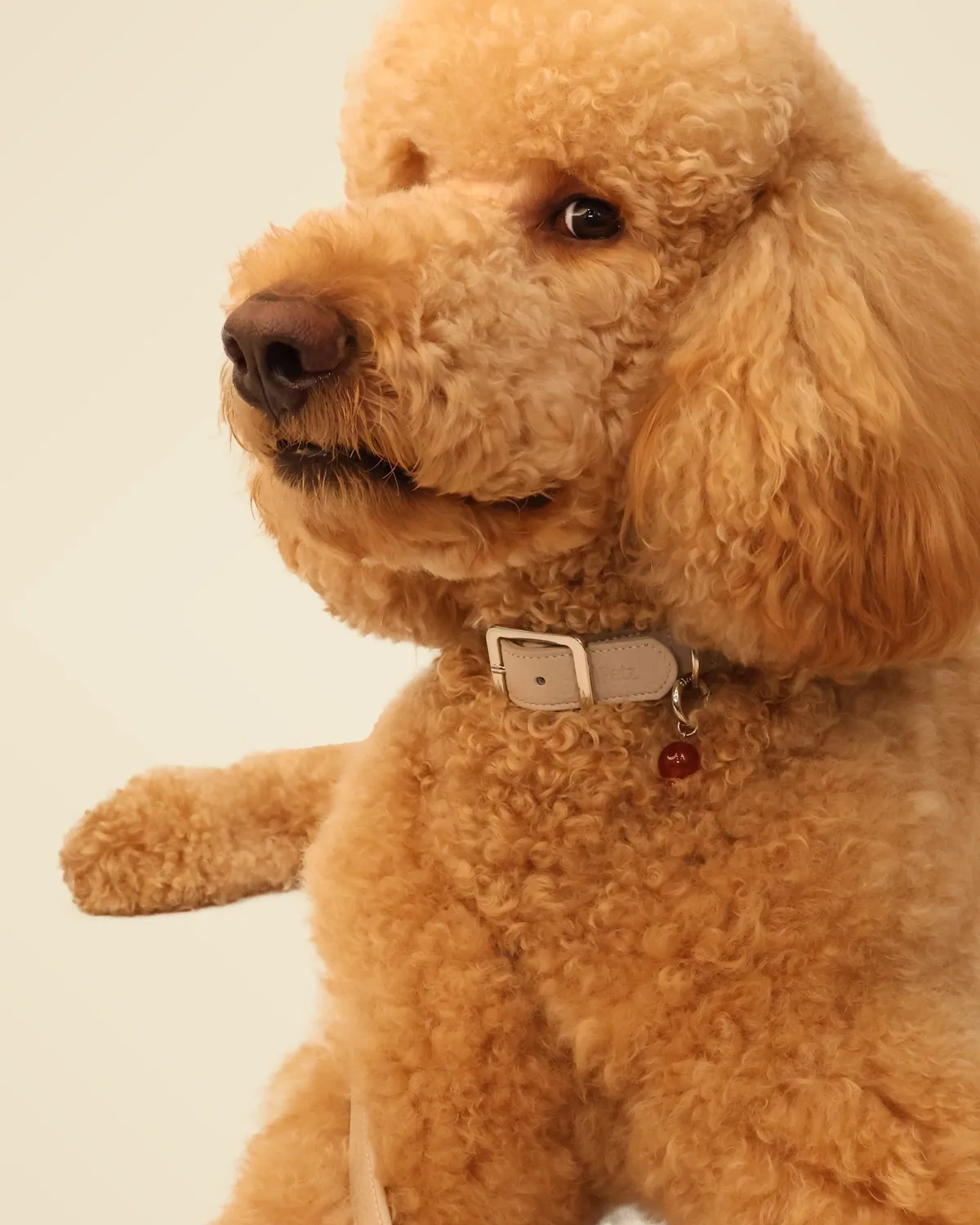
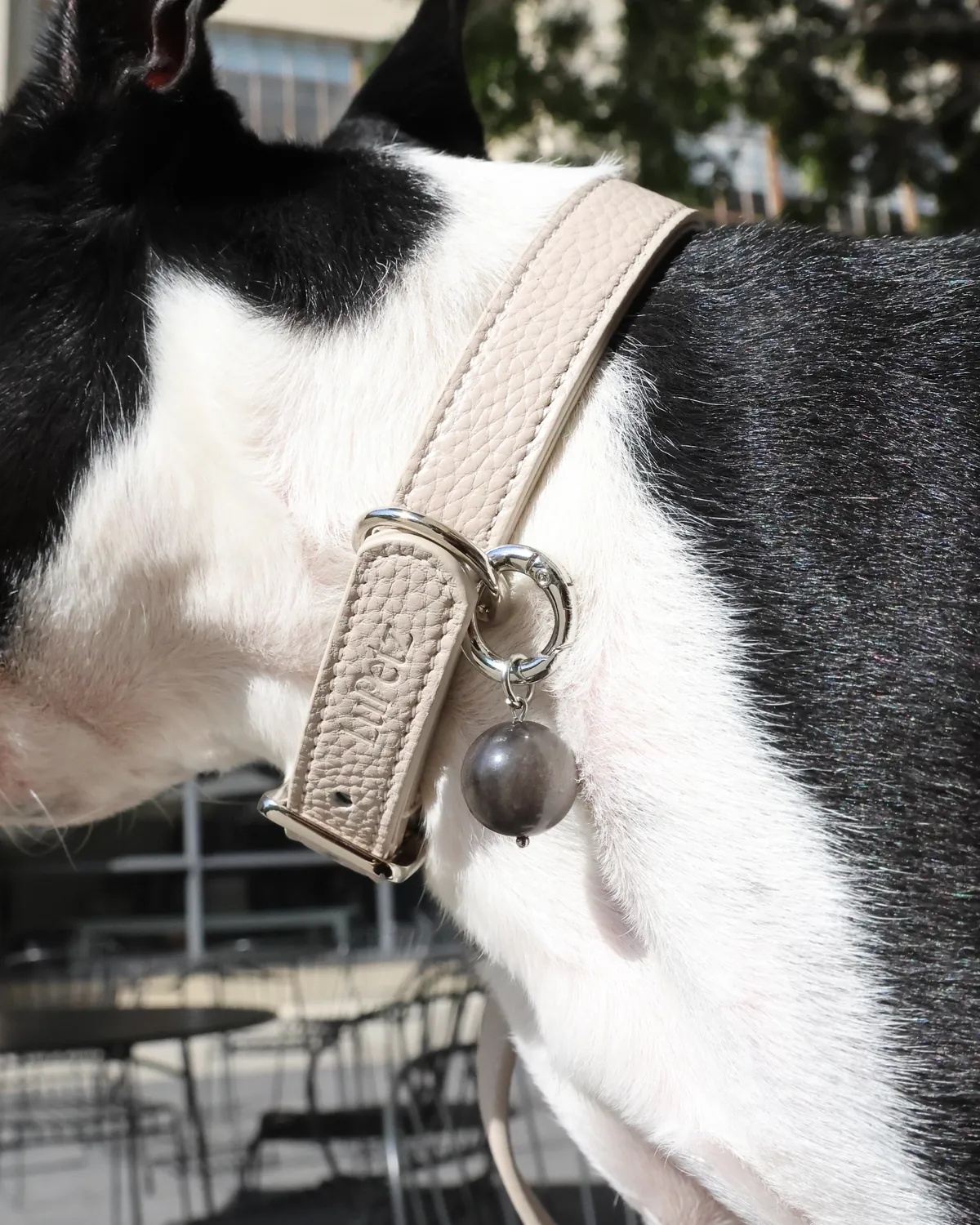
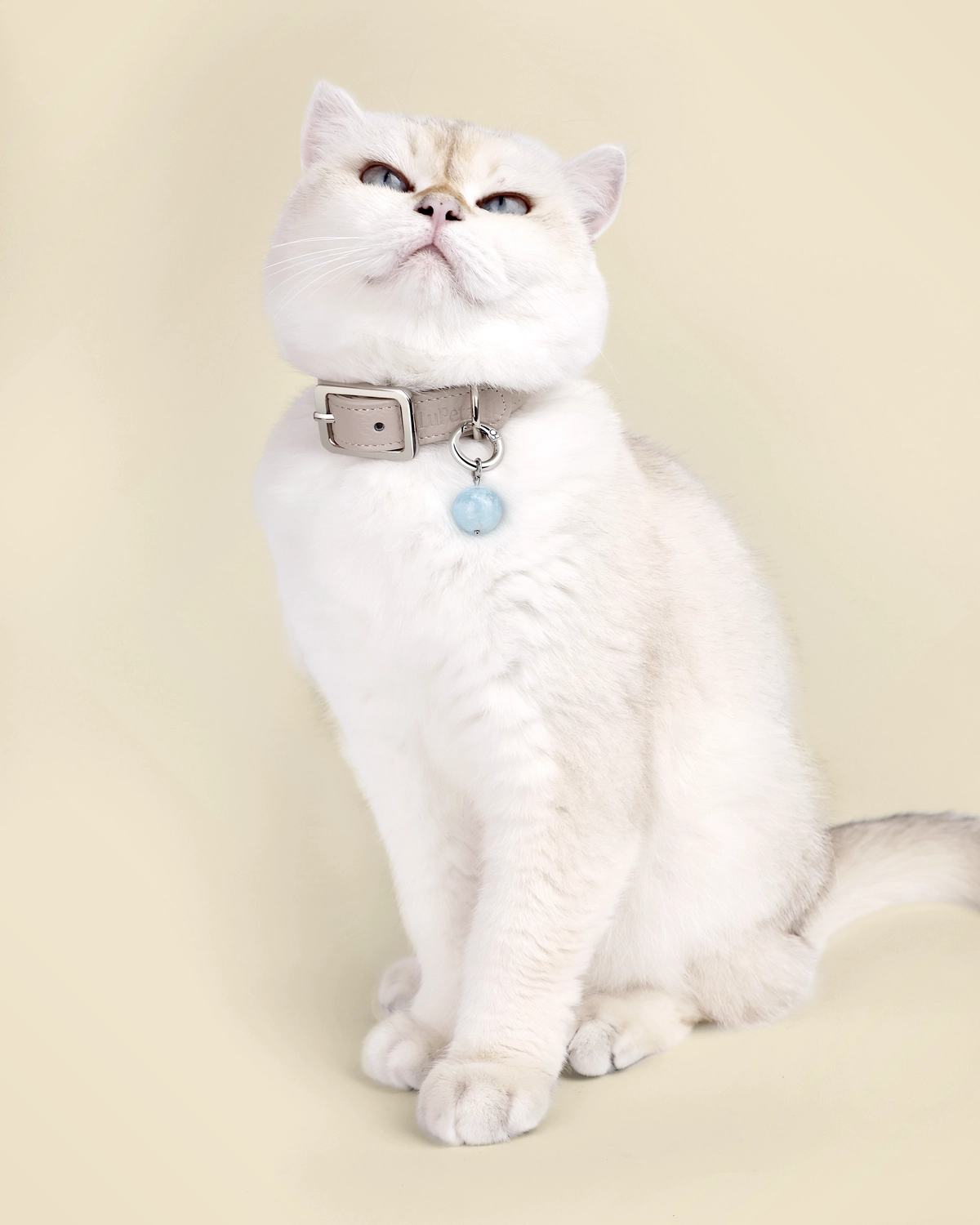
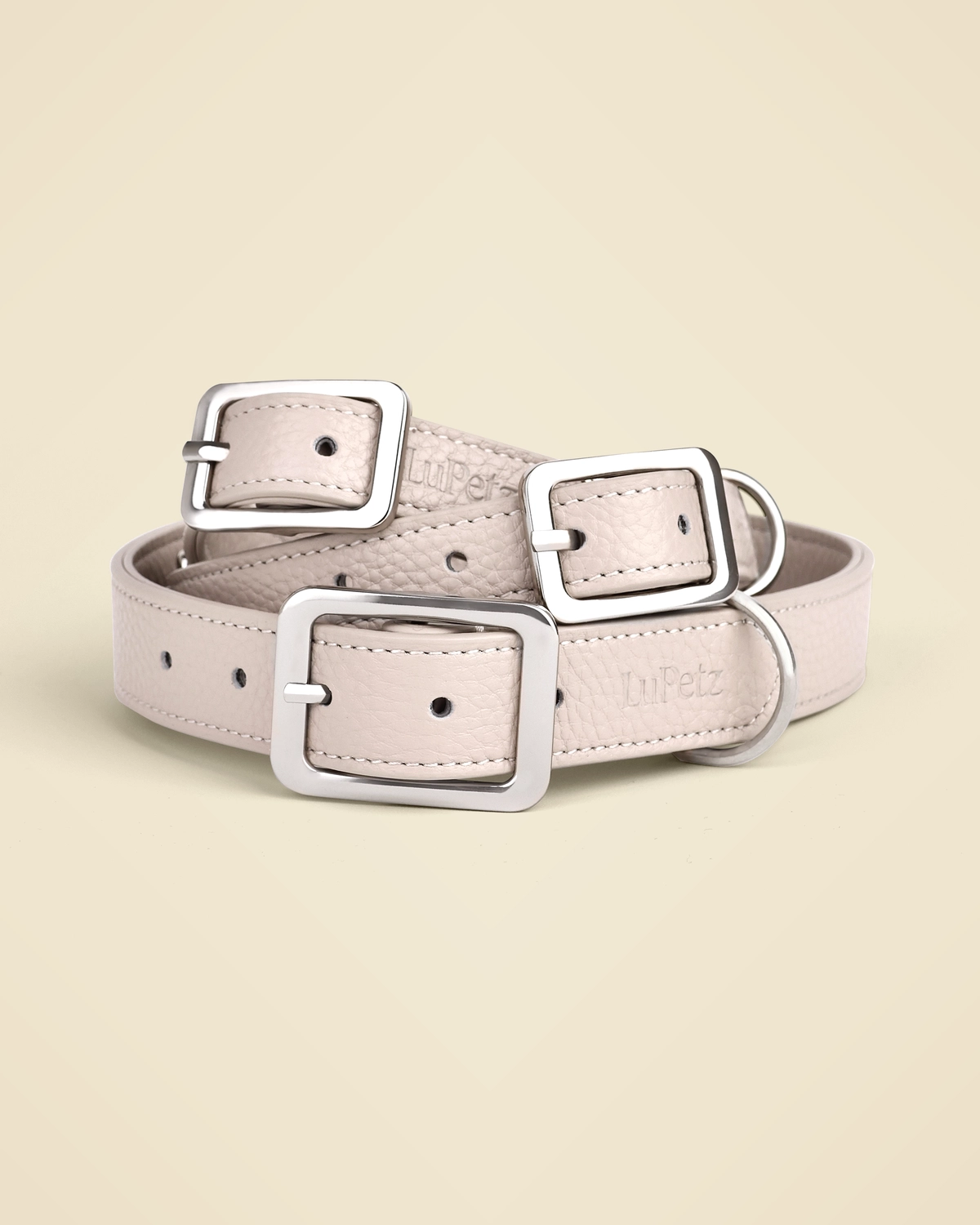
When does a leather collar make sense? Once the neck sits comfortably inside a size range and growth has slowed, a good leather collar is a pleasant upgrade: it softens with wear, keeps its shape and looks better every month. Our LuKra Collar comes in three sizes, and size S fits necks from 20 to 29 cm (about 8 to 11.5 in), which suits many small breeds and growing puppies of medium breeds for a while.
How to get a puppy used to a collar, step by step
Keep every session short and end before your puppy gets bored or frustrated. A few minutes, a few times a day, works better than one long attempt.
- Let them meet it. Put the collar on the floor during play. Let your puppy sniff it, and reward any calm interest with a small treat.
- Touch, then treat. Hold the collar against the neck for a second without fastening it. Treat. Repeat until your puppy looks at you for the treat rather than at the collar.
- Fasten it for a moment. Buckle it, give a treat or start a game straight away, then take it off after a minute or two while things are still good.
- Stretch the time. Over the next days, leave it on during meals, play and training, the moments your puppy already enjoys.
- Add the leash indoors. Clip a light leash on and let it trail while you supervise, then pick it up and follow your puppy around the room. Our puppy leash training guide takes it from there.
Some scratching at the collar during the first days is normal. Distract with a toy rather than taking it off mid-scratch, so your puppy does not learn that scratching makes the collar disappear. If the scratching continues, check the fit and look at the skin under the collar.
Fit and safety while your puppy grows
Fit is where puppy collars go wrong, because the neck you measured last month is not the neck you have today.
- The two-finger check. You should be able to slide two flat fingers under the collar, no more. Looser, and a puppy can back out of it. Tighter, and it will rub.
- Check weekly. Run the two-finger check every week while your puppy is growing, and move up a hole or a size as soon as it feels snug.
- Off when unsupervised. Take the collar off in the crate, at night and whenever your puppy is alone, so it cannot snag on furniture or crate wire. Our LuKra is a buckle collar, not a breakaway collar, so this rule applies to it too.
- Nothing to chew. Puppies chew whatever they can reach, including a friend’s collar during play. Charms, stones and tags must never be chewed or swallowed, so supervise play and remove any charm if your puppy starts mouthing it.
Add an ID tag early
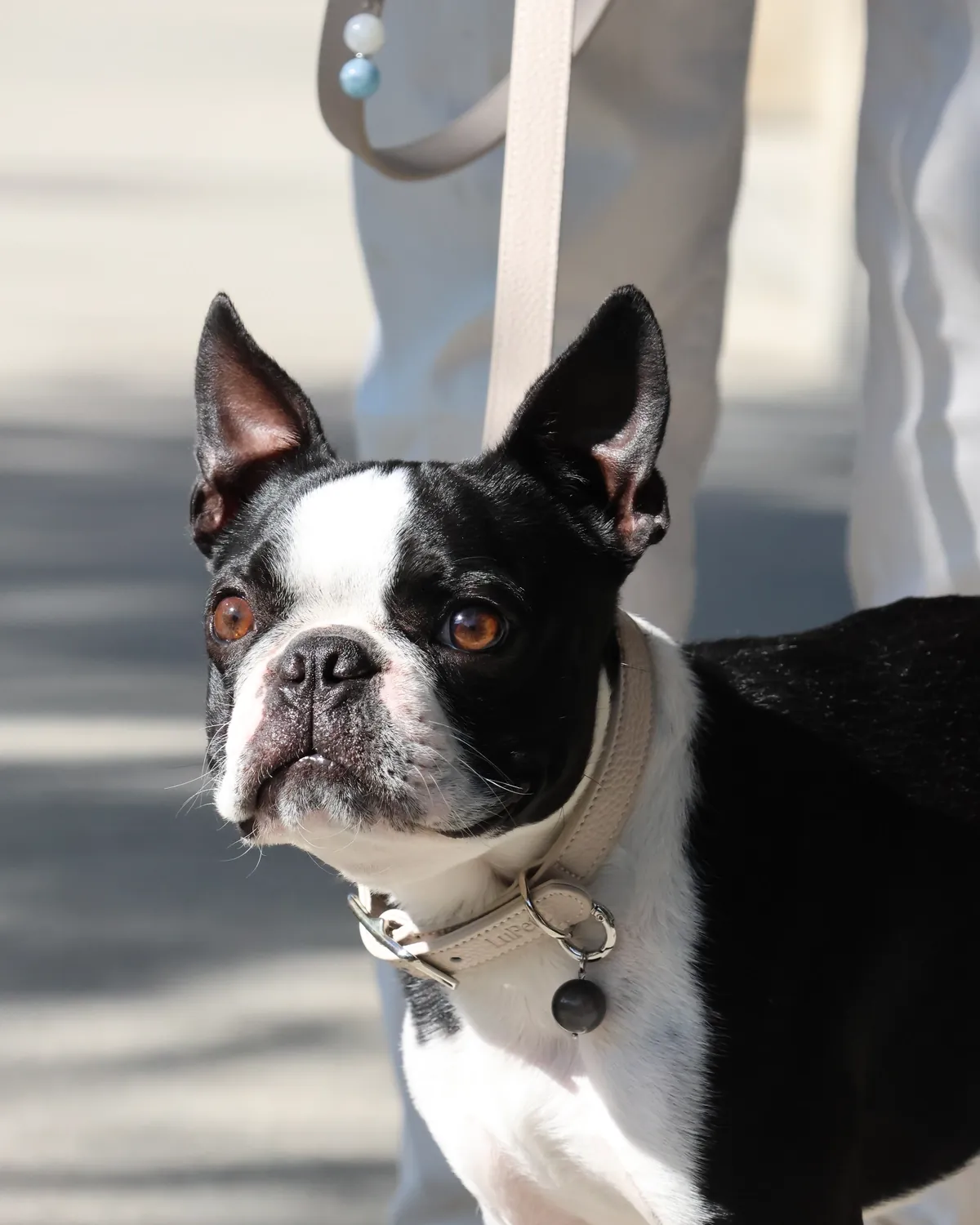
A collar earns its place by carrying identification. Add a tag with your phone number as soon as your puppy wears the collar for longer stretches, and register the microchip in your name. The AVMA’s microchip FAQ is clear that a chip does not replace a collar with up-to-date tags; the two work together. Keep the tag small and quiet so it does not bother a young puppy.
Frequently asked questions
Can a puppy wear a collar at 8 weeks?
Yes. A light, flat collar fitted with the two-finger check is fine at eight weeks, as long as you introduce it in short sessions and take it off when your puppy is unsupervised.
Should my puppy sleep with a collar on?
We would take it off at night and in the crate. A collar can catch on crate wire or bedding, and your puppy does not need it while sleeping at home.
Collar or harness for a puppy?
Often both. A harness is kinder for early walks with a puppy who pulls; a collar carries the ID tag. Once your dog walks calmly, many owners walk on the collar alone.
How long does it take a puppy to get used to a collar?
Some puppies ignore it within minutes, others need a few days of short sessions. Go at your puppy’s pace and keep every session pleasant.
Ready for the next collar?
When your puppy has settled into a size and walks well, take a look at the LuPetz collars: Italian full-grain leather, lined in the same leather and stitched by hand. Not sure which colour suits your dog? Our short quiz helps you choose.