Collars
 Leashes
 Charms
How to Get a Cat Used to a Collar: A Patient Step-by-Step
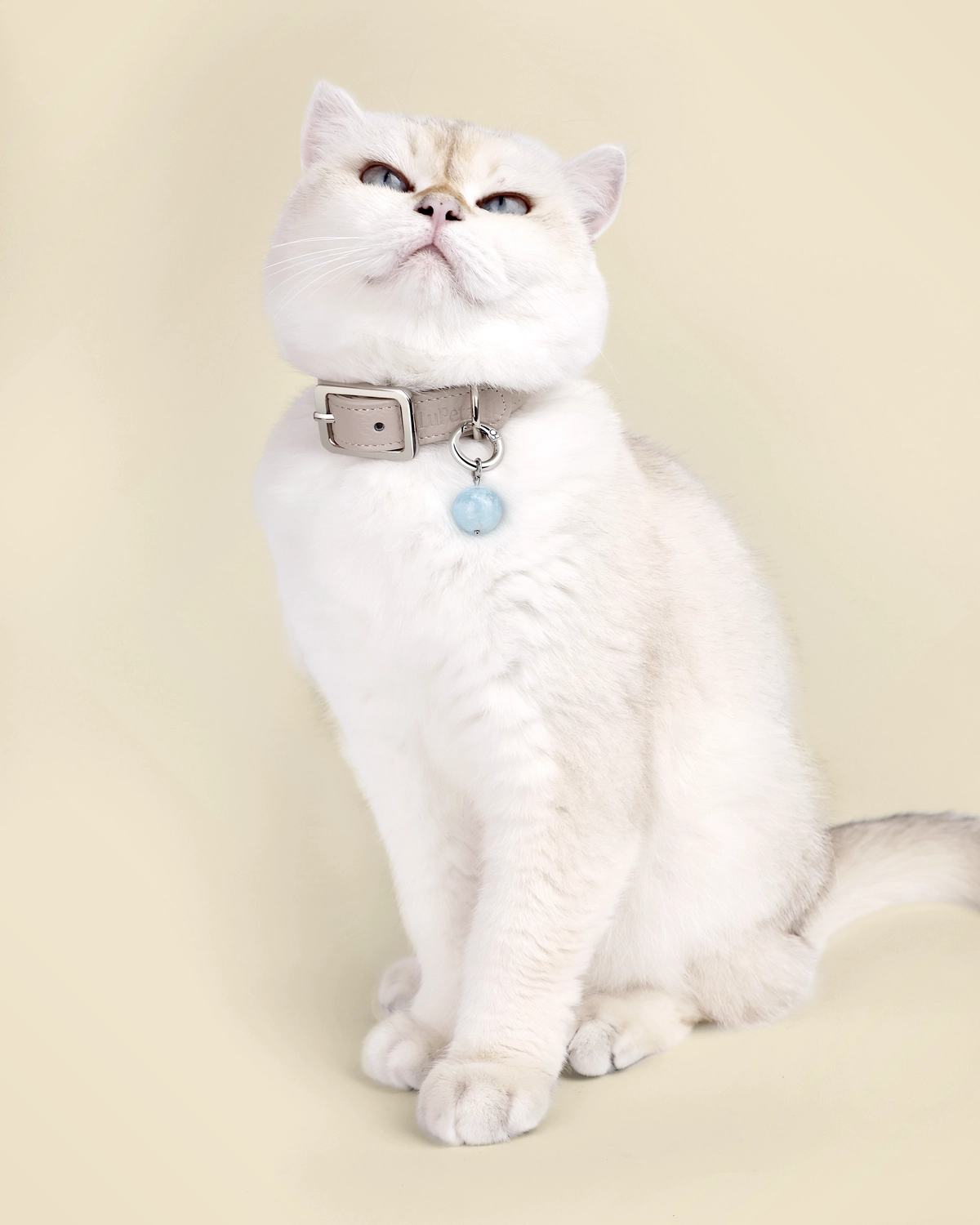
To get a cat used to a collar, go slowly and let the cat set the pace: leave the collar near their bed so it smells familiar, put it on for a few minutes during a meal or a game, and lengthen the time a little each day. Give it a week or two of short sessions; some cats need longer. Fit it with the two-finger check and, for any time your cat is alone or outdoors, use a collar that releases if it catches.
Before you start: which collar, and when
Cats are not small dogs. They squeeze through gaps, climb and jump, and a collar can catch on a branch or a fence. That is why International Cat Care recommends a collar with a quick-release or snap-open buckle for any cat that roams, and advises against collars with elastic inserts.
Our LuKra Collar is a buckle collar in Italian full-grain leather, not a breakaway collar. We think it is lovely on a cat, and many indoor cats wear one for photos, visitors and quiet evenings at home. But be honest about your cat’s life: a leather buckle collar is for time when you are there to see your cat, and it comes off when your cat is alone or goes outside. Our guide on whether leather collars are good for cats goes into this in more detail.
Pick a calm moment. A cat who has just come back from the vet or is hiding from guests will not welcome anything new around the neck.
How to get a cat used to a collar in five steps
- Make it smell like home. Leave the collar on the floor and near your cat’s bed for a day or two. Stroke your cat’s cheeks with a soft cloth and then rub the collar with it, so it carries a familiar scent, a trick the Ontario SPCA also suggests.
- Pair it with something good. Put the collar on just before a meal, a favourite treat or a play session. The first wear can be as short as a minute.
- Take it off before they mind. Remove the collar while your cat is still relaxed. Ending on a calm note is the whole point.
- Add a little time each day. Five minutes, then ten, then the length of an evening. If your cat freezes, flattens or walks backwards, go back a step.
- Recheck the fit. Cats often tense their neck when a collar first goes on. Check again after a few minutes and adjust.
Getting the fit right
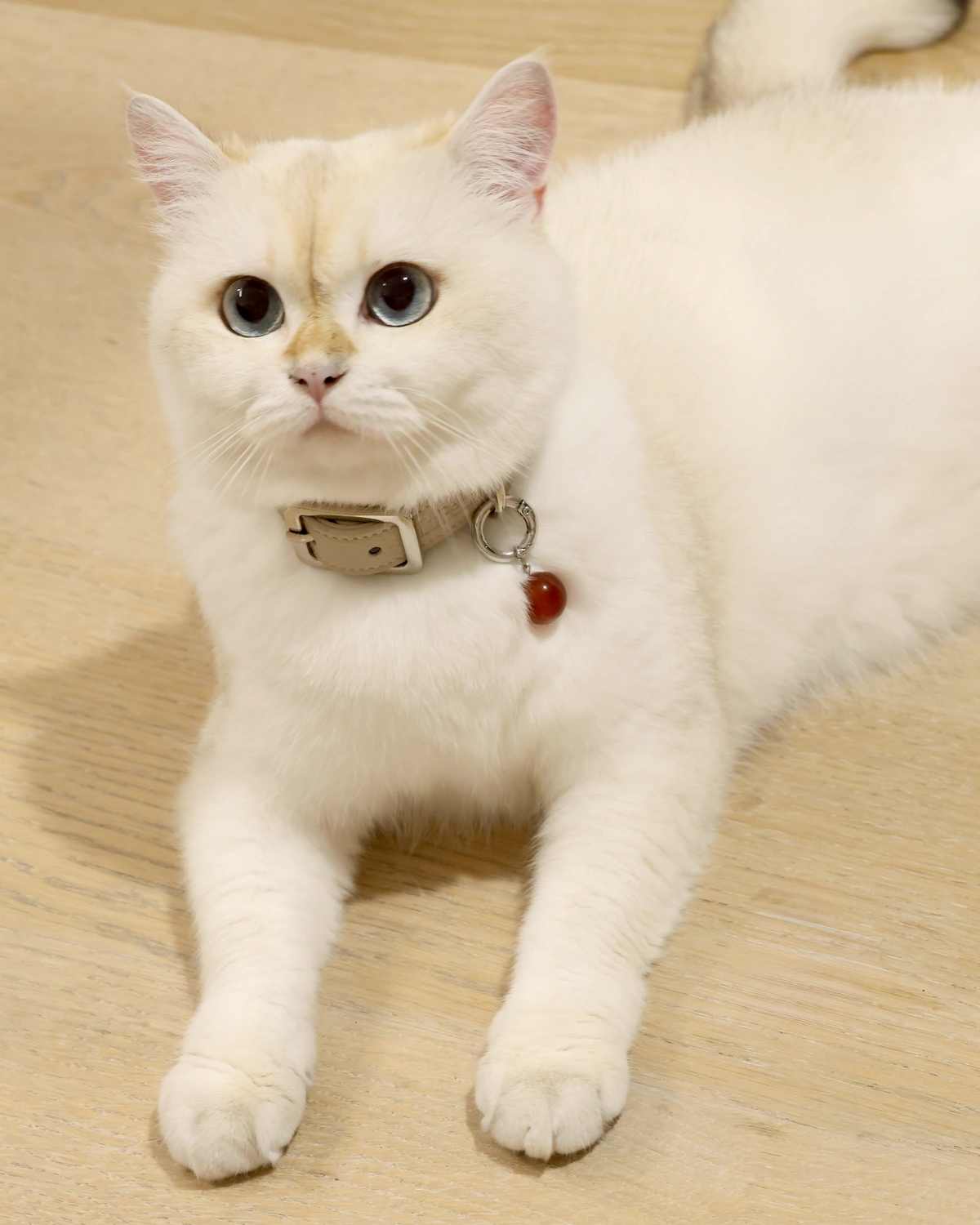
A cat collar should be snug enough not to slip over the head and loose enough for one or two flat fingers underneath. Too loose is as risky as too tight: a loose collar is how a front leg or the jaw ends up caught under the strap, one of the risks International Cat Care describes.
- Measure the neck with a soft tape where the collar will sit, then add a finger’s width. Our collar size chart shows how to measure; the method is the same for cats.
- LuKra size S fits necks from 20 to 29 cm (about 8 to 11.5 in); measure your cat to be sure.
- Check the fit every week for the first month, and after any change in weight or coat.
- Look at the skin and fur under the collar now and then for rubbing or thinning.
What to expect in the first days
Almost every cat does something odd the first time: scratching at the collar, walking low, rolling over or sitting very still. Usually this fades within a few sessions. Distract with a toy or a treat rather than rushing to take the collar off, so your cat does not learn that fussing removes it.
Kittens adapt faster than adult cats, but older cats get there too with shorter steps. If your cat is still distressed after a couple of weeks, stop and talk to your vet; some cats are simply better without a collar, and a registered microchip covers identification on its own.
Tags, charms and safety
If the collar is there for identification, add a small, light tag with your phone number. The AVMA recommends a collar with current tags as well as a registered microchip, because a collar can come off.
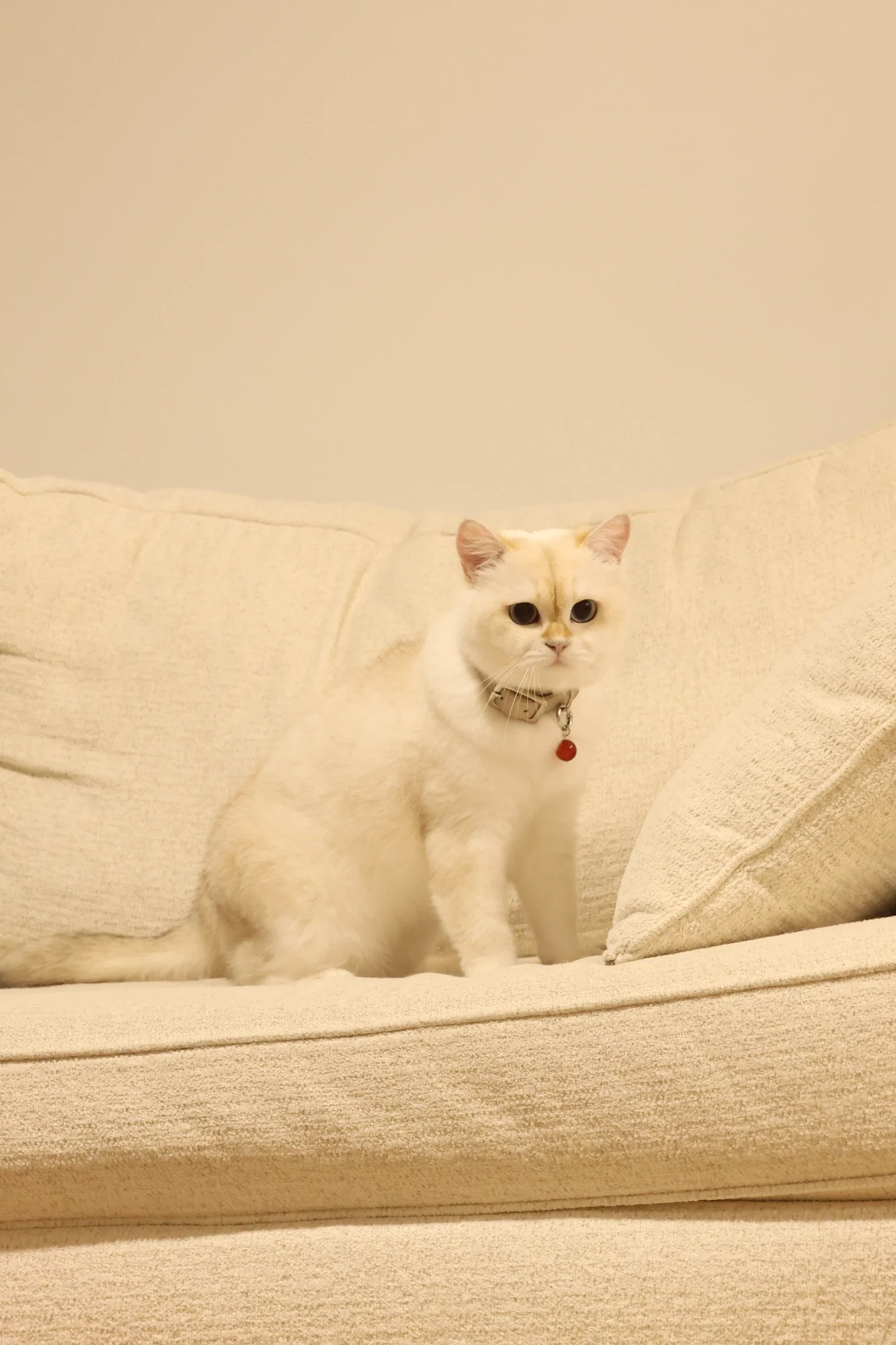
Keep anything that hangs from the collar small and secure. The natural stone on a LuKra Collar is a decorative detail, like a piece of jewellery; it must never be chewed or swallowed, so supervise your cat while it wears the collar and take the collar off if your cat starts mouthing the stone. Our guide to stone collars for cats covers fit and supervision in more detail.
Frequently asked questions
How long does it take a cat to get used to a collar?
Plan on a week or two of short, daily sessions. Kittens are often quicker; some adult cats need longer, and that is fine.
Should my indoor cat wear a collar?
It is your choice. A registered microchip is the most reliable identification. A collar with a tag helps if an indoor cat slips out the door, and a leather collar can simply be worn for the pleasure of it while you are home.
Can a cat sleep with a collar on?
A quick-release collar can stay on. A buckle collar, including the LuKra, should come off when you are not there to see your cat, overnight included.
My cat keeps scratching the collar. What should I do?
Check that you can fit one or two fingers under it and that nothing rubs. Then shorten the sessions and pair them with food or play again.
A collar worth getting used to
If your cat is ready for something more considered than a nylon strap, see the LuPetz collars: Italian full-grain leather, lined in the same leather, edges stitched by hand. Or take our quick quiz to find the colour that suits your cat’s coat.