 Collars
 Leashes
 Charms
How to Choose a Leather Dog Collar: Checklist and Brands
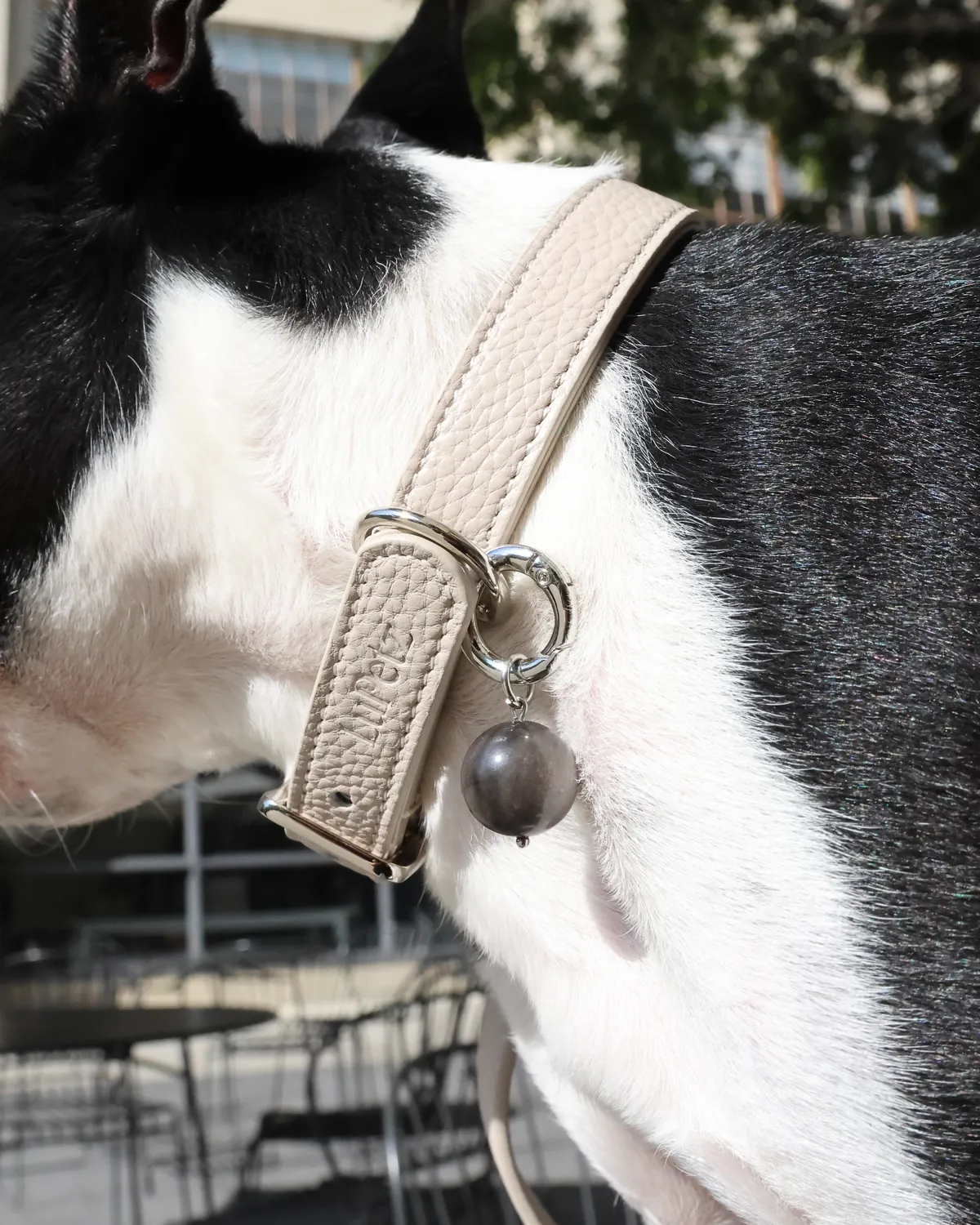
How to choose a leather dog collar comes down to six checks: full-grain leather, a leather lining or a smooth underside, sealed edges with even stitching, solid hardware that will not rust, a width in proportion to your dog, and a fit with two fingers of room underneath. Everything beyond that is taste. Below we explain each check, compare what several leather collar makers publish, and say plainly when leather is not the right choice. We make leather collars ourselves, and we say so where our own collar comes up.
Start with the leather grade
When people search for the best leather dog collar, what they usually need is a way to tell good leather from a good-sounding label, because several labels sound like quality claims and are not. A clear reference is the Leather Working Group’s list of leather definitions, which follows the international ISO, UNECE and CEN terms.
Full-grain leather
The Leather Working Group defines full grain as leather that has kept its entire grain, with none of the surface removed by corrective sanding or buffing. The grain is the outer surface of the hide, with its natural pores and small variations. Look for it in a collar worn every day.
Top-grain and corrected-grain leather
Corrected grain, in the same list, is leather whose grain has been partly buffed away and then improved with a finish. In shops, “top grain” often means leather like this: the grain layer, sanded smooth and refinished. It looks very even, but part of the original surface is gone and the finish does more of the work.
Split leather, “genuine leather” and bonded leather
A hide can be divided into layers; leather from the lower layers, without the grain surface, is split leather or suede. “Genuine leather” is not a grade in the Leather Working Group’s list at all: it tells you the item is leather, not which layer it came from. Bonded leather is shredded leather fiber bound back into a sheet, and the FTC’s guides for leather products say it should not be represented as leather. A collar bends around a neck all day; it is not a job for reconstituted material.
One note on texture: an embossed pattern is pressed into the surface, which is not the same as sanding the grain away. Judge the grade by what the maker states, not by texture alone, and ask if it is not stated.
Check the edges, stitching and hardware
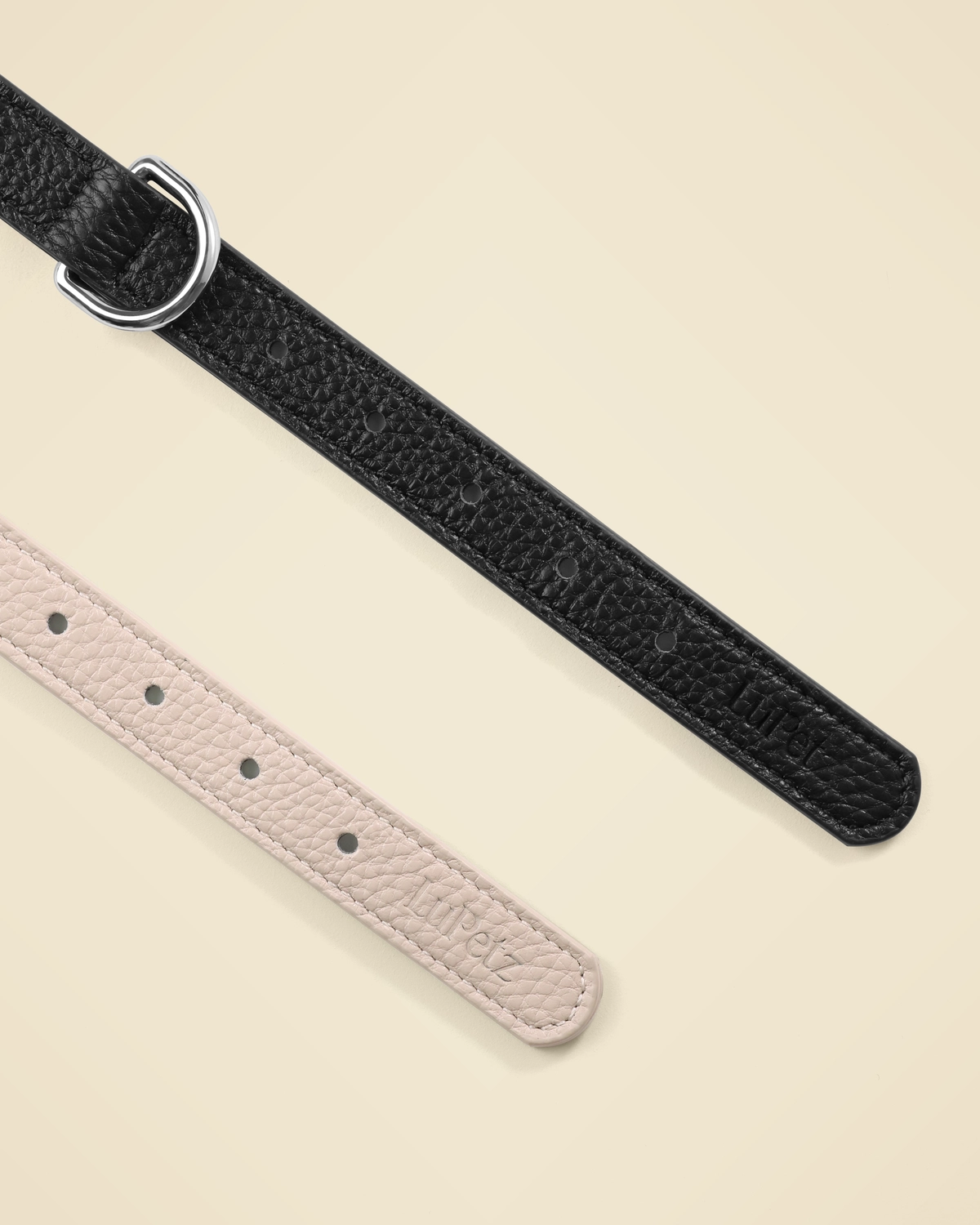
The edge moves against fur all day, so run a finger along it. A good edge is smooth, rounded and sealed, with no loose fibers or sharp corners. Rough, unfinished edges can fray and rub a short coat.
Stitches should be evenly spaced, sit snugly in the leather and have neatly finished ends. On a lined collar, where two layers of leather are joined, the stitching should close the layers along the whole length, with no gaps where they could start to separate.
Hardware takes the strain, so look at it closely too.
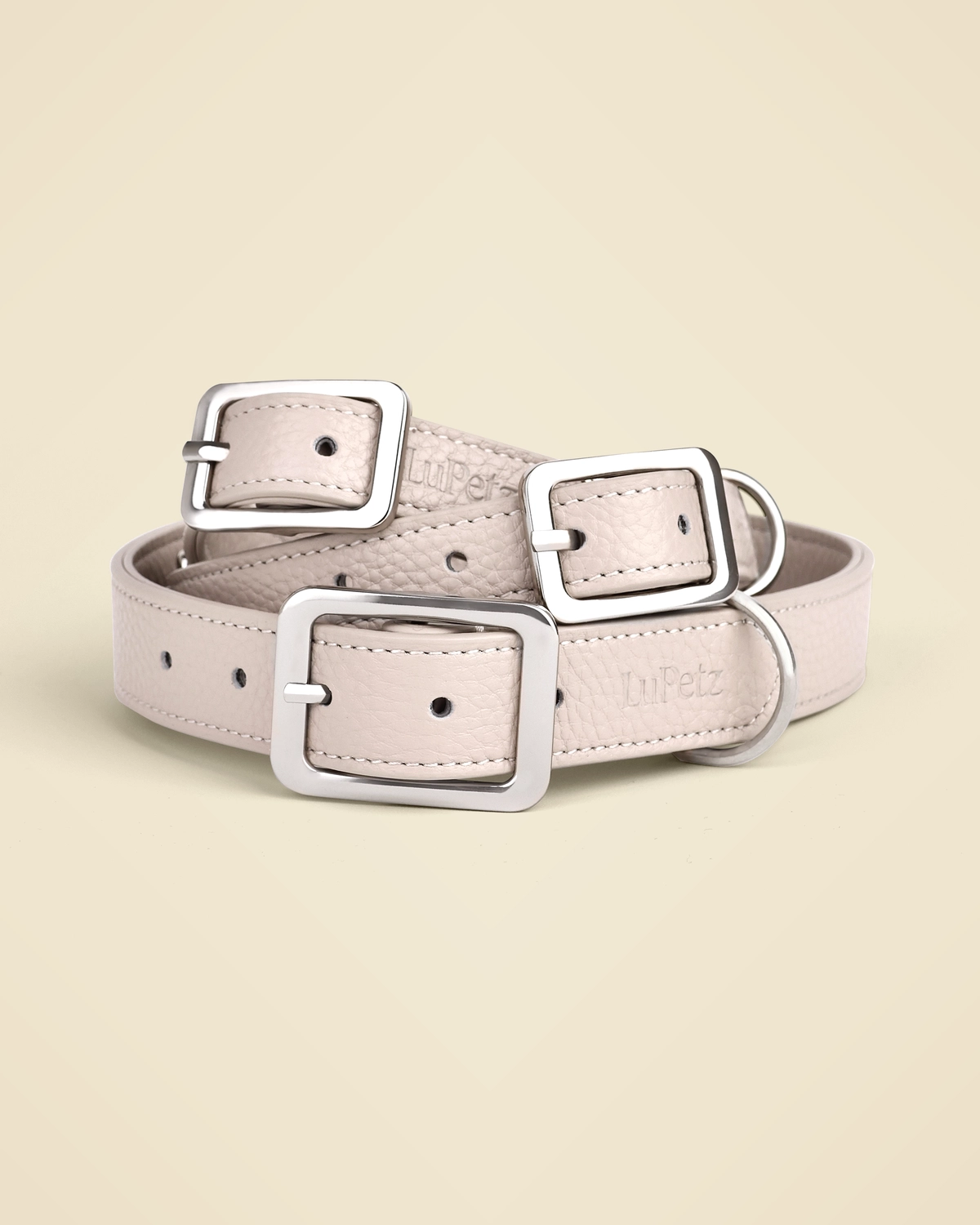
- Buckle type. A pin buckle works like a belt buckle: a pin goes through a punched hole, and the collar holds its setting. A quick-release side buckle snaps open and shut and is common on nylon collars. A martingale has a second loop that tightens a little when the dog pulls; the AKC’s guide to choosing the right dog collar describes how each type works.
- Metal. Solid stainless steel or solid brass will not flake. Plated hardware can look the same when new, but the plating can wear through with use and leave the base metal exposed to rust.
- The ring. Whatever the leash or tag clips onto should be a closed, solid ring, held firmly by stitching or rivets.
Choose the width and the fit
A wider strap spreads the pull across more of the neck, which suits larger and stronger dogs; a narrower one is lighter and suits small dogs and cats.
For fit, measure rather than guess. Wrap a soft tape around the neck where the collar will sit, add 1.5 to 2 cm (about ¾ in) for comfort, and choose the size whose range includes that number. Our dog collar size chart walks through it step by step. The AKC suggests the same final check: two fingers should slide under the fastened collar. If they don’t fit, it is too tight; if more fit, it is too loose and may slip over the head.
Leather also changes a little as it is worn. A new full-grain collar starts slightly firm and softens with wear. Recheck the fit after that, and whenever your dog’s weight changes. For puppies that are still growing, the AKC suggests an inexpensive nylon collar until they reach adult size, then leather.
Care, and when leather is not the right choice
Wipe the collar with a soft, dry cloth, condition it with a leather balm now and then to keep it supple, and if it gets wet, pat it dry and let it air-dry away from heaters and direct sun. Take it off for baths and swimming. Our guide on how to clean a leather dog collar has the full routine.
And it is not for every dog. Consider another material if:
- Your dog swims often or spends much of its time in water, mud or wet grass. Repeated soaking is hard on leather. Our comparison of leather vs nylon dog collars goes through the trade-offs.
- Your puppy is still growing fast. You will change sizes several times; save leather for the adult collar.
- Your cat goes outdoors unsupervised. A leading UK cat charity calls quick-release collars the safest choice for cats. A leather buckle collar suits a cat who wears it while someone is around; our guide to collars for cats covers fit and supervision.
A quick checklist before you buy
Use this list on any product page, ours included. If a point is not stated, ask the maker before you order.
- Leather grade is named: full grain, stated in writing.
- Underside is finished: a leather lining or a smooth, sealed back that will not scratch the coat.
- Edges are sealed and stitching is even along the whole strap.
- Hardware metal is named: solid stainless steel or solid brass rather than “metal”.
- Closure is clear: pin buckle, quick-release or martingale, so you know how it behaves if it snags.
- Sizes are given as neck ranges in inches or centimetres, with a measuring guide.
- Care and return terms are written down.
What leather collar makers publish about their collars
There is no single best leather dog collar for every dog, so we looked at what a few makers that sell leather collars in the U.S. publish about one of their collars, and lined it up against the checklist. The aim is not to rank anyone; it is to show which facts are easy to find and which you may need to ask about.
| Collar | Leather | Lining | Hardware and closure | Width and sizing | Where made | Source |
|---|---|---|---|---|---|---|
| LuPetz LuKra Collar | Italian full-grain leather, lychee-grain embossed finish | Same full-grain leather | Stainless steel pin buckle and ring; a buckle collar, not breakaway | 2 cm (S, M), 3 cm (L); three neck ranges, 20–48 cm | Not stated | Product page |
| California Collar Co. Basic Nameplate collar | Full-grain, vegetable-tanned English bridle leather from U.S. steer hides | Not stated | Solid brass hardware; closure not stated | 1 in or 1.25 in; sized to the dog’s neck, aiming for the middle of the range | Made to order in a U.S. workshop | cacollarco.com |
| Lifetime Leather classic dog collar | Full-grain American leather, cut and stitched by hand | Not stated | Solid brass or chrome hardware; closure not stated | Width not stated; XS to XL, add 1 in to the neck for small dogs, 2 in for medium and large | Phoenix, USA | lifetimeleather.com |
| Whiskey Leatherworks Full Leather Dog Collar | 6–7 oz full-grain leather | Not stated | Solid brass buckle, D-ring and rivets | 1 in; four sizes from 11 to 24 in | Kennebunk, Maine, USA | whiskeyleatherworks.com |
| American Bench Craft personalized hunting collar | Full-grain leather | Not stated | Solid brass hardware (nickel colour option); O-ring the maker describes as designed to flip if caught | 1 in; five holes, neck 15–27 in | Not stated | americanbenchcraft.com |
As stated on each brand’s website, checked October 2026. We have not tested these collars, and makers change their products, so check the current page before you buy. Every maker here names full-grain leather and most name a solid metal for the hardware; lining and closure type are rarely stated, so those are the questions worth asking.
How the LuKra Collar fits this checklist
We make the LuKra leather dog collar, so here it is against the same list, using its published specs and nothing else: Italian full-grain leather outside and as the lining, edges stitched by hand, a stainless steel pin buckle and ring, 2 cm wide in Small and Medium and 3 cm in Large, and three sizes by neck measurement (20–29, 29–39 and 39–48 cm). It comes in black or taupe, with one small natural stone on a ring as a decorative detail. It is a buckle collar, not a breakaway collar, and it is not made for swimming.
The matching LuKra Leash is 150 cm of the same leather, so the two soften together and keep matching; our guide on how to match a dog collar and leash covers color and proportion. Together they form the collar and leash set, which ships free in the U.S. You can see every color in the leather collar collection.
Frequently asked questions
Which leather grade should a dog collar be?
Full-grain leather is the grade to look for. It keeps the whole grain surface of the hide, with no corrective sanding, so it holds up to daily bending and softens with wear instead of cracking. Look for the words full grain on the product page rather than judging by texture, because embossing can make any leather look grainy.
Is genuine leather good for a dog collar?
Genuine leather simply tells you the item is leather. It does not say which layer of the hide was used, and it is not a grade in the Leather Working Group’s definitions. A collar labelled genuine leather may be split leather with a coated surface, so ask the maker for the grade before you buy.
Is top-grain leather better than full-grain?
No. Top grain usually means the grain layer has been sanded smooth and refinished, so part of the original surface is gone and the coating does more of the work. Full grain keeps its whole original surface. Both can make a usable collar, but full grain is the one that ages and softens well with everyday wear.
How wide should a leather dog collar be?
Wide enough to spread the pull, narrow enough to stay light. Cats and small dogs usually suit about 2 cm (¾ in), while large, strong dogs suit 2.5 to 3 cm (1 to 1¼ in) or more. The collar should look in proportion to the neck and let your dog turn its head freely.
How tight should a leather collar be?
Two fingers should slide flat under the fastened collar, and it should not slip over the ears when you pull it gently forward. Measure the neck with a soft tape and use the maker’s size chart. Recheck the fit once the leather has softened, and whenever your dog gains or loses weight.
Can a leather dog collar get wet?
Rain now and then is fine if you pat the collar dry and let it air-dry away from heaters and direct sun. Take it off for baths and swimming, because repeated soaking dries leather out. Condition it with a leather balm now and then to keep it supple, and see our cleaning guide for the full routine.
Is a leather buckle collar safe for cats?
A leather buckle collar suits a cat who wears it while someone is around. It does not release if it catches on something, so cats that roam outdoors unsupervised are usually better in a quick-release collar. The LuKra Collar is a pin-buckle collar, not a breakaway collar, and most adult cats fit the Small size.
More on Leather Dog Collars
See all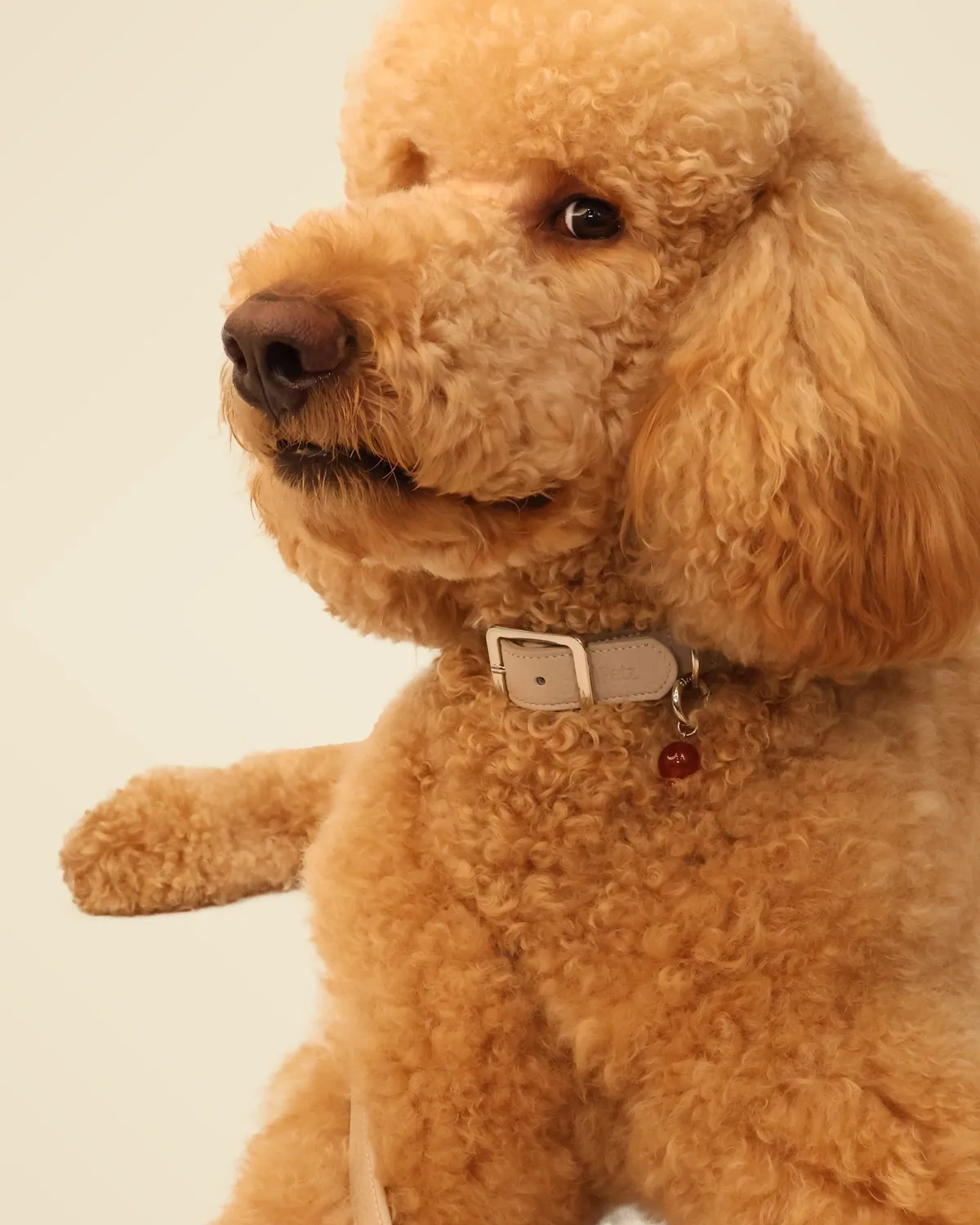 LuKra Collar Review: Leather, Stitching and Fit, From the MakerRead the guideLeather vs Nylon Dog Collar: Which Suits Your Dog?Read the guideHow to Clean a Leather Dog Collar and Keep It SuppleRead the guide
 How to Soften Leather: A Gentle Guide for Collars and LeashesRead the guide
Also in this topicLeather Dog Collars·LuKra Collar·Are Leather Collars Good for Cats? An Honest Guide·Minimalist Dog Accessories: How to Choose Less, but Better