 Collars
 Leashes
 Charms
How to Soften Leather: A Gentle Guide for Collars and Leashes
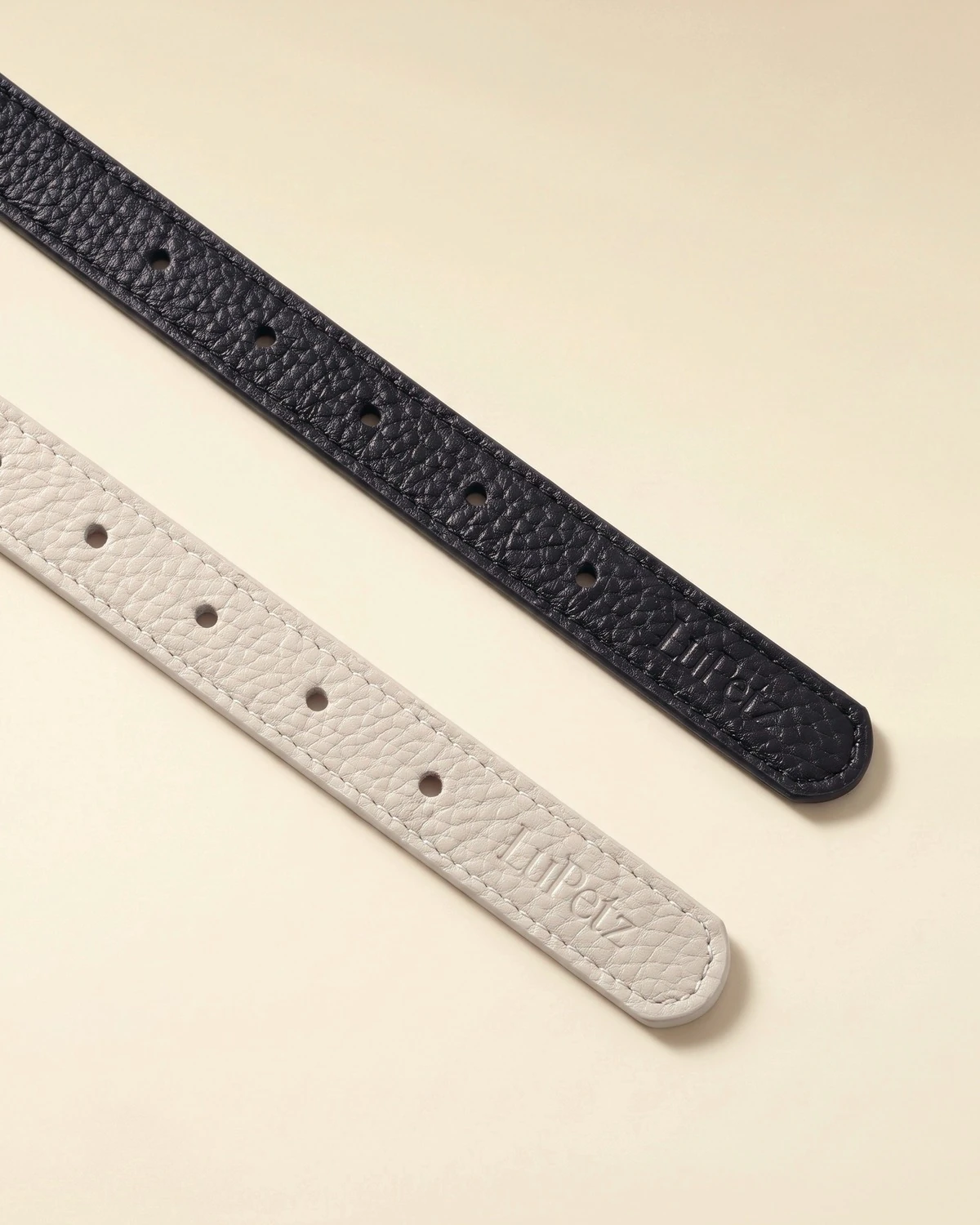
To soften leather, flex it gently by hand, wear or use it regularly so body warmth and movement can work on the fibres, and add a very thin coat of leather conditioner only when the surface feels dry. If the leather has gone stiff after getting wet, clean it with a barely damp cloth, let it dry slowly at room temperature, then condition and flex it again. Soaking, heating or drowning leather in oil does more harm than good. This guide shows the gentle way for a leather dog collar and leash.
Why leather feels stiff
Leather is a network of fibres. It feels firm when those fibres have not yet been flexed where the piece bends, or when they have lost moisture and the natural oils that keep them supple. There are three common reasons a collar or leash feels stiff:
- It is new. A collar lined in leather on both sides, like ours, starts out a little more structured than a single layer, because two layers are stitched together into one strap. That structure is what helps it keep its shape for years.
- It got wet and dried too fast. Rain, a swim or a bath followed by drying near a heater leaves leather hard and sometimes uneven.
- It is dry or dirty. Dust, mud and skin oils sit in the grain. Over months, leather that is never cleaned or conditioned can feel dull and tight.
Stiffness is not the same as a bad fit. A collar can feel firm and still fit well. What matters on day one is the size and the two-finger check, not how soft the strap is.
Check the fit before anything else
Measure your dog’s neck with a soft tape and choose the size from that number, not from the label on an old collar. The American Kennel Club suggests the same: once the collar is on, you should be able to slide two fingers underneath, and no more (AKC on choosing the right dog collar). If you cannot fit two fingers, it is too tight. If you can fit three, it is too loose and may slip over the head.
A firm new collar can feel tighter than it is, so check again after the first few wears. Our dog collar size chart walks through measuring step by step.
How to soften a new leather dog collar
1. Flex it by hand
Before the first wear, hold the collar at both ends and roll it gently into a loose curve, the way it will sit around a neck. Work along its length, especially around the buckle holes you will use. Do not fold it flat or crease it hard. Ten minutes over an evening is enough.
2. Short, supervised wears
Put the collar on for walks and for time at home when you are around. Body warmth and movement do most of the work. Start with an hour or two, then let your dog wear it for longer as the leather settles. Take it off at night for the first week.
3. Watch the skin and coat
After each of the first few wears, run your fingers under the collar. Look for redness, rubbing or flattened fur, especially on short-coated dogs. If you see any, check the fit again and give the skin a break.
4. Condition only if it feels dry
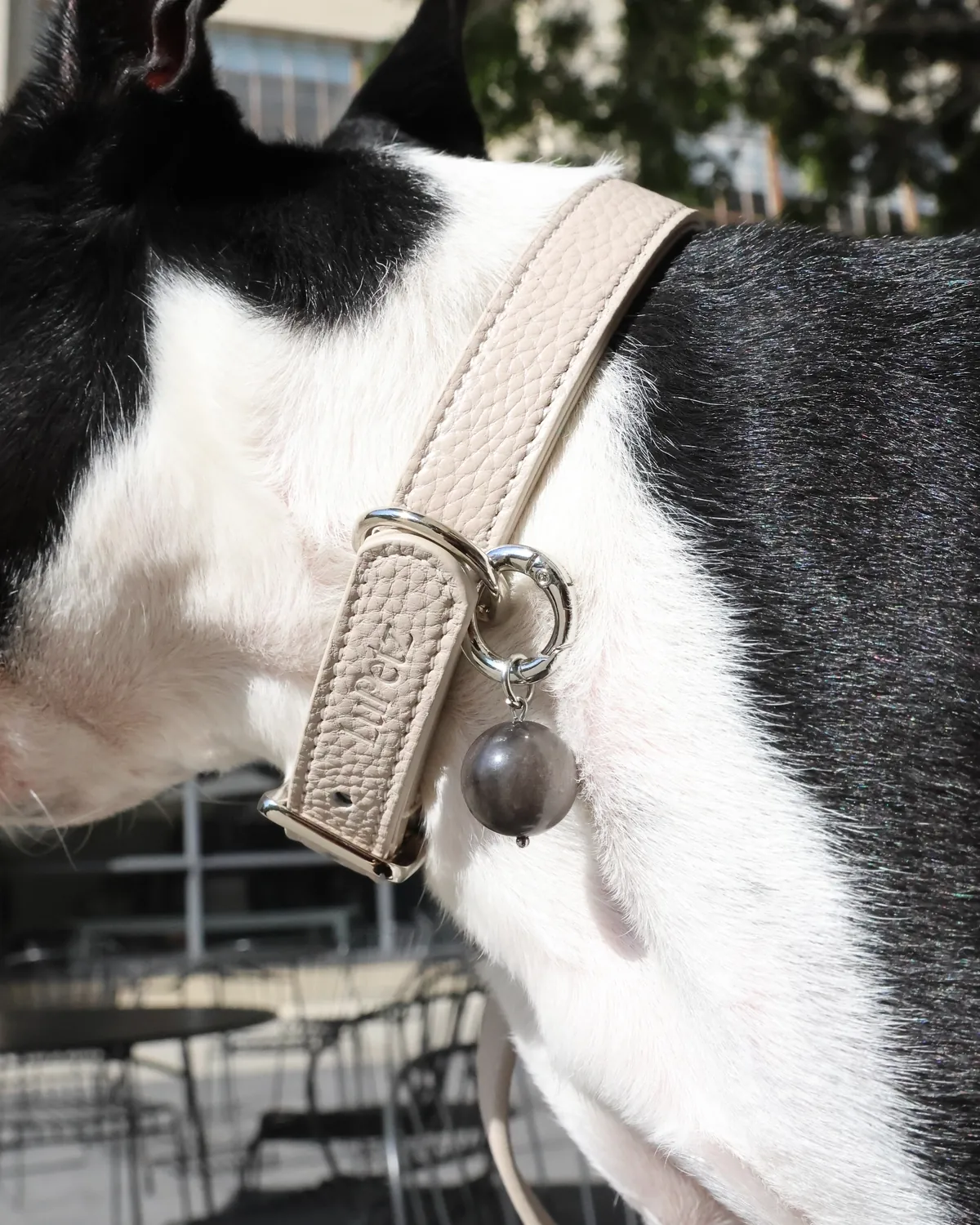
A new collar usually needs nothing at first. If the leather feels dry or looks dull after a few weeks, use a small amount of a leather conditioner made for tack or leather goods. Apply it with your fingertips, work it in, let it dry, then buff off the excess with a soft cloth, as the University of Florida extension service describes for leather tack (UF/IFAS on saddle and tack care). One thin coat is plenty.
How to soften a leather leash
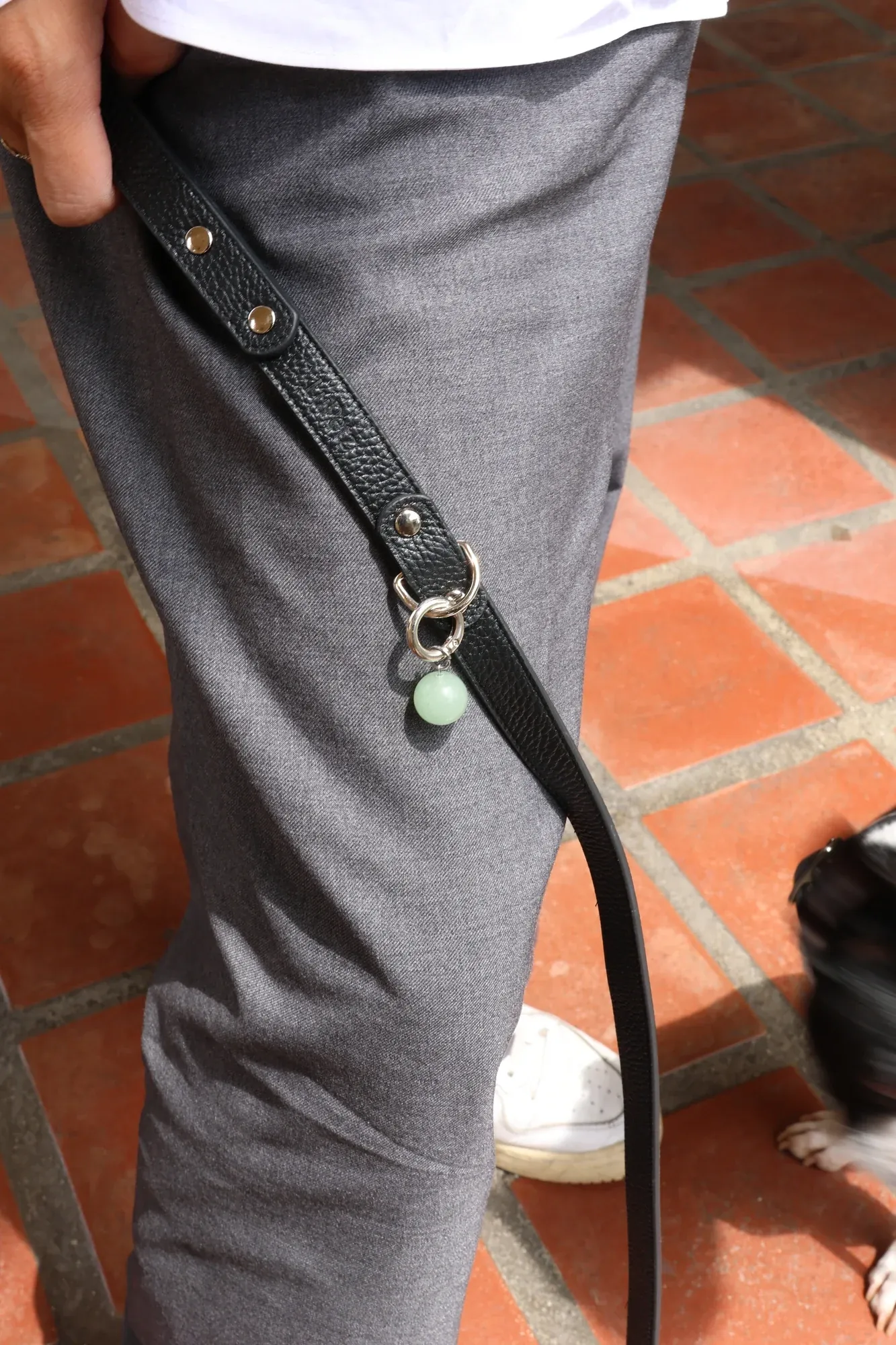
A leash softens fastest where your hand holds it. Run the length of the leash slowly through your closed hand a few times before the first walks, and roll the handle loop between your palms so it shapes to your grip. Then simply use it: daily walks soften a full-grain leash more evenly than any product. If the handle feels dry after a few weeks, give it the same thin coat of conditioner as the collar, buff it off, and let it rest overnight before the next walk. The LuKra Leash is 150 cm of the same Italian full-grain leather as the collar, so both age the same way.
How to soften leather that has gone stiff
If a collar or leash has dried hard after rain or a swim, or simply feels tight after months of wear, bring it back slowly:
- Clean it. Wipe off dirt with a soft, barely damp cloth. Take off any stone charm first so it doesn’t scratch the leather.
- Let it dry at room temperature. Lay it flat or loosely coiled, away from radiators and direct sun, until it is completely dry.
- Condition in thin coats. Work a small amount of leather conditioner in with your fingertips, wait, and buff off what has not soaked in. If it still feels dry the next day, repeat once rather than adding a thick layer.
- Flex and wear. Roll the strap gently again, then go back to normal use. Leather that has dried hard usually loosens over a week or two of wear.
If the leather has cracked through the surface, conditioning will make it look better but cannot repair it. Check cracked areas near the buckle holes and the clip carefully, and replace the piece if the strap looks weak.
What not to do
- Do not soak it. Wetting a collar to shape it to the neck is a shortcut you do not need. Soaked leather can dry hard and uneven.
- Do not heat it. Keep leather away from radiators, hair dryers and hot car dashboards. The Canadian Conservation Institute notes that local heat speeds up the deterioration of leather (CCI on caring for leather).
- Do not drown it in oil. More oil does not mean softer leather. The same CCI note explains that applied oils can stiffen leather over time as they oxidise, and UF/IFAS advises against over-oiling leather kept in humid air, where it can encourage mildew. Avoid cooking oils altogether.
- Do not use household or shoe cleaners. The AKC warns that cleaners made for furniture or shoes can contain chemicals that are not safe for dogs.
Keeping leather soft
Once the leather has softened, care is light. Take the collar off for baths and swimming, wipe it if it gets muddy, let it air-dry at room temperature if it gets wet, and store it flat or loosely coiled, away from direct sun. Stable, moderate humidity is kinder to leather than very dry or very damp air; CCI suggests around 45 to 55 percent for leather objects.
Every few weeks, look closely at the collar and leash: the leather near the buckle holes, the hand-stitched edges and the stainless steel hardware. If you use a stone charm, make sure the ring is closed and the stone is not chipped, and never let your dog chew it. Our guide to cleaning a leather dog collar has the full routine, and leather vs nylon explains why leather ages the way it does.
Frequently asked questions
What is the fastest way to soften leather?
Regular use plus gentle flexing. Rolling the strap in your hands and wearing it daily softens leather faster than any product, because body warmth and movement loosen the fibres where the piece bends. Add a thin coat of conditioner only if it feels dry. Heat and soaking seem quicker but can leave leather hard, uneven or cracked.
How long does it take to soften a leather dog collar?
It depends on the leather and how often your dog wears it. With daily wear you will feel the strap soften gradually over the first weeks; a collar lined in leather on both sides takes a little longer than a single strap, and keeps its shape better for it.
Can I use oil to soften a leather collar?
Only a thin coat of a conditioner made for leather, and only when the leather feels dry. Wipe off what does not soak in. Heavy oiling can stiffen leather over time as the oil oxidises, and cooking oils can go rancid, so avoid them.
How do I soften leather that got wet and dried hard?
Wipe it clean with a barely damp cloth, let it dry fully at room temperature away from heat, then work in a thin coat of conditioner and buff off the excess. Flex the strap gently and go back to normal wear; it usually loosens within a week or two.
Is it safe for my dog to wear a stiff collar?
Yes, if it fits. Use the two-finger check, supervise the first wears and look at the skin under the collar afterwards. A firm collar that fits correctly is safer than a soft one that is too loose and can slip over the head.
Should I take the collar off at night?
For the first week it is a good idea, so you can check the leather and your dog’s neck each day. After that, follow your usual routine, and always take a buckle collar off when your dog is alone or in a crate.
Leather that gets better with time
A good leather collar asks for a little patience at the start and very little after that. The LuKra leather dog collar is cut from Italian full-grain leather, lined in the same leather and stitched by hand, so it softens with wear and keeps its shape. If you want the leash in the same leather, see the collar and leash set.
More on Leather Dog Collars
See all How to Choose a Leather Dog Collar: Checklist and BrandsRead the guide
 LuKra Collar Review: Leather, Stitching and Fit, From the MakerRead the guideLeather vs Nylon Dog Collar: Which Suits Your Dog?Read the guideHow to Clean a Leather Dog Collar and Keep It SuppleRead the guide
Also in this topicLeather Dog Collars·LuKra Collar·Are Leather Collars Good for Cats? An Honest Guide·Minimalist Dog Accessories: How to Choose Less, but Better