Collars
 Leashes
 Charms
Full Grain vs Top Grain Leather: What Really Differs
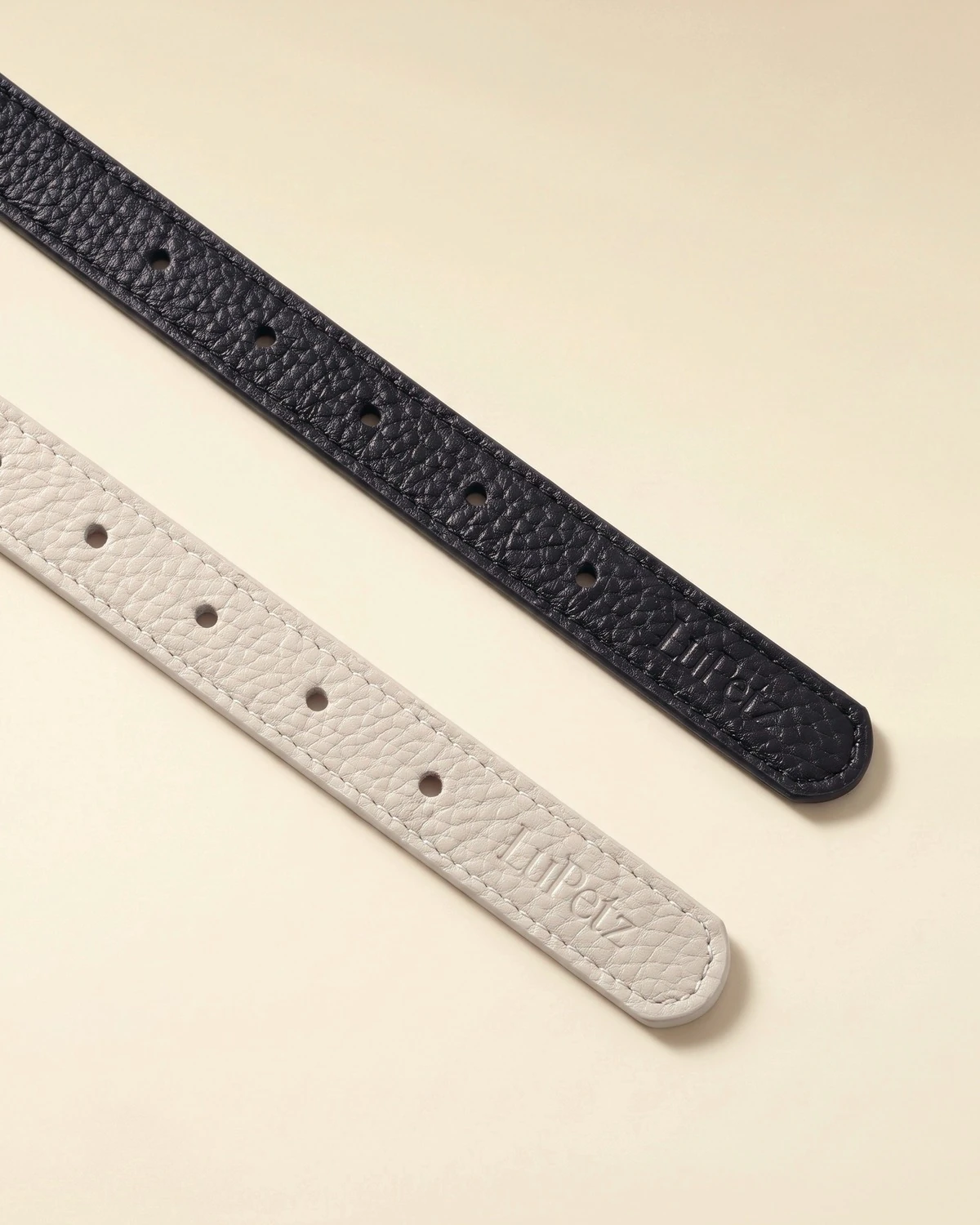
Full grain vs top grain leather comes down to one thing: what has been done to the surface. Full grain leather keeps the hide’s original outer surface, with its pores and small natural marks. Top grain leather has had that surface sanded or buffed to even it out, then is usually finished with a coating. Full grain is generally thicker, stronger and ages with a patina; top grain looks more uniform at first but does not develop the same character. Here is what that means when you are choosing something your dog wears every day.
How a hide becomes different grades of leather
A hide is thicker than most leather goods need, so tanneries split it into layers. The outer layer, on the hair side, is the grain. It has the tightest, densest fibres and the natural surface pattern. Below it is the looser, more fibrous layer called the split.
What happens to that outer layer decides the name. In the description quoted by American Leather from the Tanners’ Council, full grain is the outer cut with only the hair and epidermis removed, so the natural surface stays intact. When the surface is sanded or buffed with an abrasive to remove pores and marks, it becomes corrected grain. The Leather Dictionary is direct about it: once the grain has been sanded or buffed, it is no longer full grain.
“Top grain” sits in between as a trade term. Most sellers use it for grain leather that has been lightly corrected and given a finished surface. It is real leather, but the outermost and toughest part of the surface has been altered.
Full grain vs top grain leather, side by side
Surface and look
Full grain shows the hide as it is: visible pores, slight variations in texture, sometimes a small healed mark. Top grain looks smoother and more even because those details have been sanded away and covered with a finish, which can also be embossed with an artificial grain pattern.
Strength
The grain layer holds the densest fibres, so leaving it whole keeps the leather at its strongest. Sanding removes part of that layer. For a collar or leash, which is pulled, bent and rubbed every day, this matters more than it would for a wallet.
How it ages
Full grain develops a patina: the colour deepens slightly and the surface takes on a soft sheen where it is handled. Top grain’s coating wears differently. It can stay neat for a long time, but when the finish eventually scuffs or cracks, it does not usually improve with age.
Feel and breathability
Because full grain keeps its open pores, it feels like leather rather than a coated surface, and it softens as it is worn. Top grain often feels a little cooler and more uniform to the touch because of its finish.
Care
Full grain marks more easily at first, since it has little or no protective coating, and it benefits from occasional cleaning and conditioning. Top grain resists stains a little better thanks to its finish but cannot be restored in the same way once that finish is worn through.
What this means for a dog collar or leash
Pet accessories live a harder life than most leather goods. They get wet on rainy walks, rub against fur all day and take sudden pulls. That is why the grade of leather shows up quickly in a collar.
- Edges: A thick full-grain strap can have its edges smoothed and stitched by hand, which keeps them from fraying or peeling.
- Holes and hardware: Dense grain fibres hold buckle holes and rivets without stretching out of shape as quickly.
- Comfort: Full grain softens and moulds slightly to the dog’s neck with wear, rather than staying stiff.
- Looks over time: A full-grain collar should look better after a year, not worse.
If you are comparing leather with synthetic materials as well, our leather vs nylon dog collar guide sets out the trade-offs.
How to tell which one you are buying
Labels are not always clear, so look and feel as well as read.
- Look closely at the surface. Small, irregular pores and slight variation suggest full grain. A perfectly even, plastic-looking pattern that repeats suggests a corrected or embossed surface.
- Check the edge. Full grain usually shows a dense, compact cross-section. A cut edge that looks fuzzy and loose, with a thin coated layer on top, points to a split with a finish.
- Bend it. Full grain wrinkles finely and naturally. A heavy coating may crease in sharp lines.
- Read the wording. “Genuine leather” and “top grain” are not the same claim as “full grain”. If a listing is vague, ask the seller.
How LuPetz uses full-grain leather
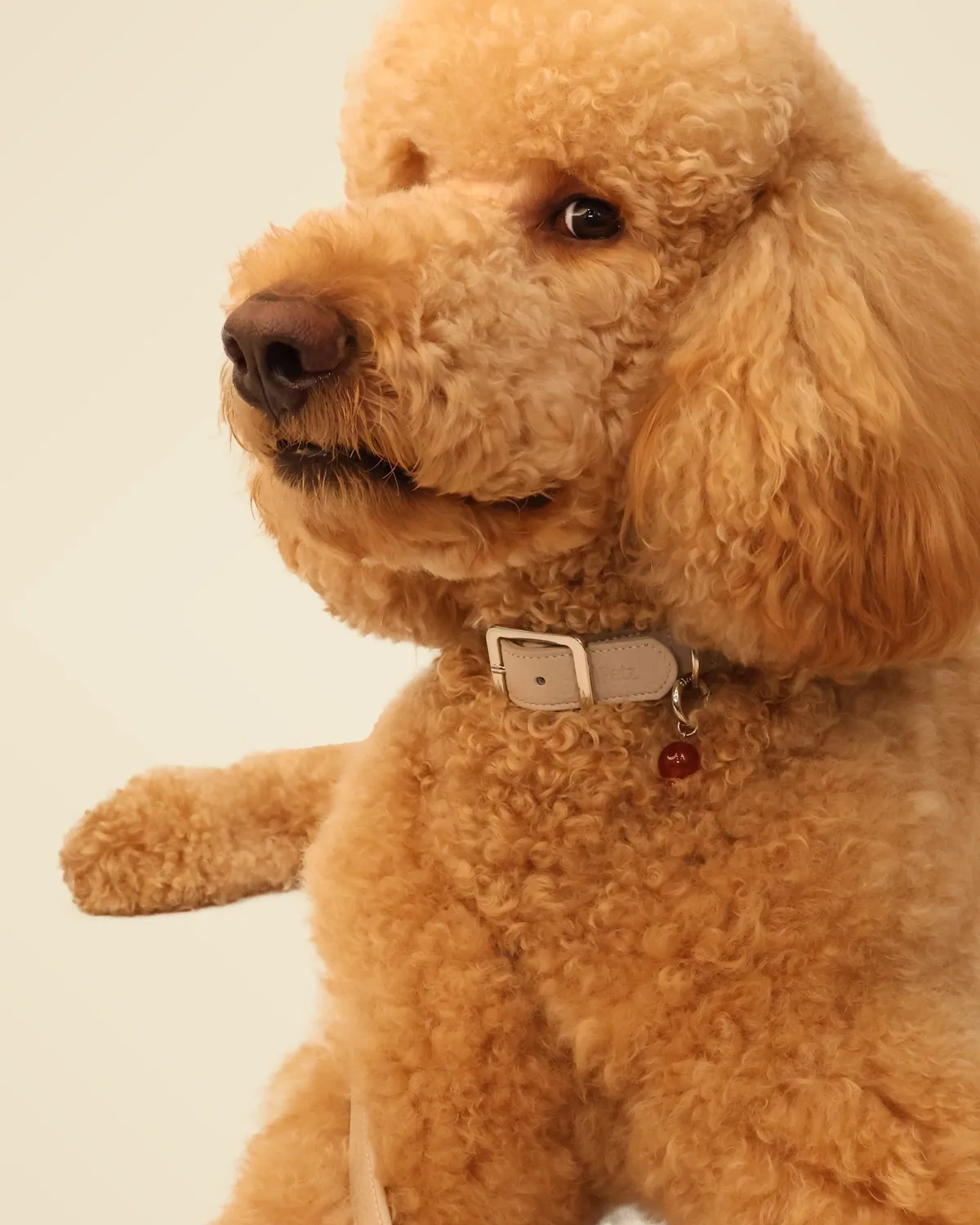
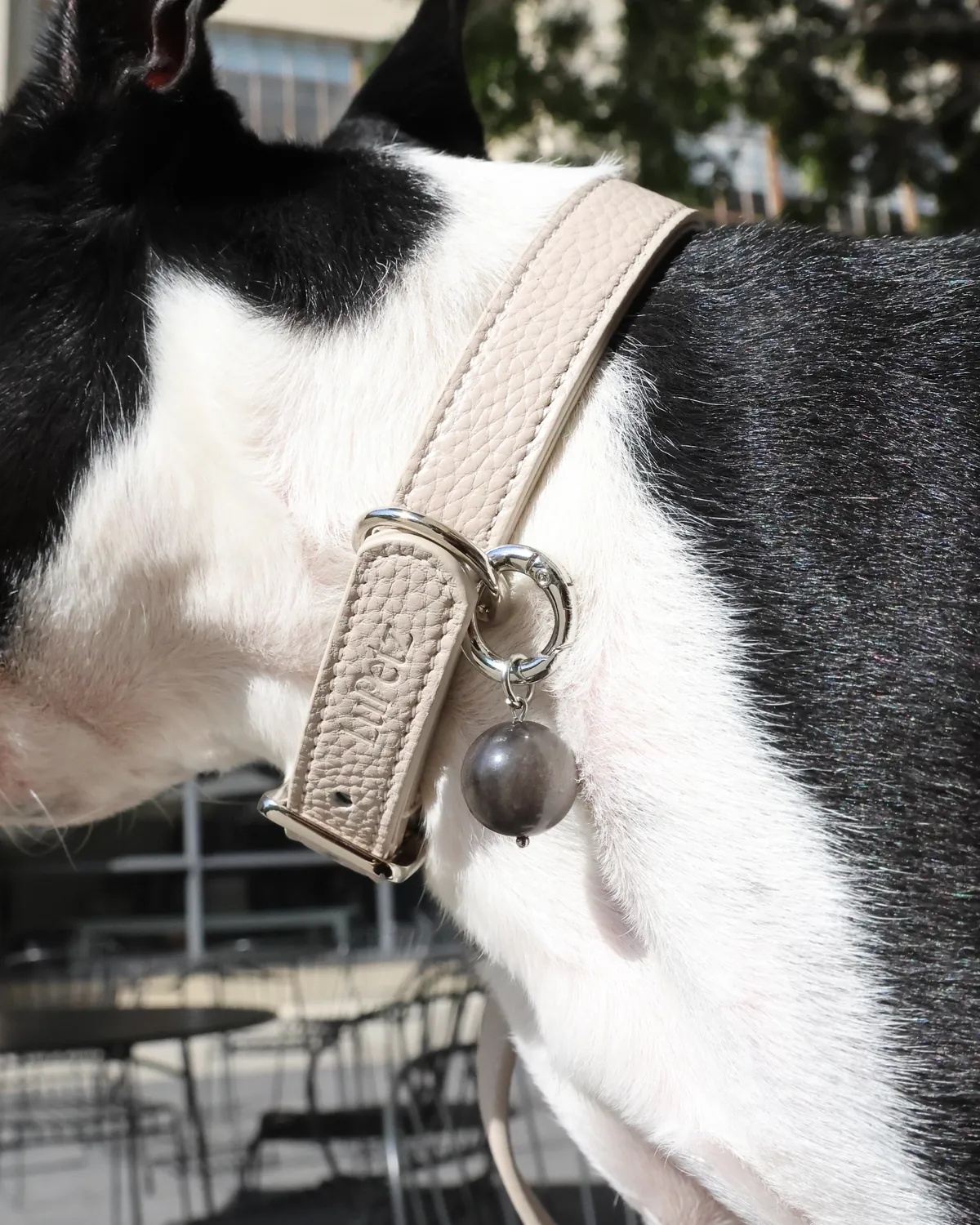
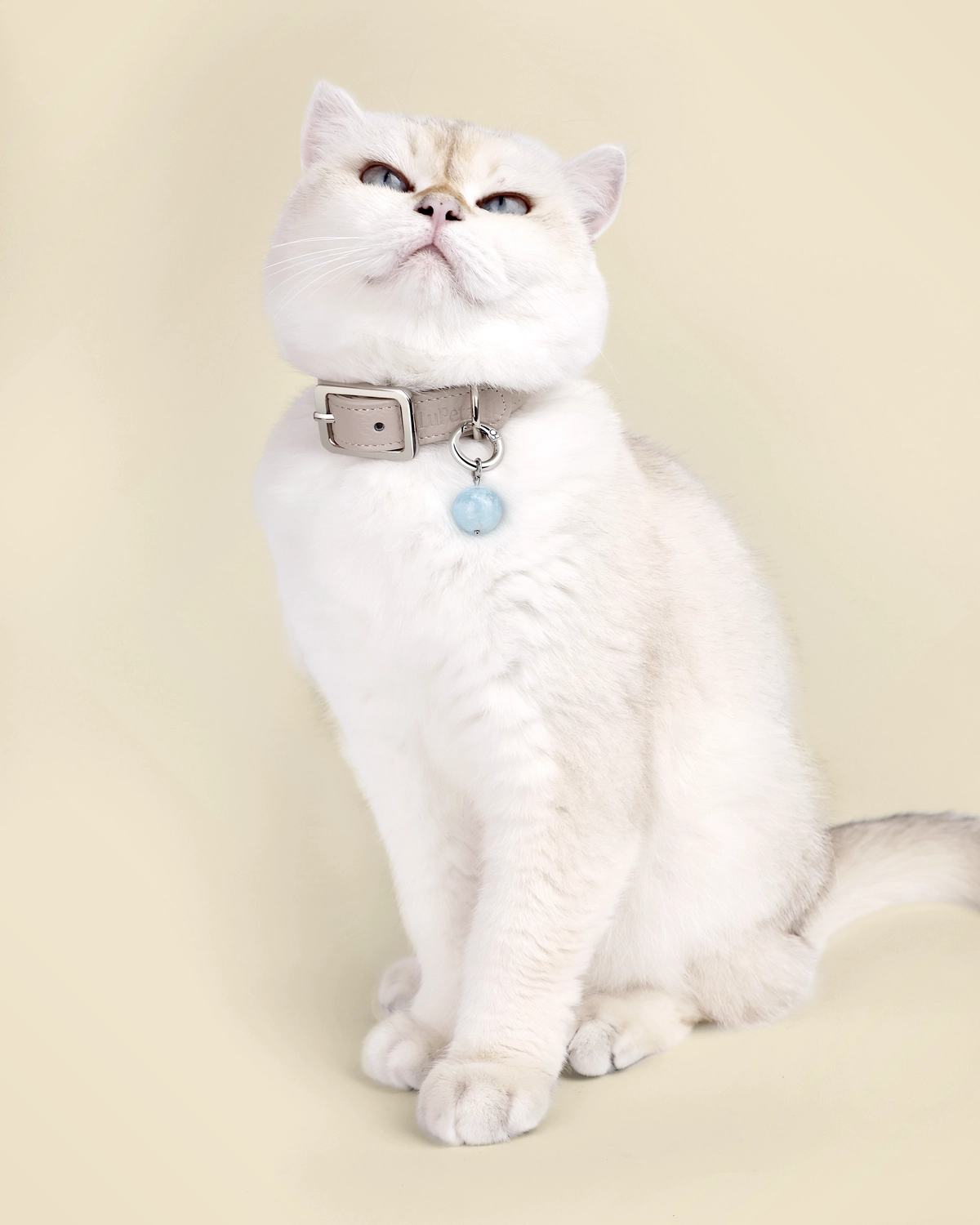
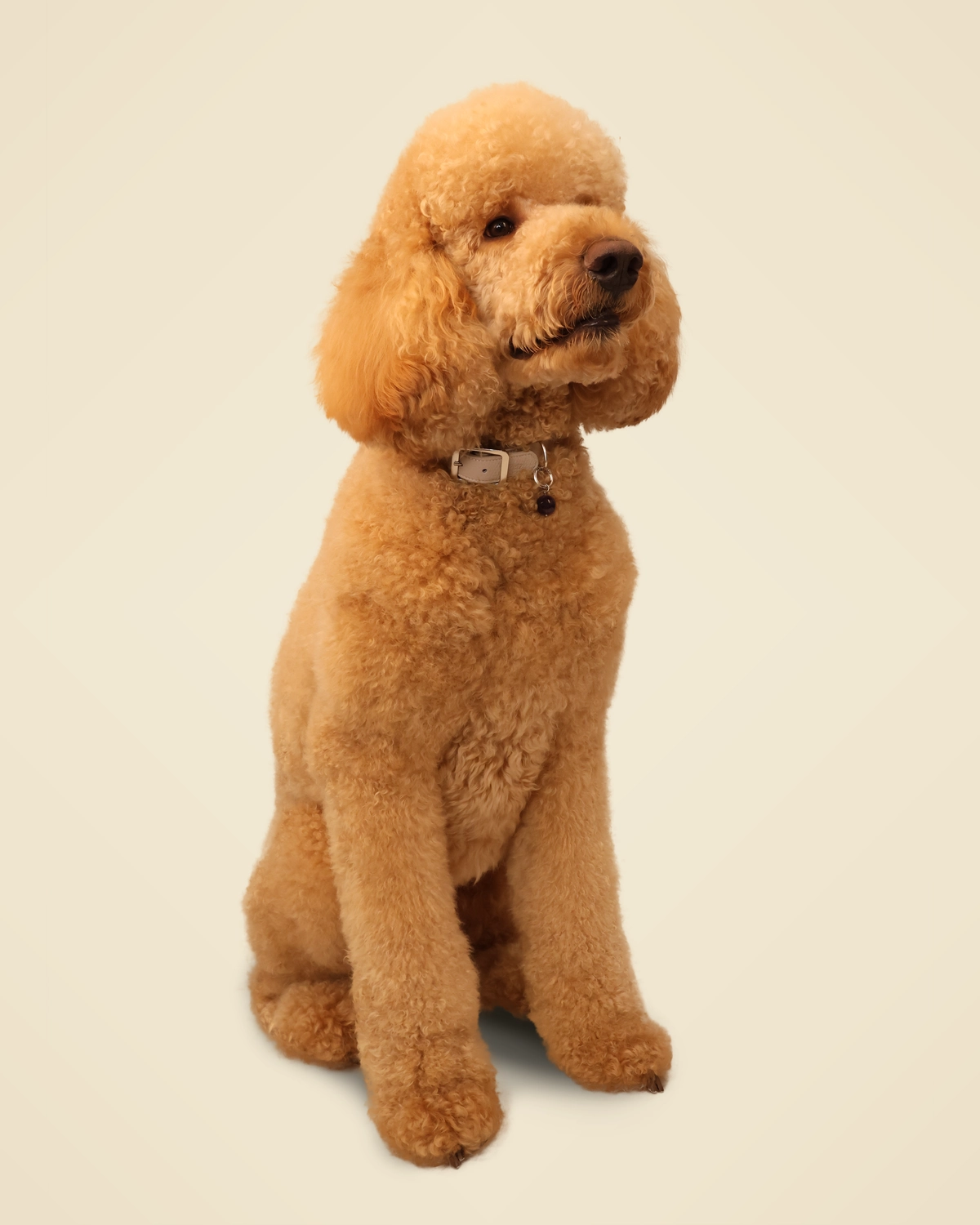
LuPetz pieces start from the material and then remove everything that is not needed. The LuKra Collar is cut from Italian full-grain leather and lined in the same leather on both sides, with edges stitched by hand and stainless steel hardware. It comes in black or taupe, in three sizes, finished with a small natural stone.
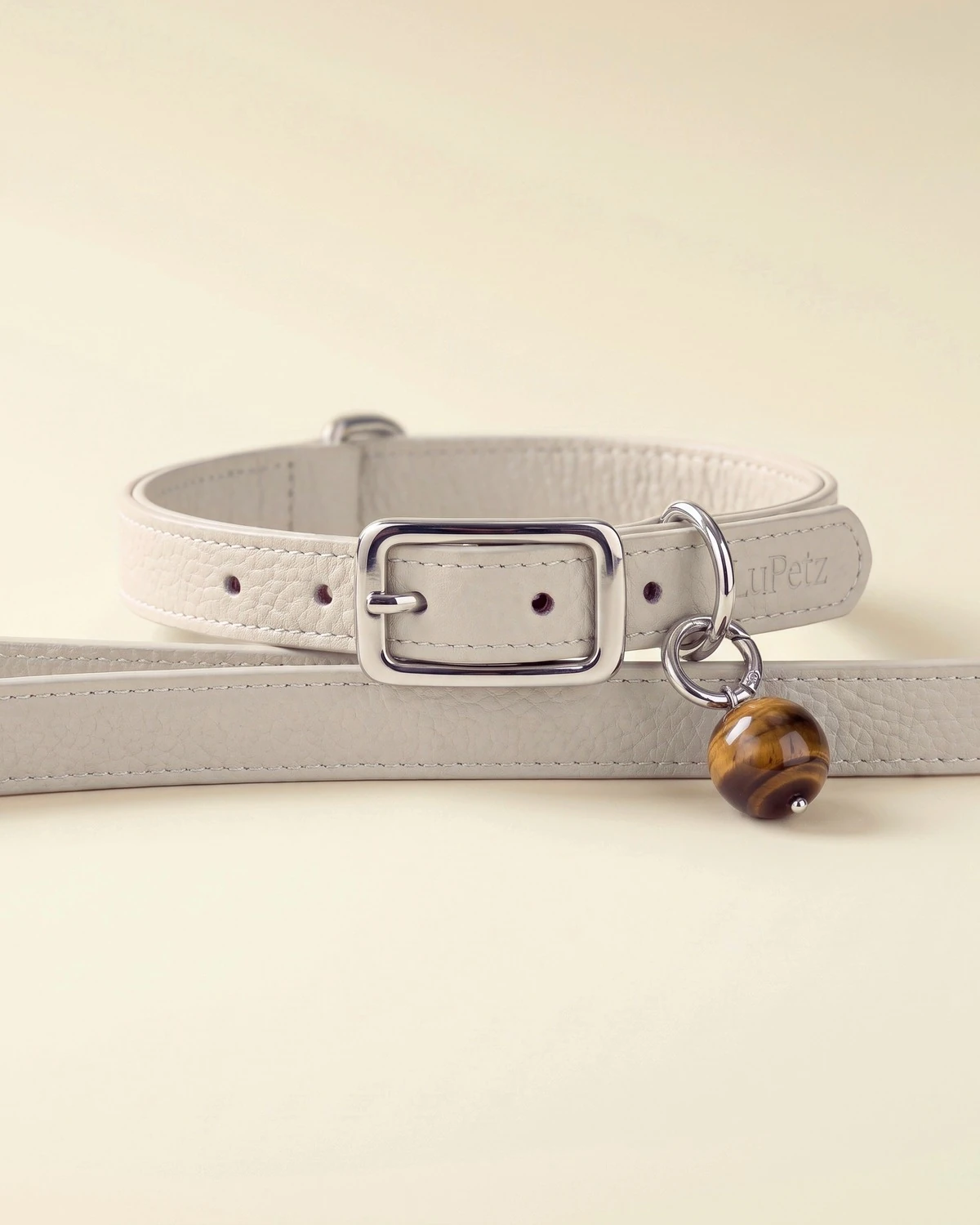
The LuKra Leash uses the same leather at 150 cm long. Both soften with wear and keep their shape. To keep full grain in good condition, see our guide to cleaning a leather dog collar, and check the fit regularly: you should be able to slide two fingers under the collar.
Full grain vs top grain: common questions
Is top grain real leather?
Yes. Top grain is genuine leather from the grain side of the hide, but its surface has been sanded or buffed and usually coated, so it is not full grain.
Is full grain leather better for dog collars?
For daily wear it is usually the stronger choice, because the dense outer fibres are left intact. It also softens and develops a patina instead of wearing through a coating.
Why does full grain leather show small marks?
Because its surface has not been sanded away. Small variations in texture are part of the natural hide and a sign that the grain is intact.
Does full grain leather need special care?
Only simple care: wipe it clean, let it dry away from direct heat, and condition it occasionally with a product made for leather.
Choose the material first
The difference between full grain and top grain is not visible in a photo, but you will feel it after a year of walks. If you would like a full-grain collar and leash that match, the LuKra collar and leash set brings both together, and US shipping is free when you order a collar and leash together.