Collars
 Leashes
 Charms
Real Crystal or Glass? How to Tell on a Pet Collar
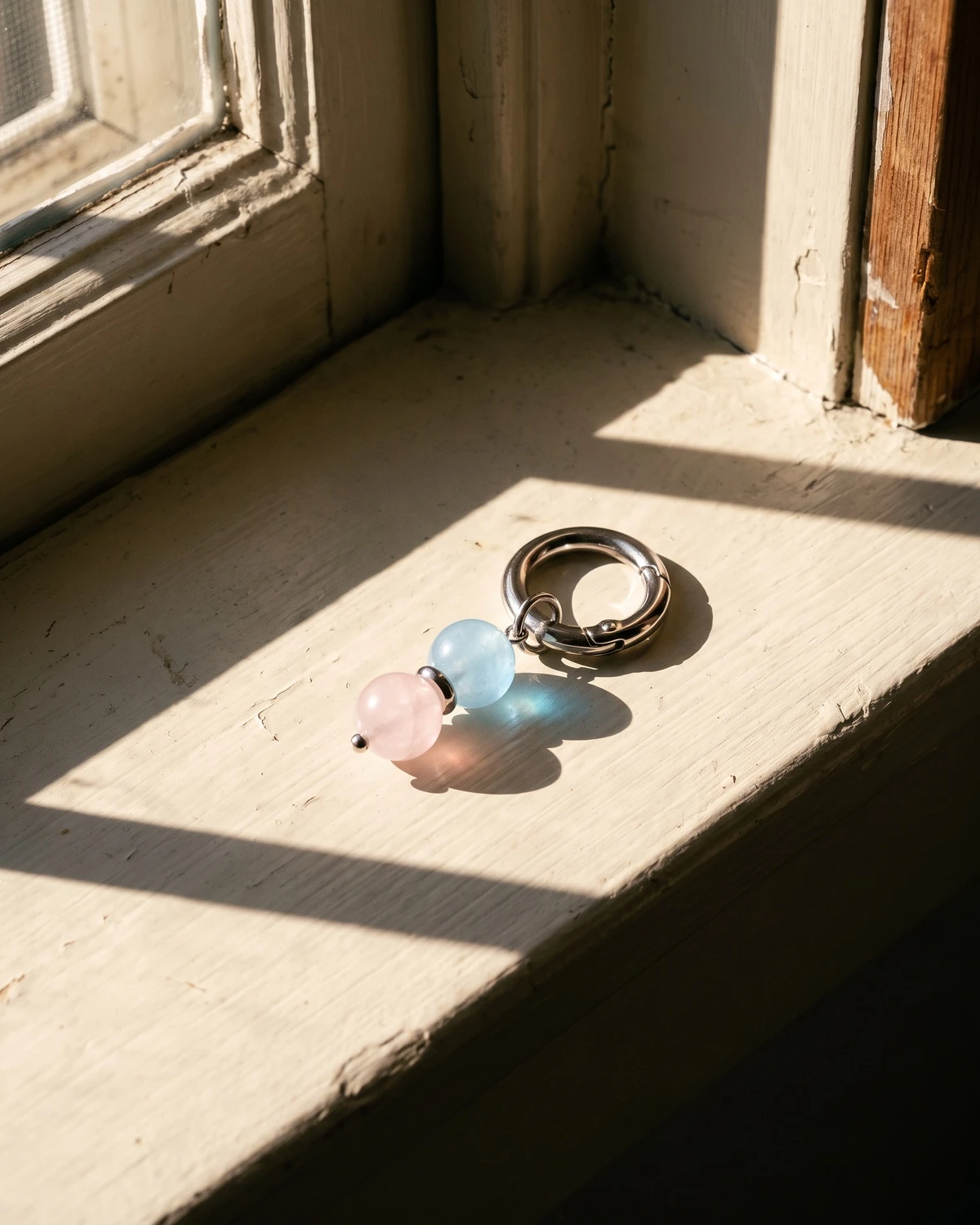
Real crystal or glass? On a pet collar it can be hard to tell at a glance, because glass and plastic beads are made to look like stone. A few simple checks will tell you a lot: bubbles, the pattern inside the bead, how cold it feels, and how it handles a scratch. None of these is perfect on its own, but together they separate most natural stones from imitations. This matters for pets because a good natural bead is hard and smooth and holds up to daily wear.
Look inside: bubbles and inclusions
Hold the bead up to a window or a phone torch and look through it with a magnifier if you have one.
- Round bubbles almost always mean glass. They form when molten glass cools.
- Wisps, clouds, fine needles or tiny cracks point to natural stone. Clear quartz often has soft white clouds; amethyst shows uneven violet zones.
- Perfectly even colour with no texture at all is a hint of glass or dyed material, though some fine stones are very clean.
The rockhounding guide to real and fake quartz has photos of each pattern.

Feel: temperature and weight
Natural stone draws heat from your hand, so a quartz bead feels cool for a moment longer than glass and much longer than plastic. Plastic also feels light for its size. These are rough checks rather than proof, but a warm, featherlight bead is unlikely to be stone.
Price is another rough guide. Natural stone has to be mined, cut and polished one bead at a time, so a strand of “amethyst” beads that costs less than a coffee is worth a second look. A low price does not prove a bead is fake, and a high price does not prove it is real, but together with the checks above it helps you ask the right questions before you buy.
Hardness: the gentle scratch test
Quartz is about 7 on the Mohs hardness scale and window glass about 5.5. A quartz bead will scratch a spare piece of glass, such as an old jar; glass beads usually will not, and plastic will be scratched instead. Do this gently and only on a piece you do not mind marking, and wipe the surface to make sure you see a real scratch rather than powder.
Names and labels that tell you something
- “Crystal glass” or “lead crystal” means glass, not natural crystal.
- “Cherry quartz”, “goldstone” and “opalite” are names for glass.
- “Reconstituted” or “dyed” stone has been ground and bound or coloured.
- A seller who names the mineral, such as “natural amethyst”, is easier to trust than one who uses a vague label with no mineral name.
For a certain answer on a valuable stone, a gem lab such as the GIA laboratory can test it.
Why natural stone suits a pet collar
A natural quartz-family bead is hard, so it resists chips and scratches on walks. It is not toxic, and polished smooth it has no sharp edges. Glass can chip, and plastic can be chewed apart into small pieces, both of which matter on something a pet wears. Whatever the material, a charm must never be chewed or swallowed, so supervise your pet when it wears one.
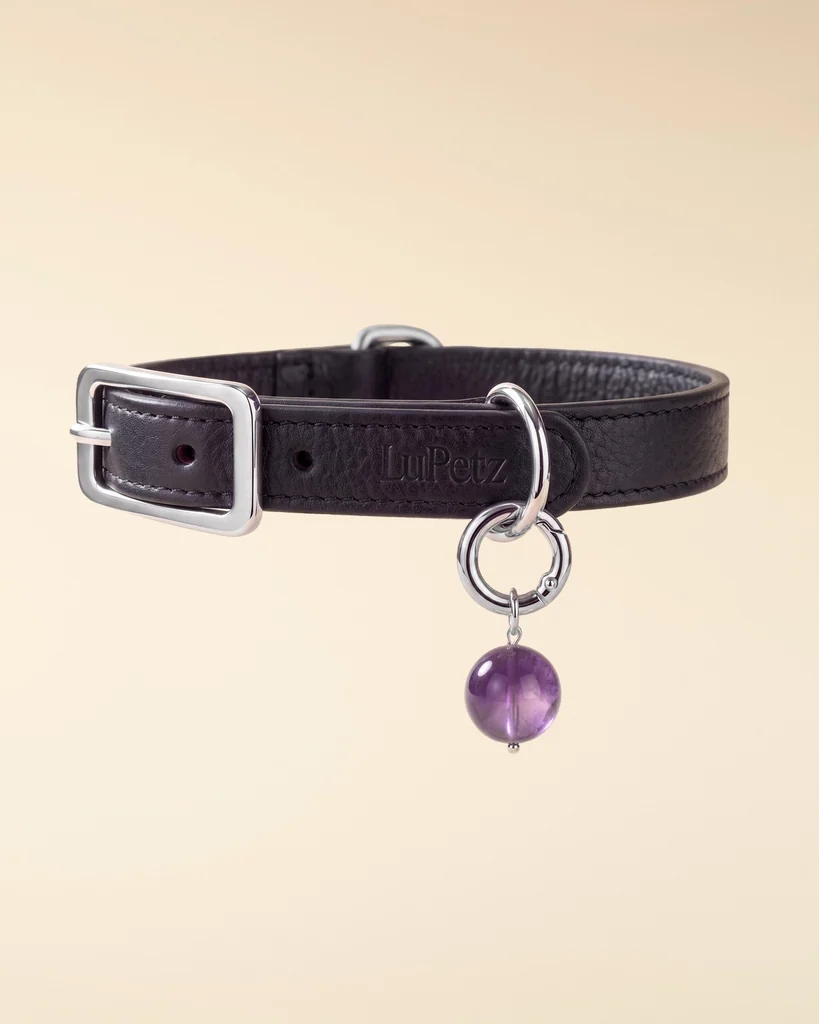
What we use
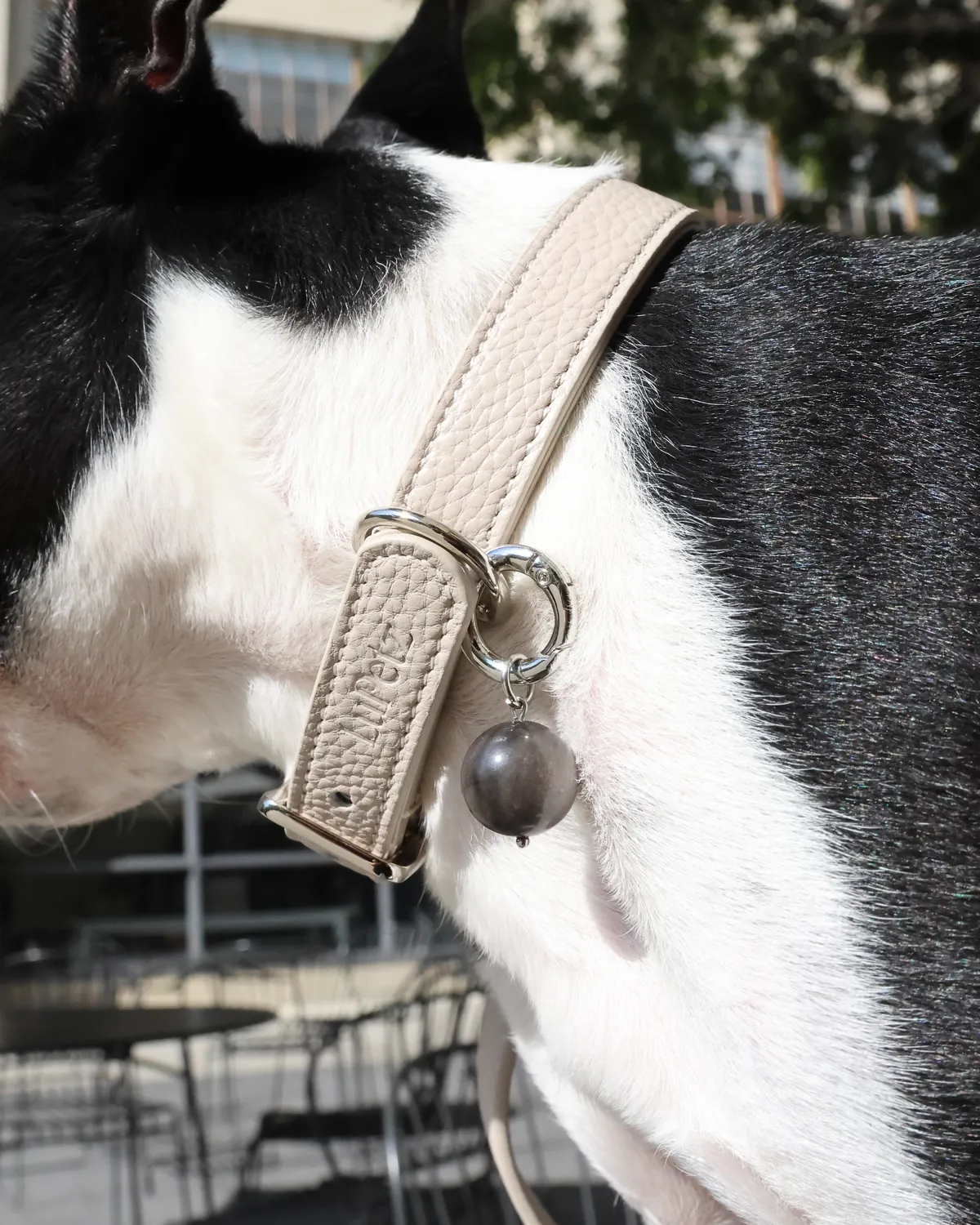
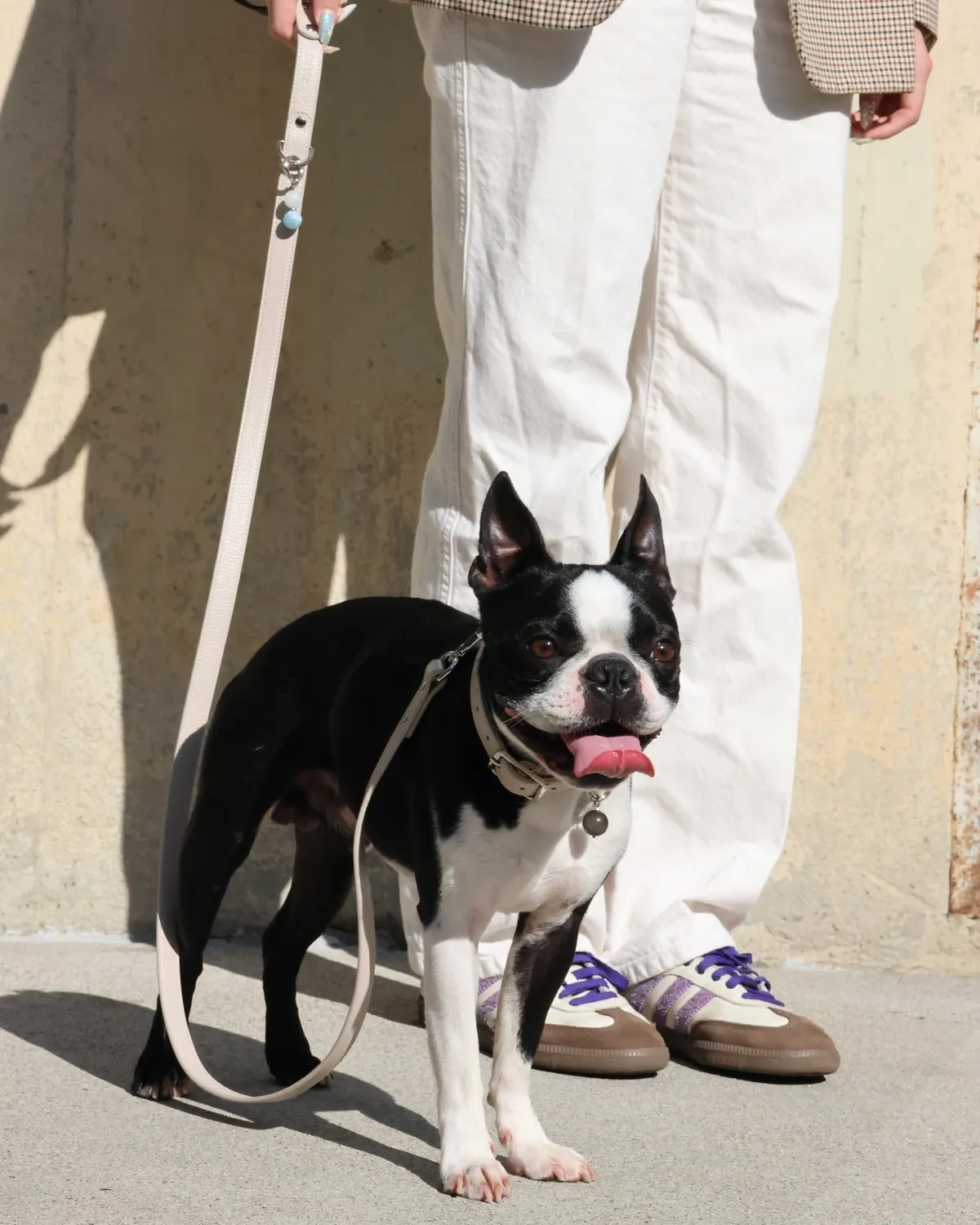
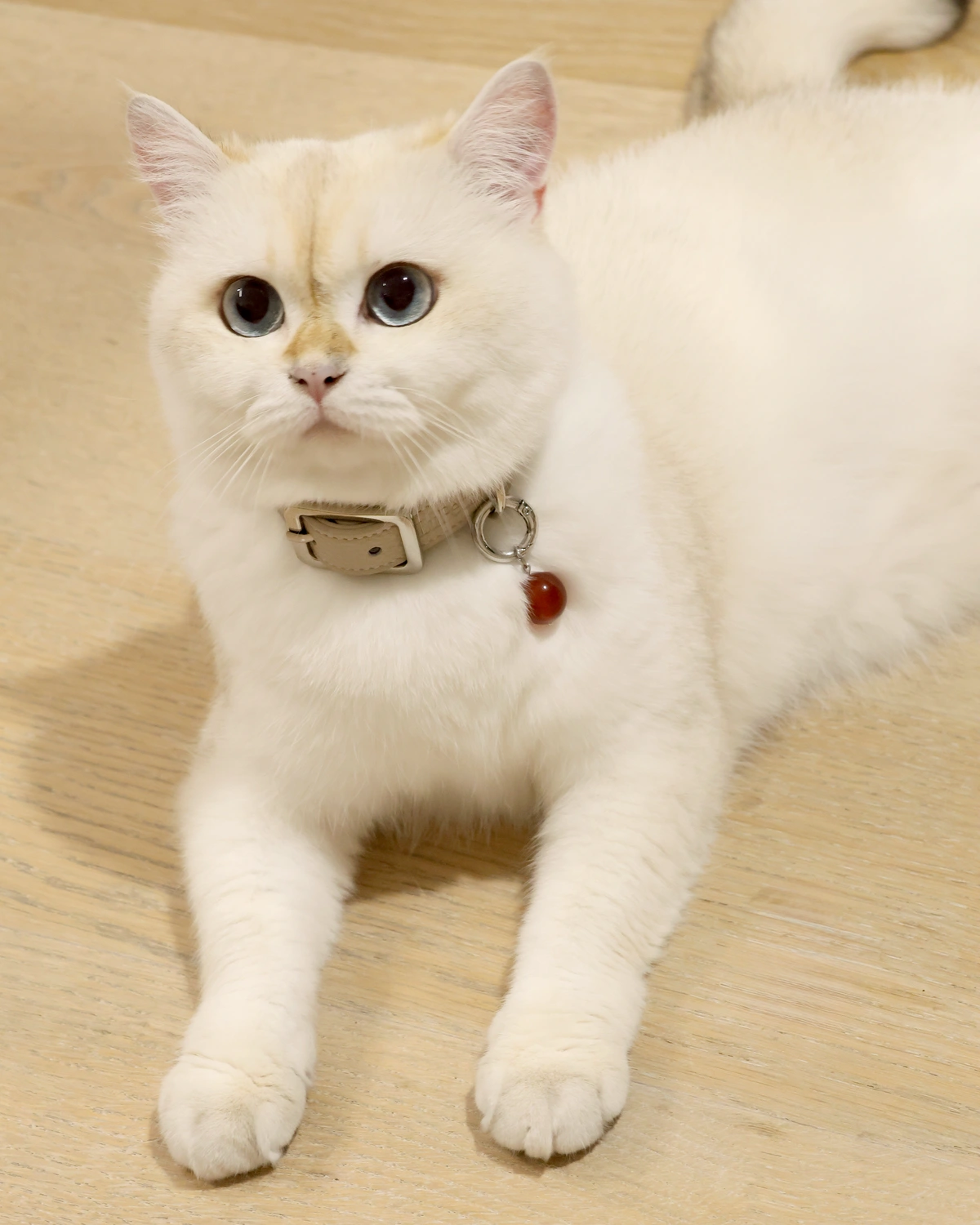
Every bead on the LuKra collar, the LuKra leash and the LuStar charm is a natural stone: clear quartz, amethyst, aquamarine, tiger’s eye, red agate, green aventurine or obsidian. Because they are natural, each bead has its own small variations in colour and texture. They are decoration, chosen for how they look against Italian leather, and we make no claims beyond that. Our guide to choosing a stone that lasts compares them.
FAQ
Is clear quartz the same as crystal glass?
No. Clear quartz is a natural mineral. Crystal glass is a type of glass, often with lead added for sparkle.
Can a real crystal have bubbles?
Natural stones can have fluid inclusions that look like tiny bubbles, but they are irregular. Perfectly round bubbles usually mean glass.
Why do two beads of the same stone look different?
Natural stones vary. Small differences in colour and texture are a sign of a real stone.
How do I clean a natural stone bead?
Wipe it with a soft damp cloth and dry it. See our cleaning guide.