Collars
 Leashes
 Charms
Leather vs Nylon Dog Collar: Which Suits Your Dog?
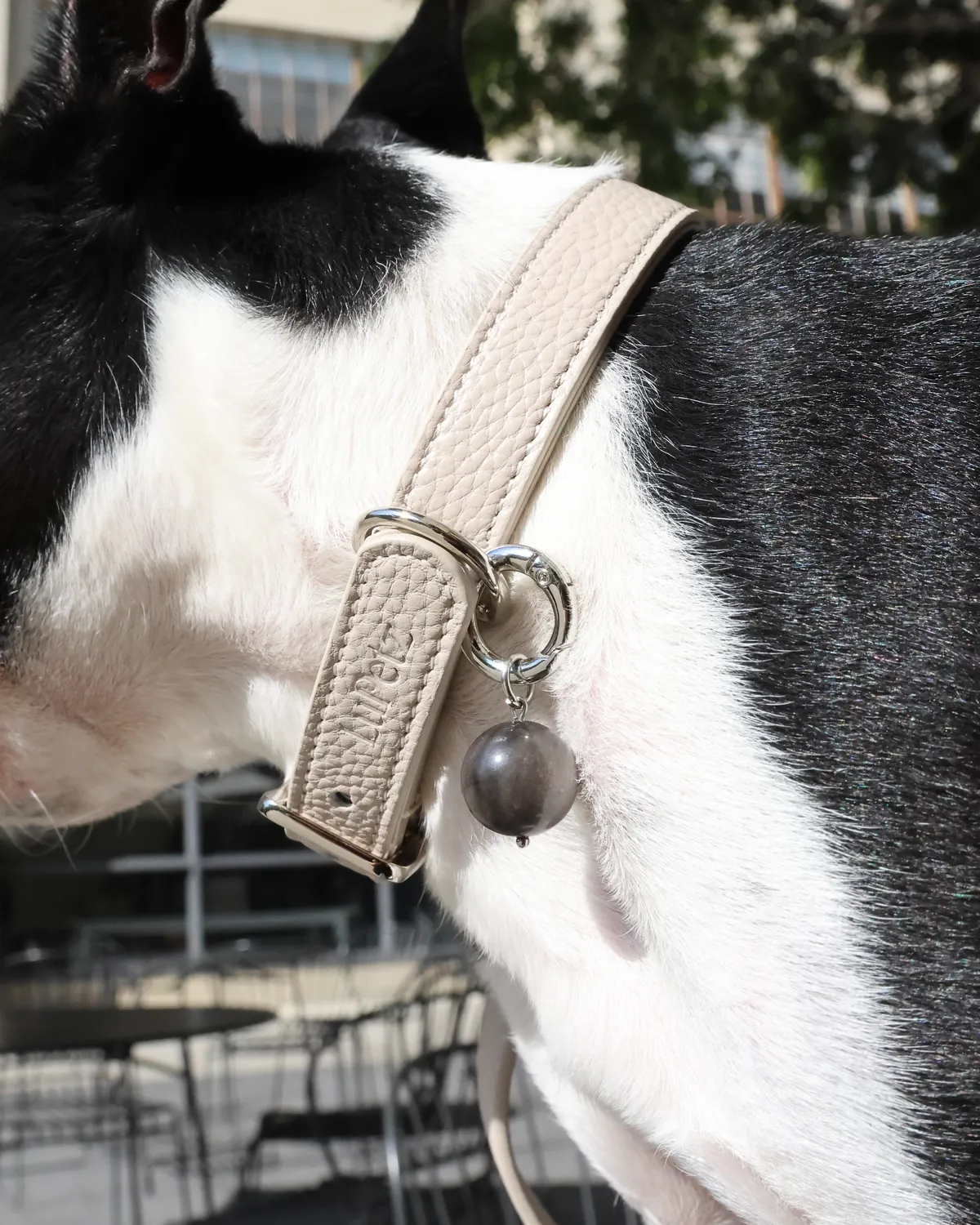
Leather vs nylon dog collar: the short answer is that nylon suits growing puppies, frequent swimmers and tight budgets, while leather suits an adult dog’s everyday collar, the one worn for years that should feel soft and look better as it ages. Neither material is wrong. They are good at different things, and the right choice depends on your dog’s age, how wet your walks get and how much care you are willing to give. This guide compares the two on comfort, water, durability, care and cost.
Leather vs nylon at a glance
- Choose nylon for a puppy who is still growing, a dog who swims most days, or a spare collar for muddy weekends.
- Choose leather for an adult dog’s daily collar, or when you want one collar that lasts for years and matches a leash.
- Either way, fit and hardware matter more than the strap. A well-fitted collar with a solid metal buckle is the starting point in both materials.
How the two materials differ
Nylon
Nylon collars are made from woven synthetic webbing. The webbing is light, dries quickly and comes in every colour and pattern. It is also inexpensive. The American Kennel Club calls nylon a practical choice for a growing puppy because of its low price point, since a puppy may need several collars in the first year.
Leather
Leather is a natural material, and quality varies a great deal with the part of the hide used. Full-grain leather is the top layer of the hide with its natural surface left unaltered, not buffed and printed with an artificial grain. It is the grade to look for in a collar. The AKC describes leather as a durable option that can handle water, heat and scuffs, and better suited to a dog that has finished growing.
Comfort and fit
Both materials are comfortable when the collar fits. The difference is in how they behave over time. Nylon feels the same on day one as on day five hundred. Leather starts a little firm, then softens and takes on the curve of the neck, so a leather collar that has been worn for a month sits closer and moves less than a new one.
Look at the edges. On any collar, a hard or rough edge is what rubs. Good leather collars have smoothed or stitched edges and a lining, and good nylon collars have webbing with a soft, tight weave. Run a finger along the inside before you buy.
Then check the fit with the AKC’s two-finger test: if you cannot slide two fingers under the collar it is too tight, and if more than two fit it is too loose. Our guide on how to measure dog collar size explains where to measure and how to choose between sizes. If you ever see redness or thinning fur under a collar of any material, take it off and ask your vet.
Water, mud and smell
This is where nylon is the easier material. The AKC describes standard nylon leashes as strong, waterproof and washable, and the same holds for nylon collars: rinse, wash by hand with dog shampoo, air dry. A dog who swims every day is simpler to live with in nylon.
Leather copes with rain and wet grass. What it does not like is being soaked and then dried fast. The AKC’s advice is not to soak leather but to wipe it with a damp, soft sponge. If a leather collar does get drenched, blot it and let it dry slowly at room temperature, away from radiators and direct sun.
Smell follows moisture. Any collar that stays damp against a coat will start to smell, so the habit that matters is the same for both: take the collar off after a wet walk and let it dry fully. The AKC also notes that washing a collar when your dog is bathed helps prevent skin irritation and chafing.
Durability, care and cost
How each one ages
A collar usually fails at one of three places: the buckle, the ring or the stitching that holds them. So start there, whatever the strap is made of. Metal hardware and close, even stitching are good signs in both materials.
After that, the two age differently. Nylon stays the same until it starts to fray, most often at the edges and around the hardware, and fuzzy or thinning webbing is the signal to replace it. Leather changes gradually. It darkens a little, picks up a soft sheen where it is handled and creases where it bends. Kept clean and conditioned now and then, it softens with wear and keeps its shape. Left dirty and dry, it stiffens and can crack. Leather rewards a small amount of care, and nylon forgives none being given.
Neither is chew-proof. A collar is not a toy, and a dog who chews should not be left alone with one that is off the neck.
Care
Nylon: wash it when it is dirty. Leather: wipe it when it is dirty, dry it slowly, condition it a few times a year. The AKC warns against using furniture or shoe leather cleaners on a dog’s collar because their chemicals can be toxic to dogs. Our step-by-step guide on how to clean a leather dog collar covers what to use instead. In practice it comes to a few minutes every couple of months.
Cost over time
Nylon costs less to buy, and that is the right logic for a puppy. The AKC points out that a pricier material may not be worth it for a collar a fast-growing puppy wears for only a few weeks. Once a dog has reached adult size the sum changes. A collar that is worn every day for years is the one worth spending on, because the cost is spread over every walk. Many owners end up with both: nylon through puppyhood, then one good leather collar.
Where the LuKra collar sits
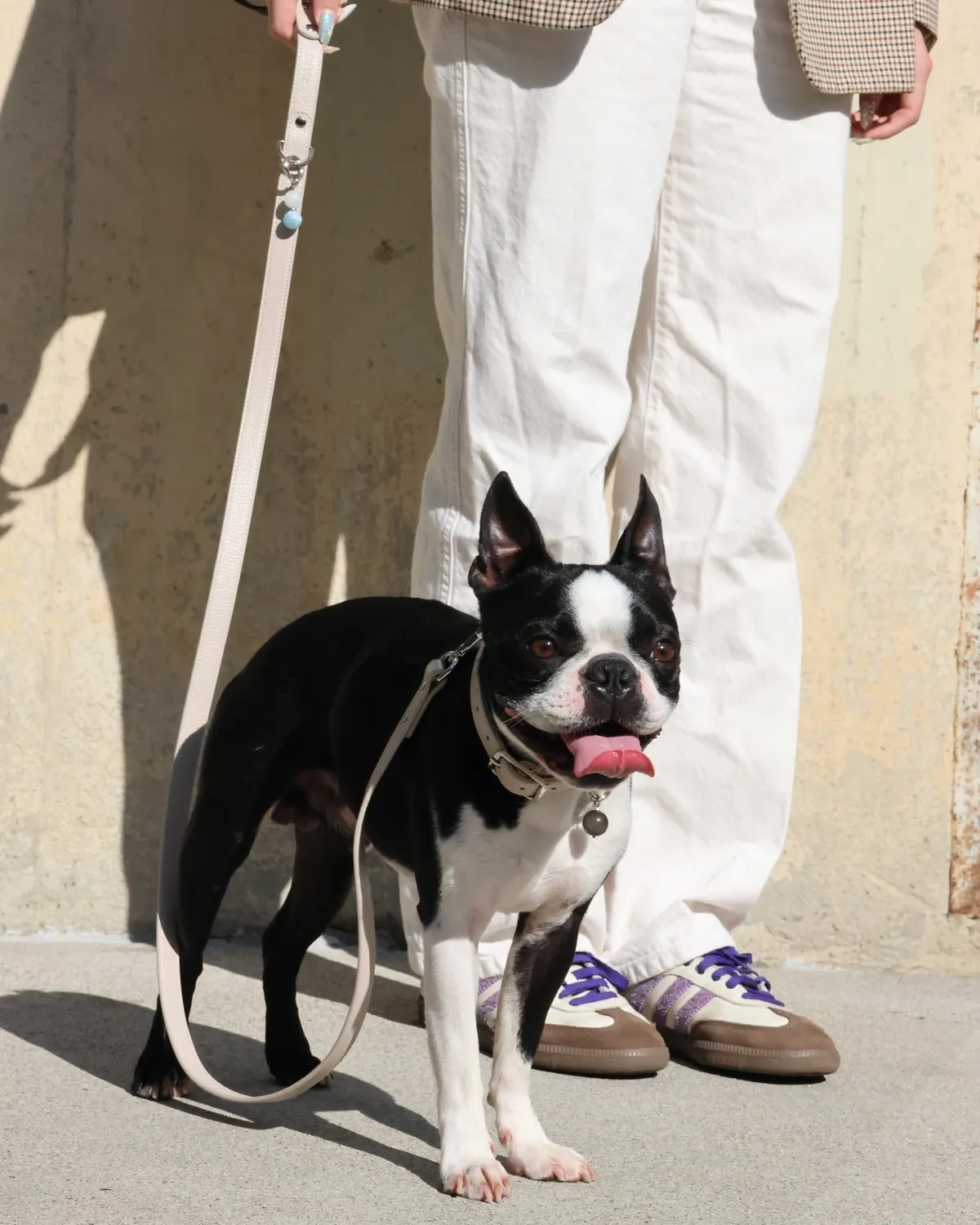
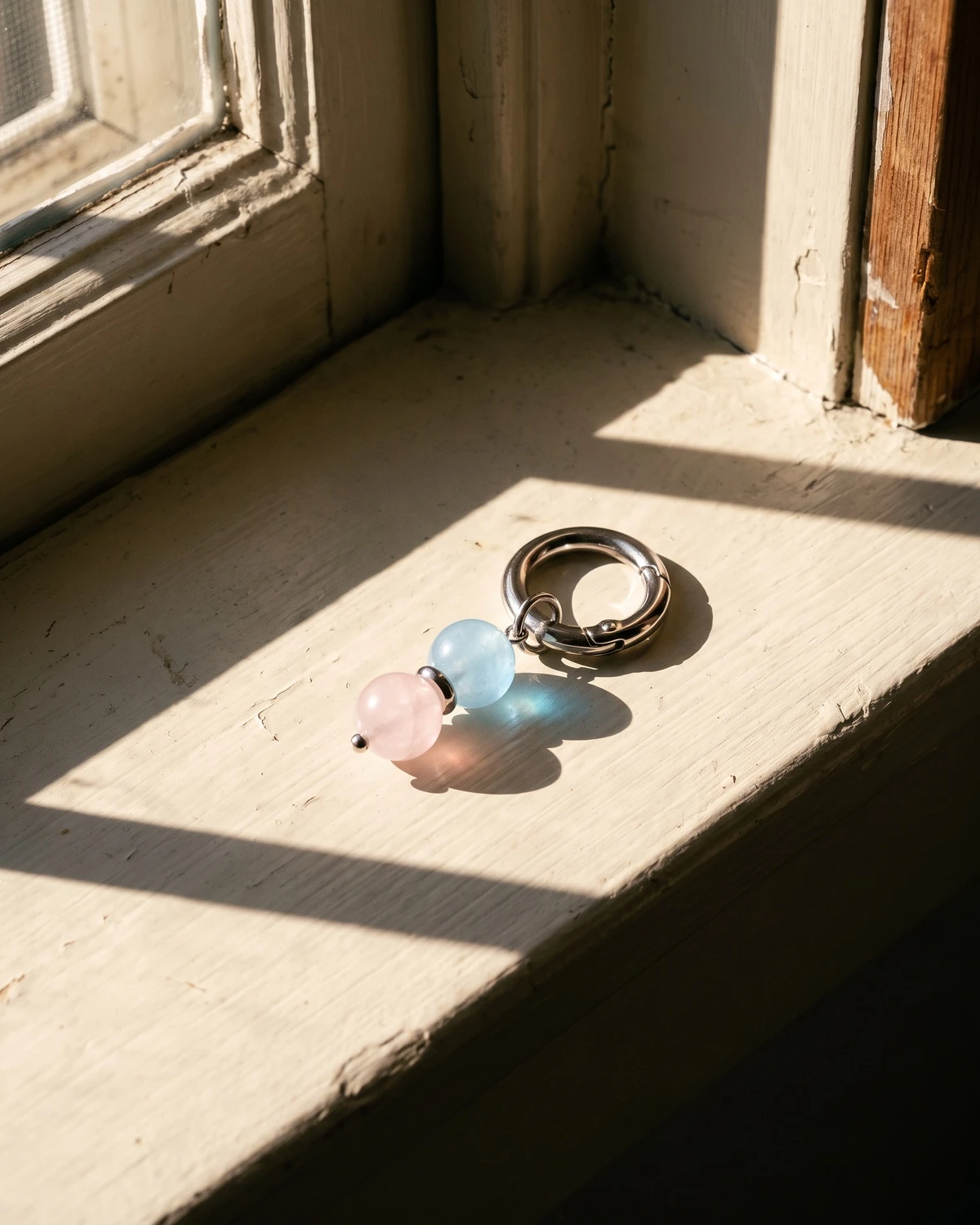
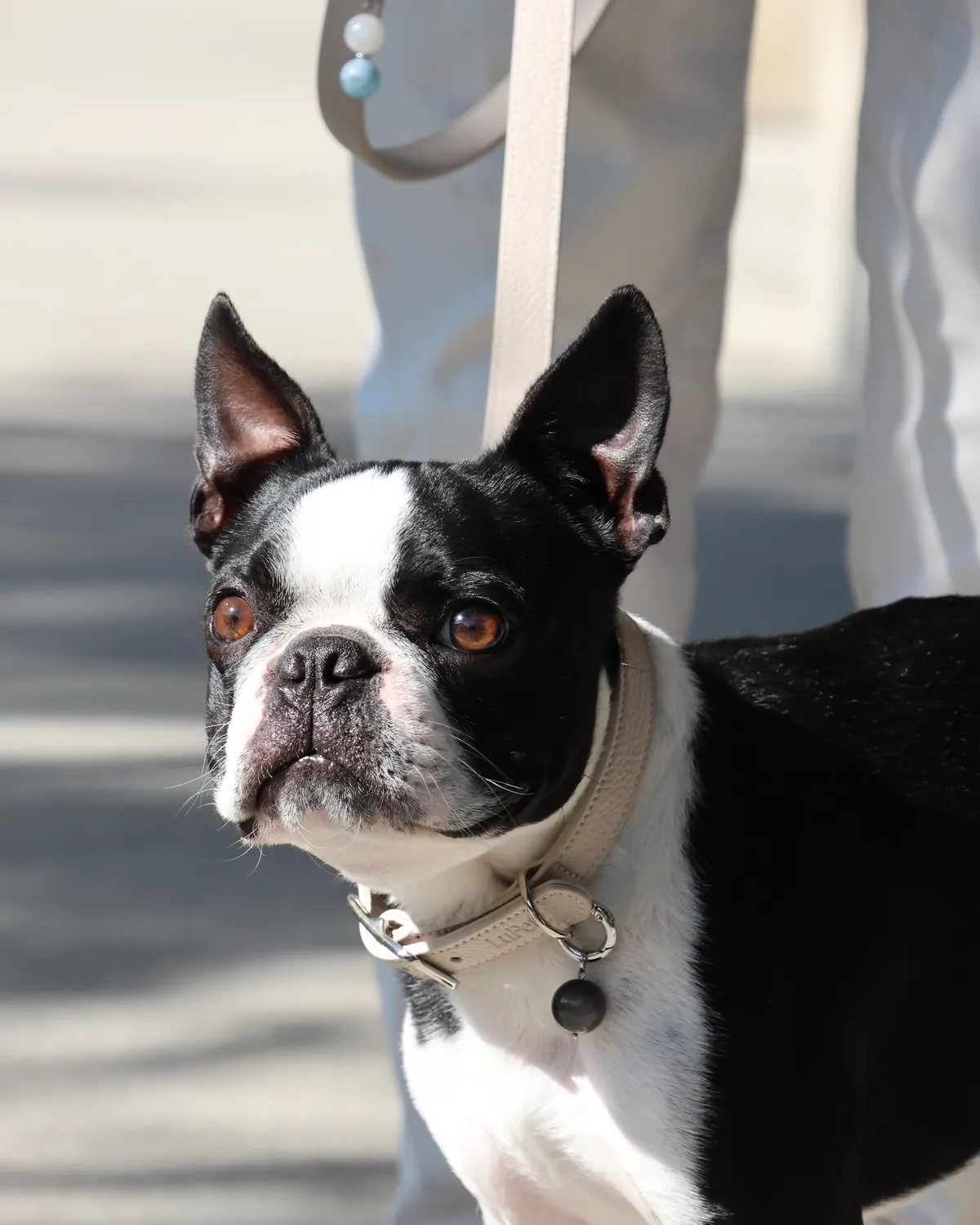
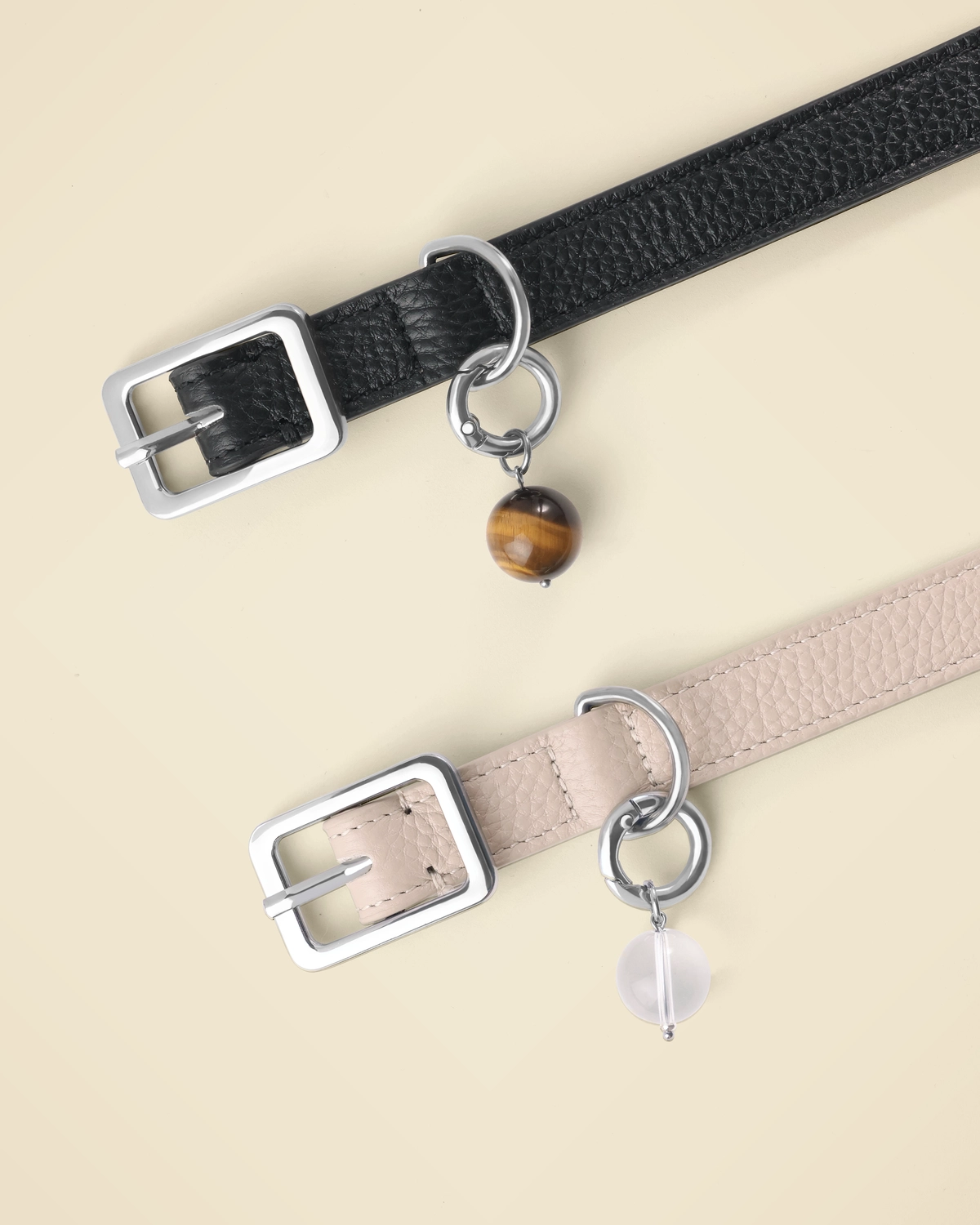
The LuKra leather dog collar is our answer to the leather side of this comparison. It is made of Italian full-grain leather, lined in the same leather so both faces feel alike, with edges stitched by hand and stainless steel hardware. It comes in three sizes, in black or taupe, and is finished with a small natural stone charm, a decorative detail that is one of a kind because each stone is natural.

It is a buckle collar, not a breakaway or safety collar, and the charm must not be chewed or swallowed, so supervise your pet while it gets used to wearing one. If you want the leash to match, the LuKra leather leash is cut from the same leather, and US shipping is free when the two are ordered together. Returns are accepted within 14 days.
Common questions
Is leather or nylon better for a puppy?
Nylon, in most cases. Puppies grow fast and outgrow collars quickly, and an inexpensive, washable collar makes sense for that stage. Move to leather when your dog has reached adult size.
Can a leather dog collar get wet?
Yes. Rain and damp grass are fine. Avoid soaking it, and after a very wet walk blot it and let it dry slowly at room temperature. For a dog who swims daily, keep a nylon collar for the water.
Which lasts longer, leather or nylon?
It depends on quality and care more than on the material. Check hardware and stitching first. Good nylon lasts until the webbing frays. Good full-grain leather that is kept clean and conditioned can be worn for years and looks better for it.
Can cats wear leather collars?
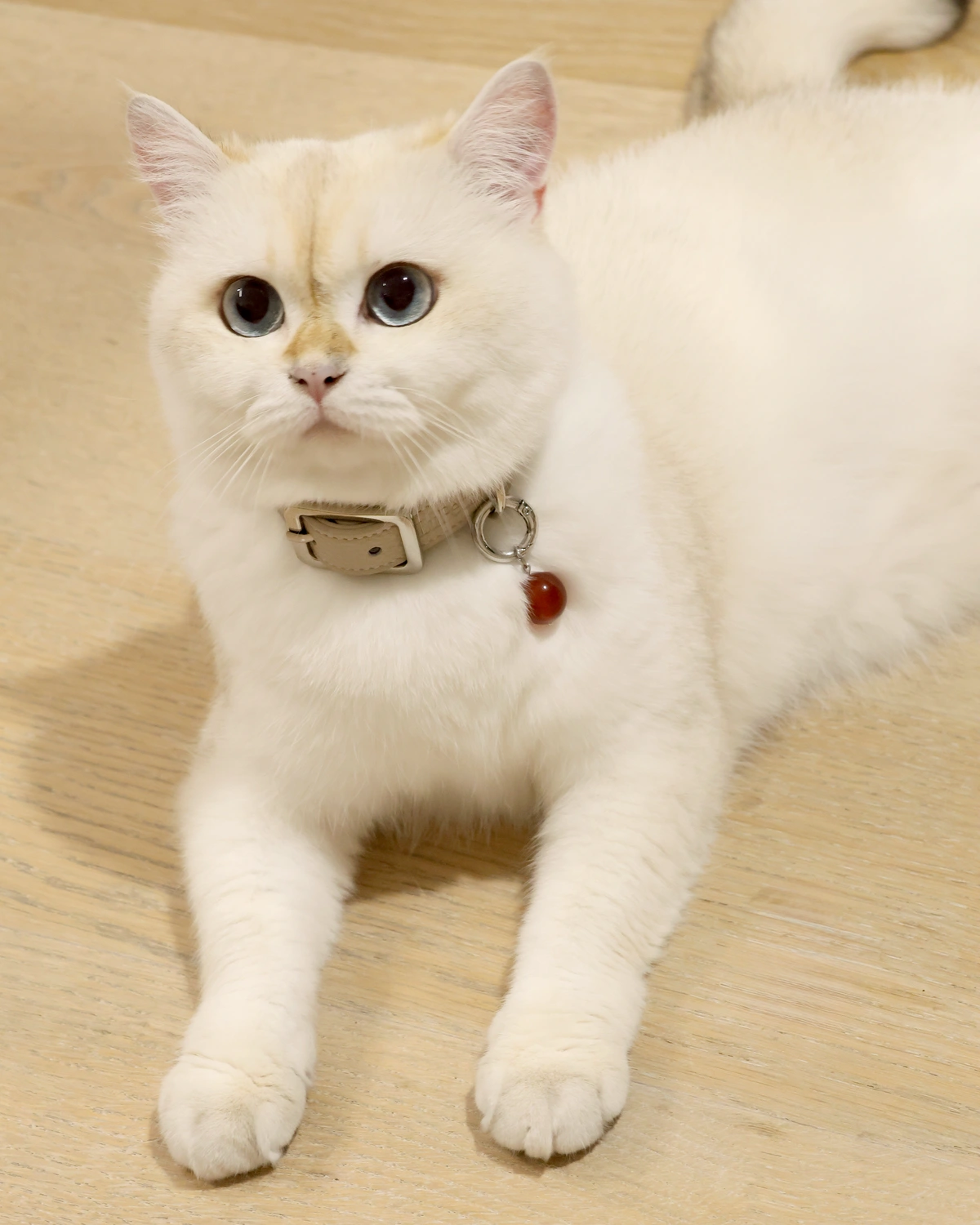
They can, in a small size with a correct two-finger fit. Bear in mind that a buckle collar does not release under pressure, so supervise a cat that wears one.
If leather is the right side of the comparison for your dog, see the LuPetz collar collection, or take the one-minute quiz to choose a colour and stone.